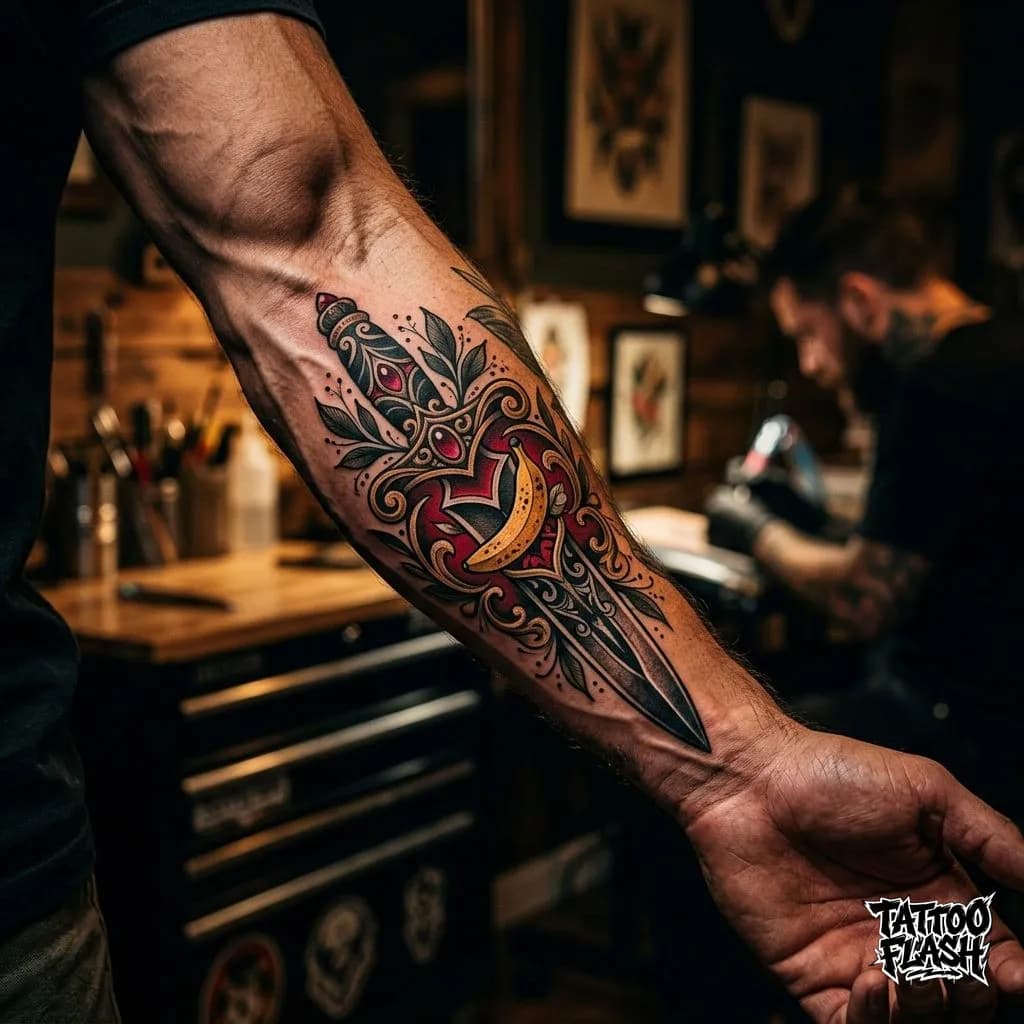
Neo-TraditionalForearm
Neo-Traditional Forearm Dagger TattooStyle Focus
Published reference: Neo-Traditional Forearm Dagger Tattoo. Use it to discuss the subject, outline, and placement with your artist; it does not show every variation of the style.
Linked placements show published neo-traditional references. Placements marked as suggestions do not yet have a published reference in this style.
Published references
1
Placements represented
1
Published placements
Forearm
Published reference: Neo-Traditional Forearm Dagger Tattoo. Use it to discuss the subject, outline, and placement with your artist; it does not show every variation of the style.
Neo-traditional work keeps a strong outline while expanding the depth, palette, and decorative detail of classic flash.
The added shading and ornament usually need more room than a traditional flash piece.
Medium and broad placements support layered leaves, frames, fur, feathers, and dimensional color.
The published references in this collection include forearm. Compare their composition at your intended size.
For planning, consider forearm, thigh, calf, and shoulder blade. These suggestions are separate from the placements represented in this collection; ask an artist how the design could fit the chosen size and anatomy.
Lead with the main subject, then name the ornamental frame and palette rather than stacking unrelated motifs.
If you try the generator, specify the subject, orientation, palette, and level of detail. Treat the output as a reference for artist refinement.
