Learn what common American traditional tattoo motifs symbolize and how classic flash meanings influence placement and design choices today.
Decoding the Old School Flash Wall
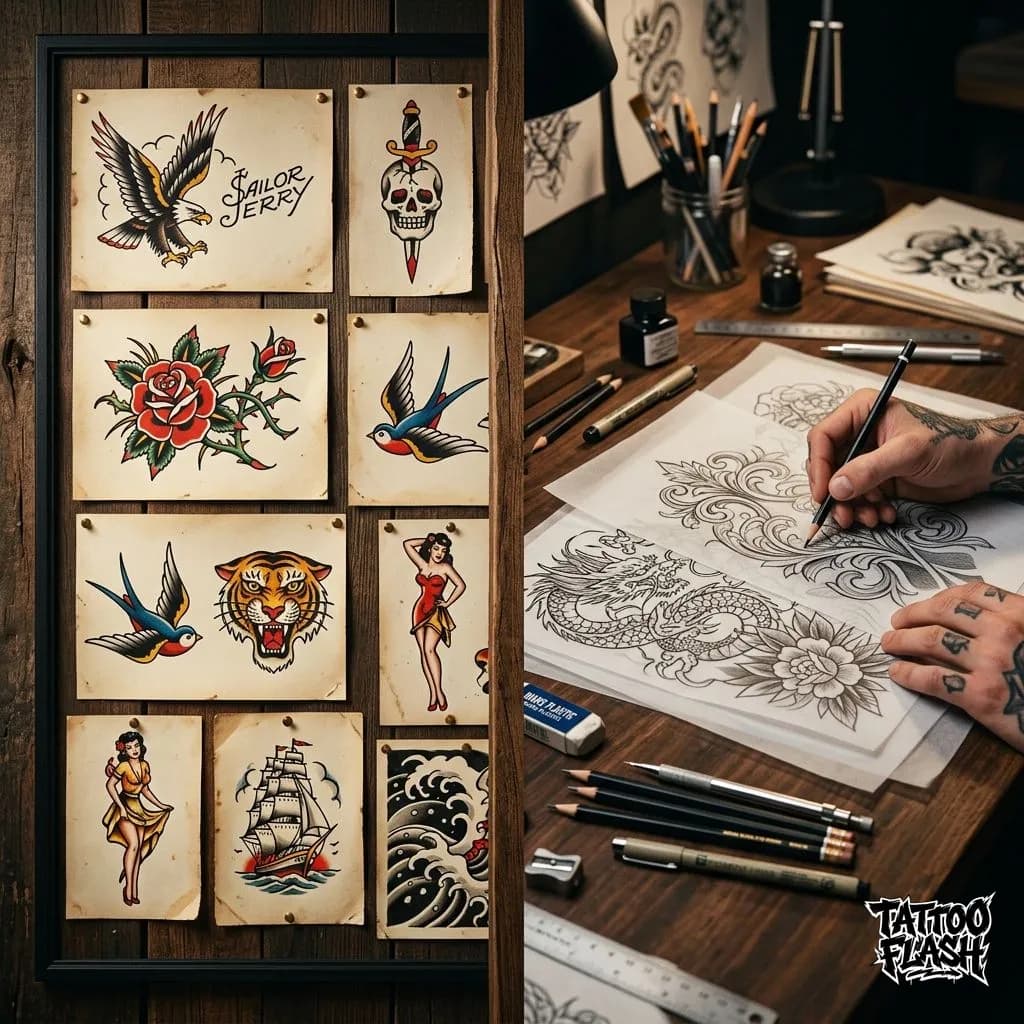
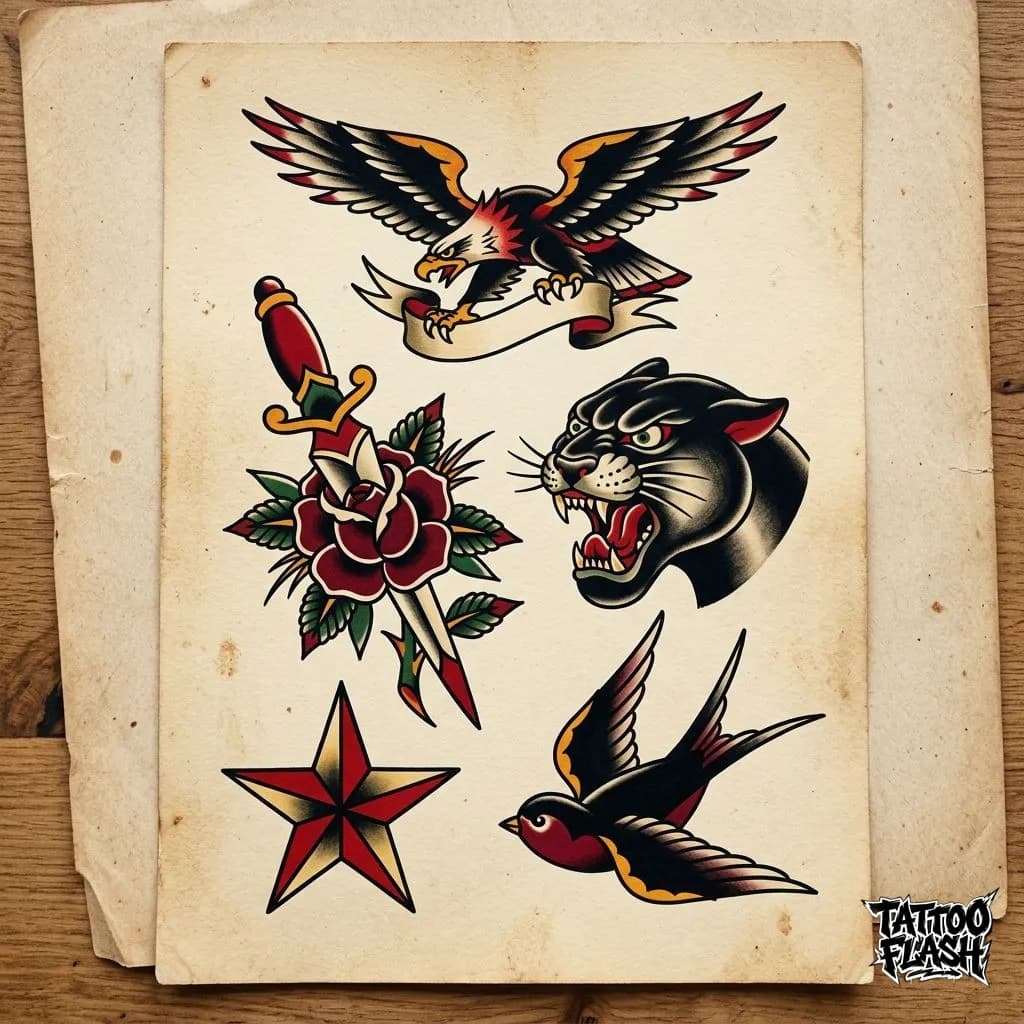
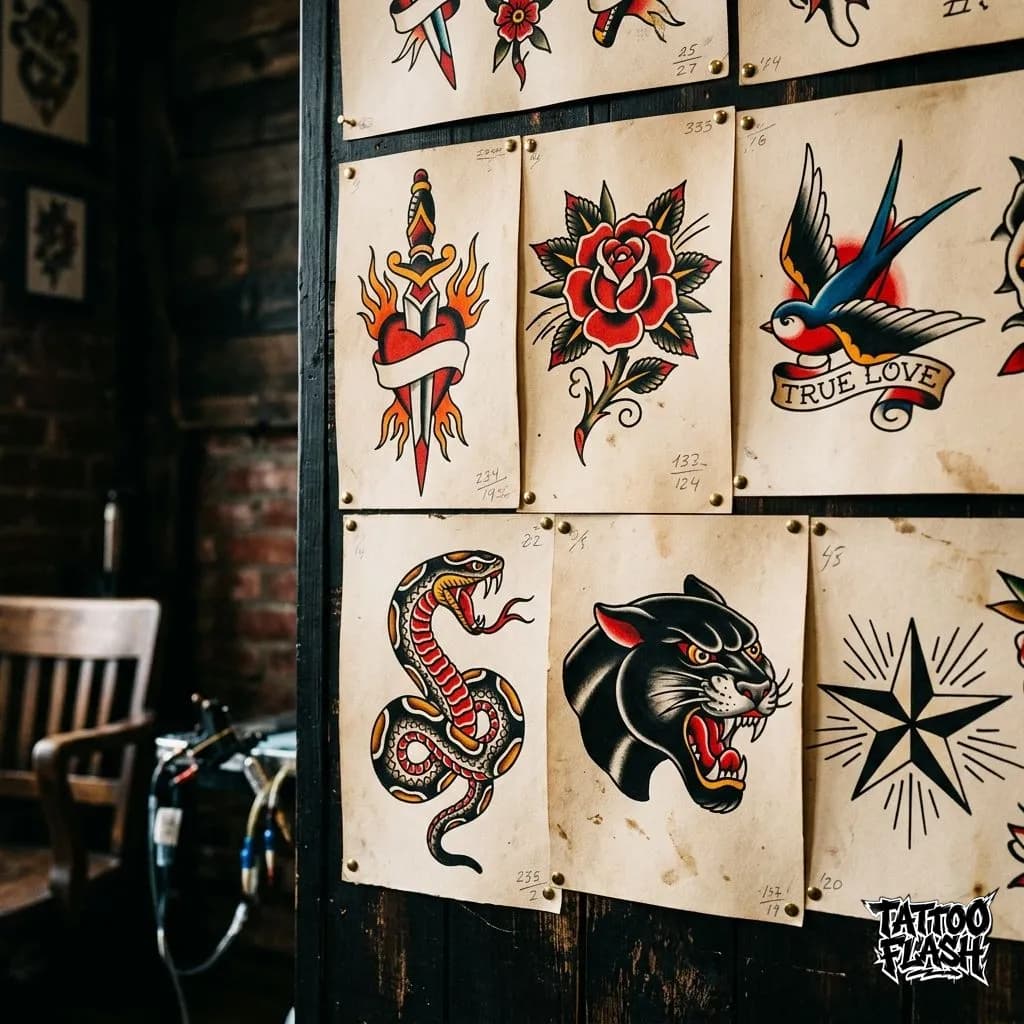
Before tattoos became highly personalized reflections of individual identity, they served as visual passports for sailors, soldiers, and societal outsiders. When you look at an American Traditional flash wall today, you are essentially looking at an encrypted language. Each standardized design carrying a highly specific meaning related to survival, superstition, or personal tragedy.
If you are unfamiliar with the technical rules that govern how these pieces are applied (heavy black outlines, primary colors), we recommend reviewing our core American Traditional Guide, the dedicated Traditional style page, and the wider Tattoo Meanings archive. This article focuses entirely on the symbols themselves and the history they carry.
The Anchor: Stability in the Storm
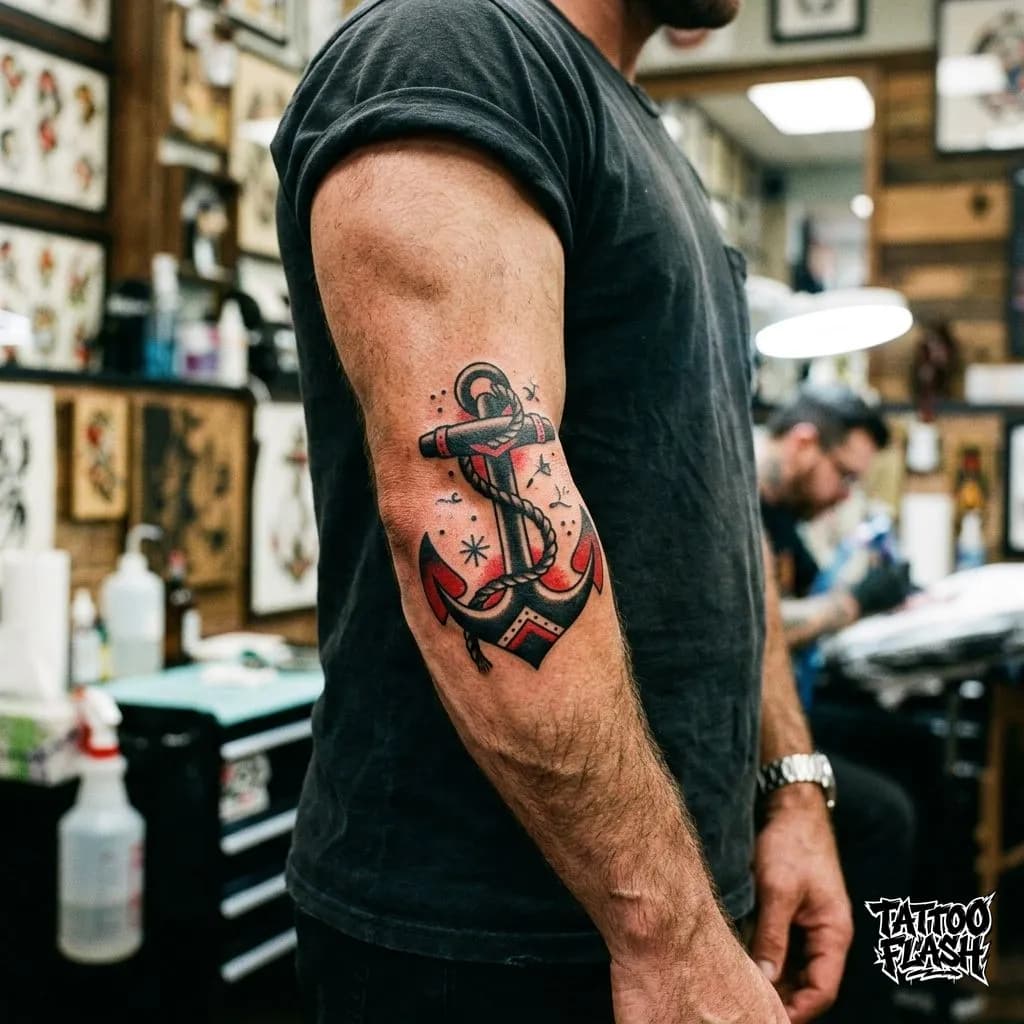
The anchor is arguably the most famous tattoo in history. Originally, a sailor earned an anchor tattoo after successfully crossing the Atlantic Ocean—a massive achievement in the era of unpredictable weather and scurvy. It still fits naturally on classic placement canvases like the forearm.
Metaphorically, an anchor represents stability and staying grounded during chaotic times. If an anchor is depicted "fouled" (wrapped in a chain or rope), it signifies a sailor holding their ground in the face of immense adversity. In modern times, the anchor frequently features a banner bearing the name of a loved one (like variations of the iconic "MOM" tattoo) acting as the wearer's literal anchor to the mainland.
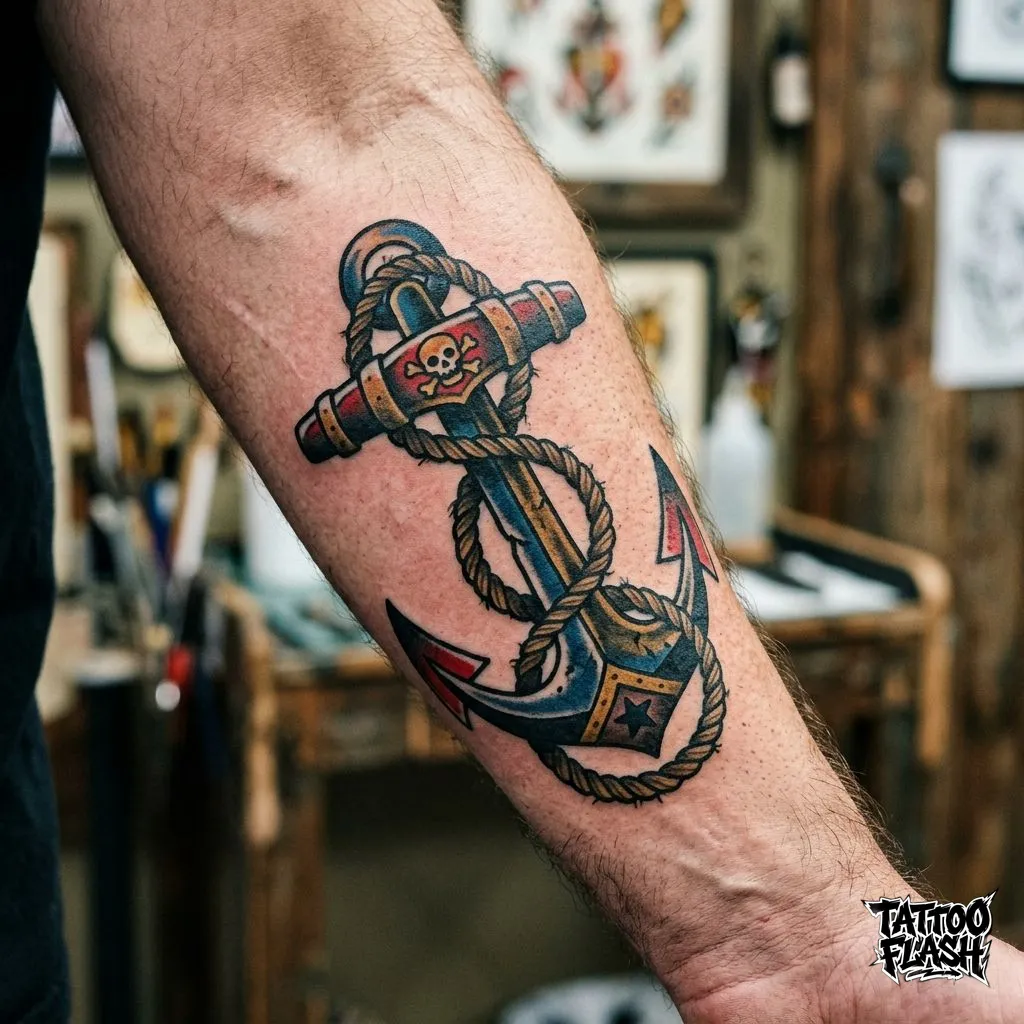 A fouled anchor. The thick rope wrapping around the iron indicates stability even when entangled in dangerous circumstances.
The Skull and Rose: Life and Death
In traditional tattooing, juxtaposition is everything. The skull and rose design is a perfect "memento mori"—a Latin phrase translating to "remember that you must die."
By placing the ultimate symbol of death (the skull) next to the ultimate symbol of life, beauty, and vitality (the blooming rose), the tattoo acts as a permanent reminder of life's fleeting nature. It tells the wearer to appreciate the beauty of their current existence precisely because it will inevitably end.
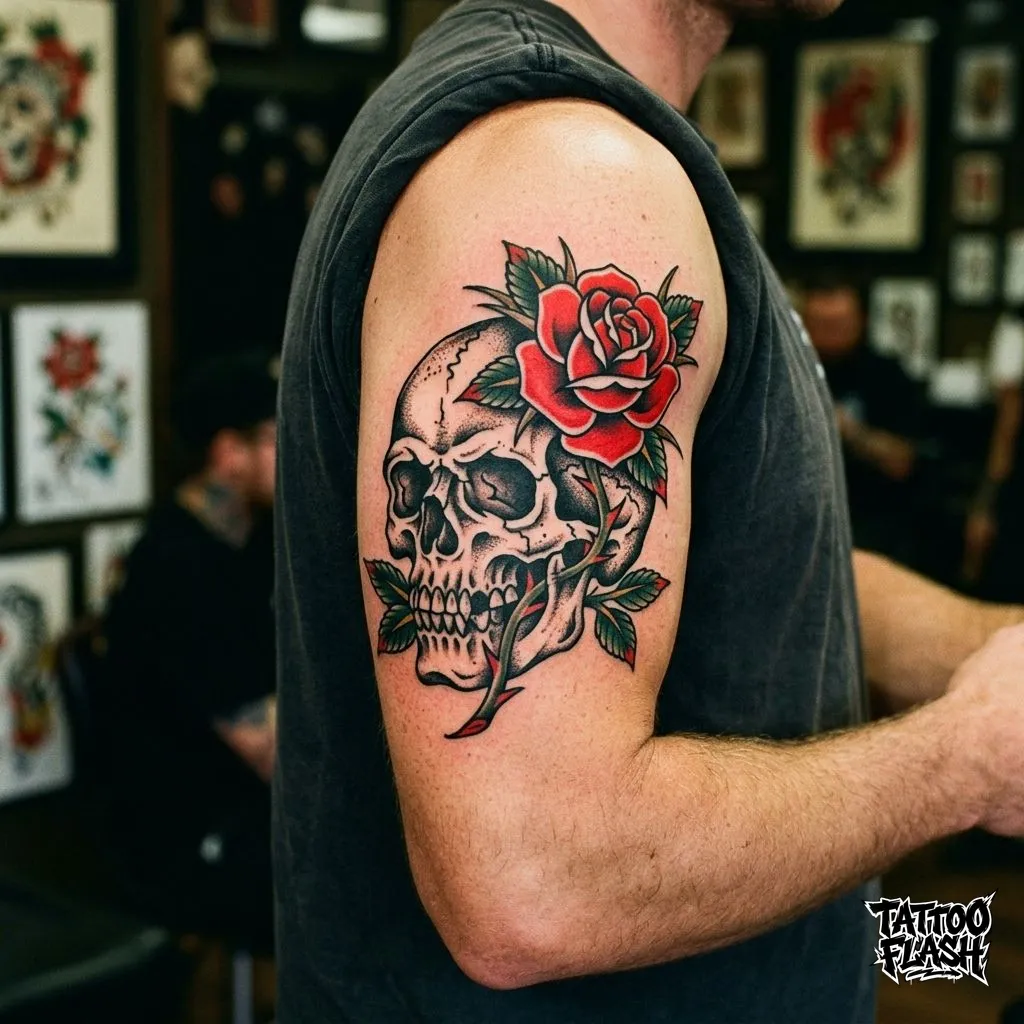 The skull and rose. The bold whip shading creates a heavy contrast between the macabre skull and the vibrant, living petals.
The Wolf Head: Loyalty and Instinct
In flash tattooing, animal heads are frequently used to immediately convey the wearer's values. The traditional wolf head, usually depicted snarling or baring its teeth, represents fierce loyalty, survival instinct, and the protection of one's "pack."
Historically, it was also adopted by individuals who viewed themselves as "lone wolves"—outcasts who survived outside the boundaries of polite society. Because of its intense, aggressive imagery, it is frequently placed on highly visible, confident areas like the hand or throat.
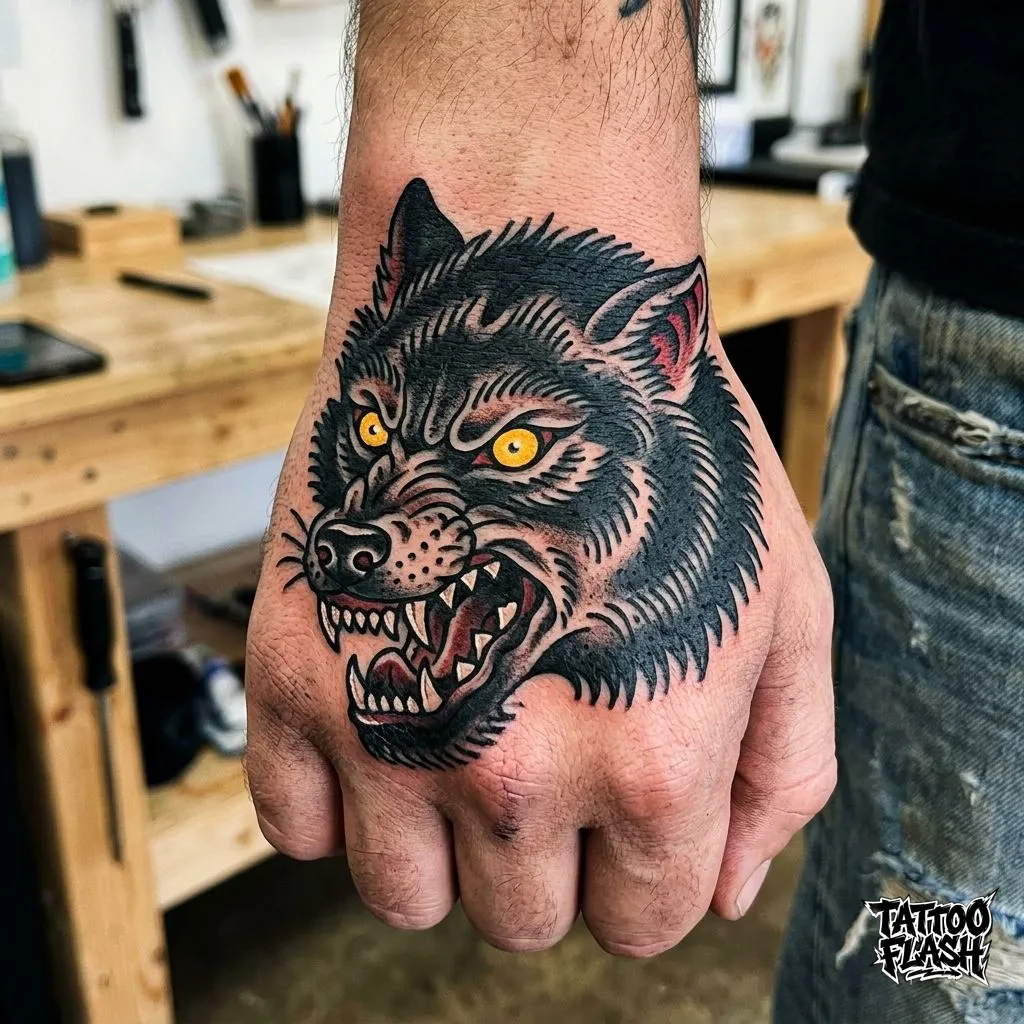 A traditional wolf head on the hand. The aggressive posture explicitly warns others of the wearer's defensive nature.
The Snake and Dagger: Treachery and Resilience
While the dagger piercing a heart represents romantic betrayal, the dagger combined with a snake speaks to a more vicious, combative struggle.
The snake is a universal symbol of treachery, danger, and hidden threats. When depicted wrapped around a dagger, it symbolizes a battle between good and evil, or more personally, the wearer's triumph over a treacherous situation. It implies that the wearer is armed, resilient, and fully aware of the "snakes in the grass" around them.
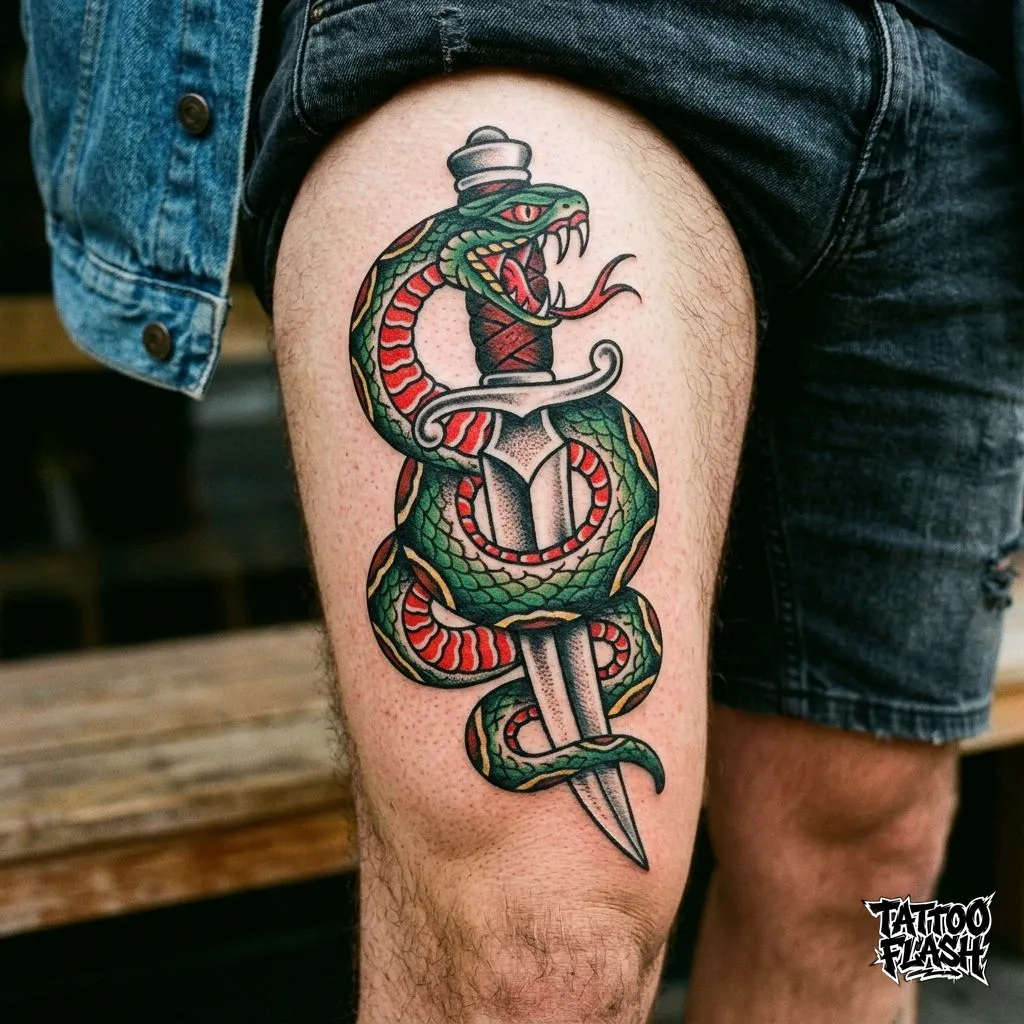 A snake wrapping a dagger. The intense contrast and combative subject matter make this a classic symbol of overcoming betrayal.
Wearing History
Choosing a traditional tattoo means engaging in a lineage that stretches back over a century. While the modern world allows people to attach their own unique meanings to any image, wearing a traditional swallow, anchor, or skull means speaking a language that any other tattoo collector in the world will immediately recognize.
Curious how these historic symbols look combined with modern ideas? Run your concept through our AI Tattoo Generator and see history reimagined.
Don't want a generic design?
Generate your own direction, keep the symbolism, and hand your artist a cleaner starting point.
About the contributor