Understand what makes a traditional tattoo work, how old school flash differs from newer variations, and which placements fit bold classic motifs best.
The Origin of American Traditional
Before the internet, before social media, and before ultra-fine tattoo machines, tattoos needed to be fast, highly readable, and indestructible. American Traditional tattooing (frequently called "Old School") was born in naval ports and military bases in the early to mid-20th century. Pioneers like Norman "Sailor Jerry" Collins established strict aesthetic rules that ensured a tattoo would still look readable even after decades of harsh sun exposure and salt water.
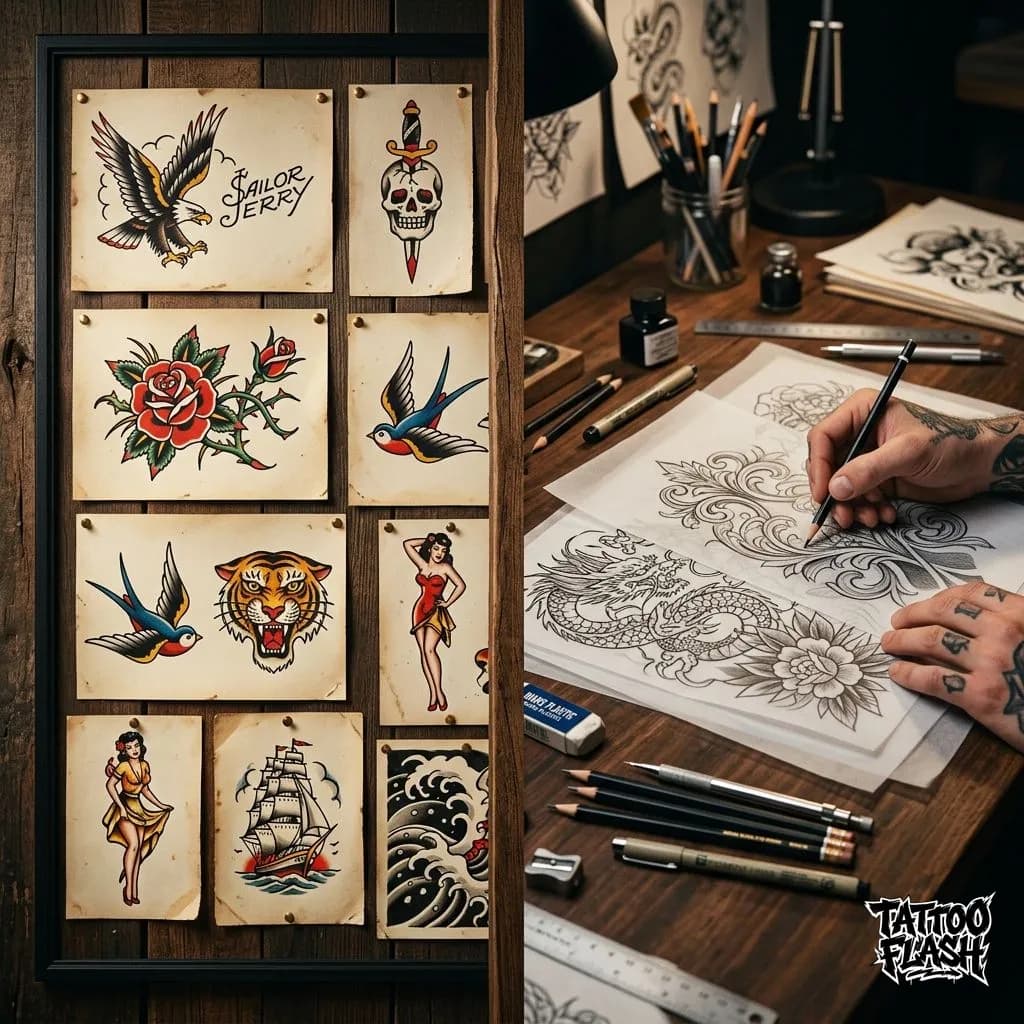
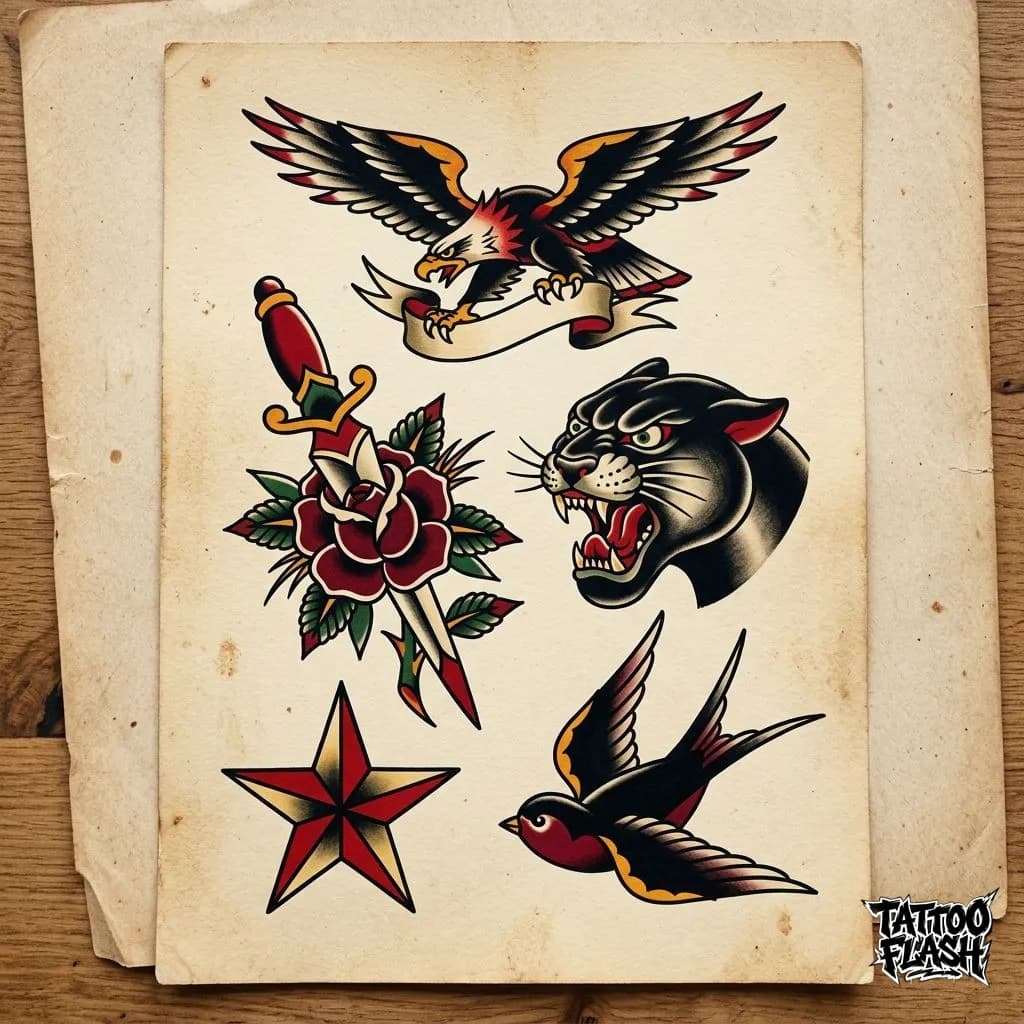
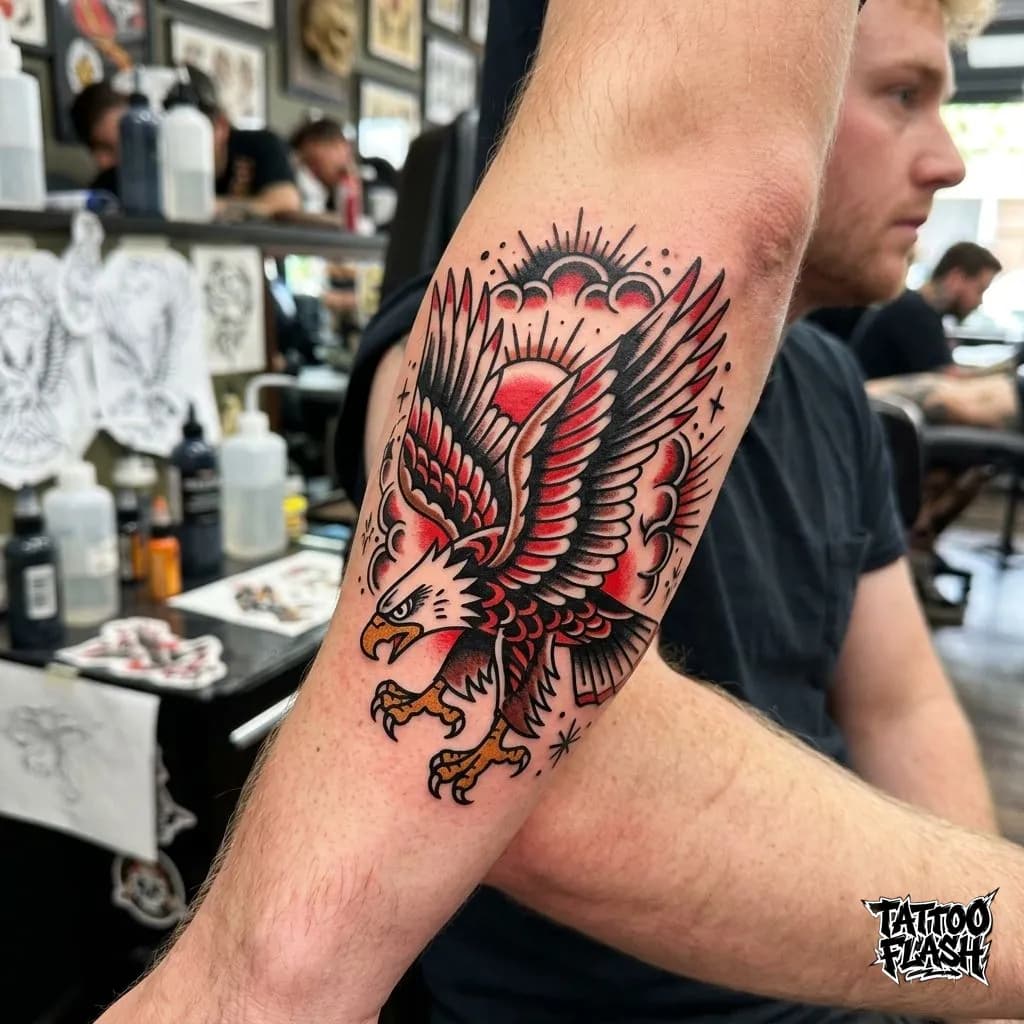
The mantra of American Traditional is "Bold Will Hold." If you want the wider hub, browse the Styles archive and the dedicated Traditional style page before narrowing into motifs. Unlike Fine-line tattooing that relies on delicate negative space, Traditional heavily utilizes thick black outlines (typically executed with a large round liner needle). The shading must be abrupt and heavy, and the color palette is strictly limited to primary shades that the human body accepts best: solid red, deep yellow, bottle green, and flat blacks.
If you are curious how this style compares to modern geometry, check out our broader Tattoo Styles Explained guide.
Classic Flash and Motifs
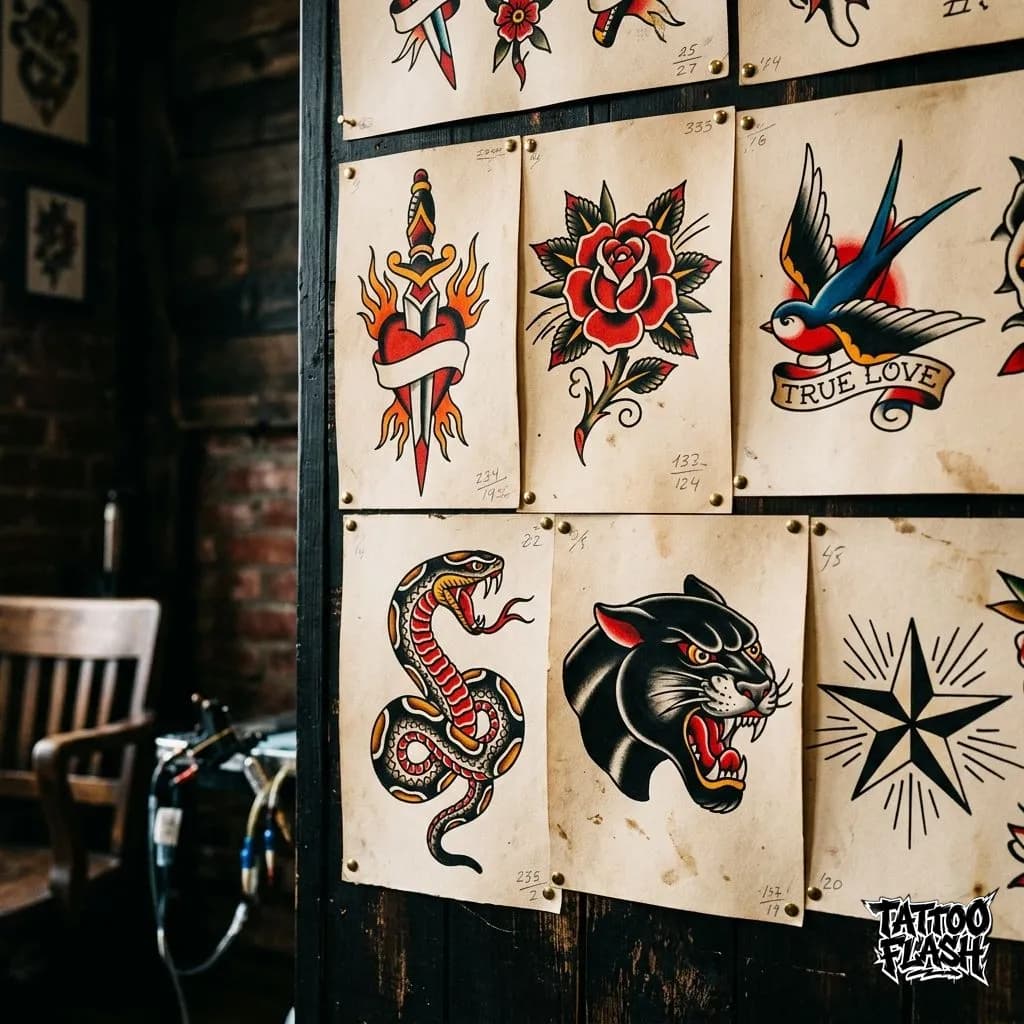
The imagery used in American Traditional tattooing carries distinct, standardized meanings, largely tied to wartime themes, superstitions, and naval navigation.
The Crawling Panther: Originally designed to cover up old, faded, or poorly executed tattoos, the crawling panther is a staple of Traditional flash. Its dark contours perfectly hide previous mistakes, and its aggressive stance represents strength and stealth. The heavy black shading makes it a massive endurance test for clients, especially on softer body sections like the calf or inner bicep.
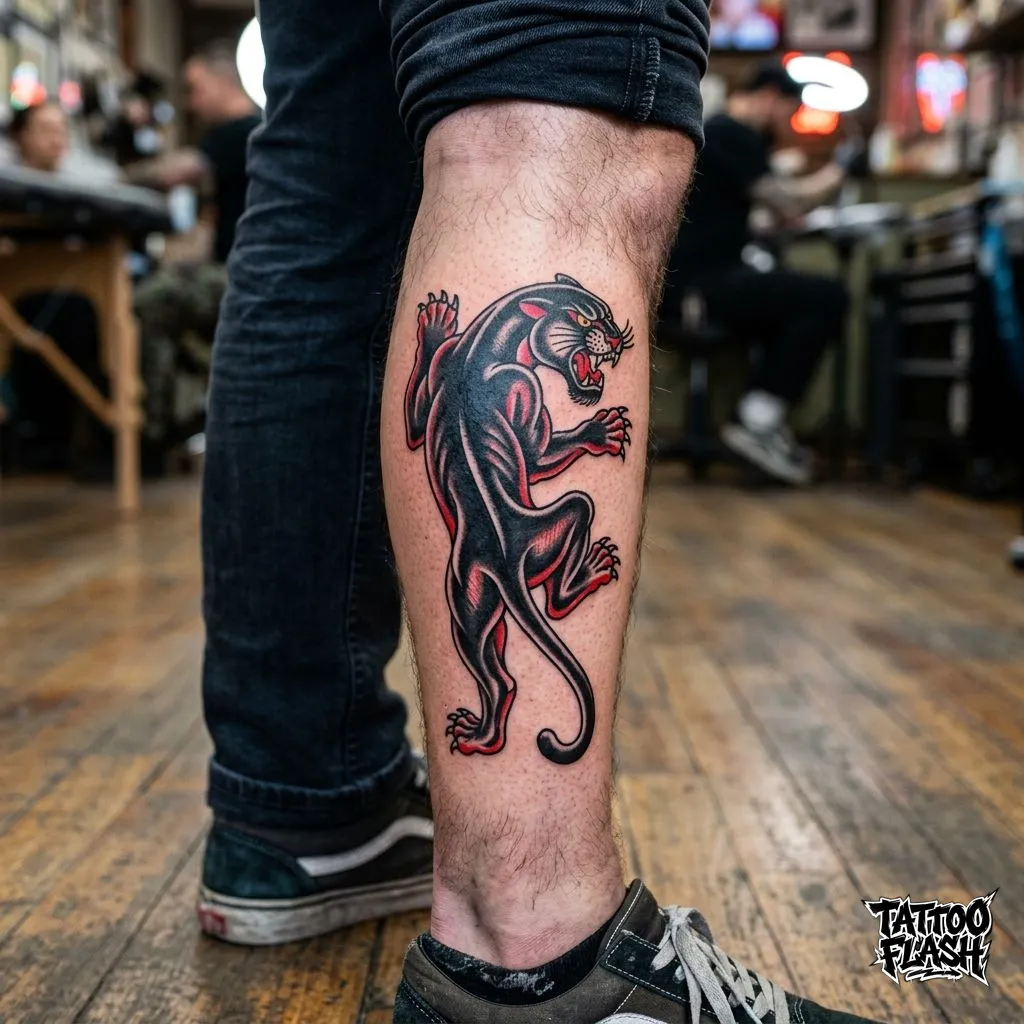 A crawling panther on the calf. The heavy saturation of black and red guarantees this piece will remain highly legible decades from now.
The Dagger and Heart: A universal symbol of love, betrayal, and heartbreak. The dagger piercing a heart is one of the most recognizable designs in tattooing history. Traditional artists use a technique called "whip shading"—moving the machine quickly to create a peppered gradient from solid black to raw skin—to give the heart volume without diluting the ink.
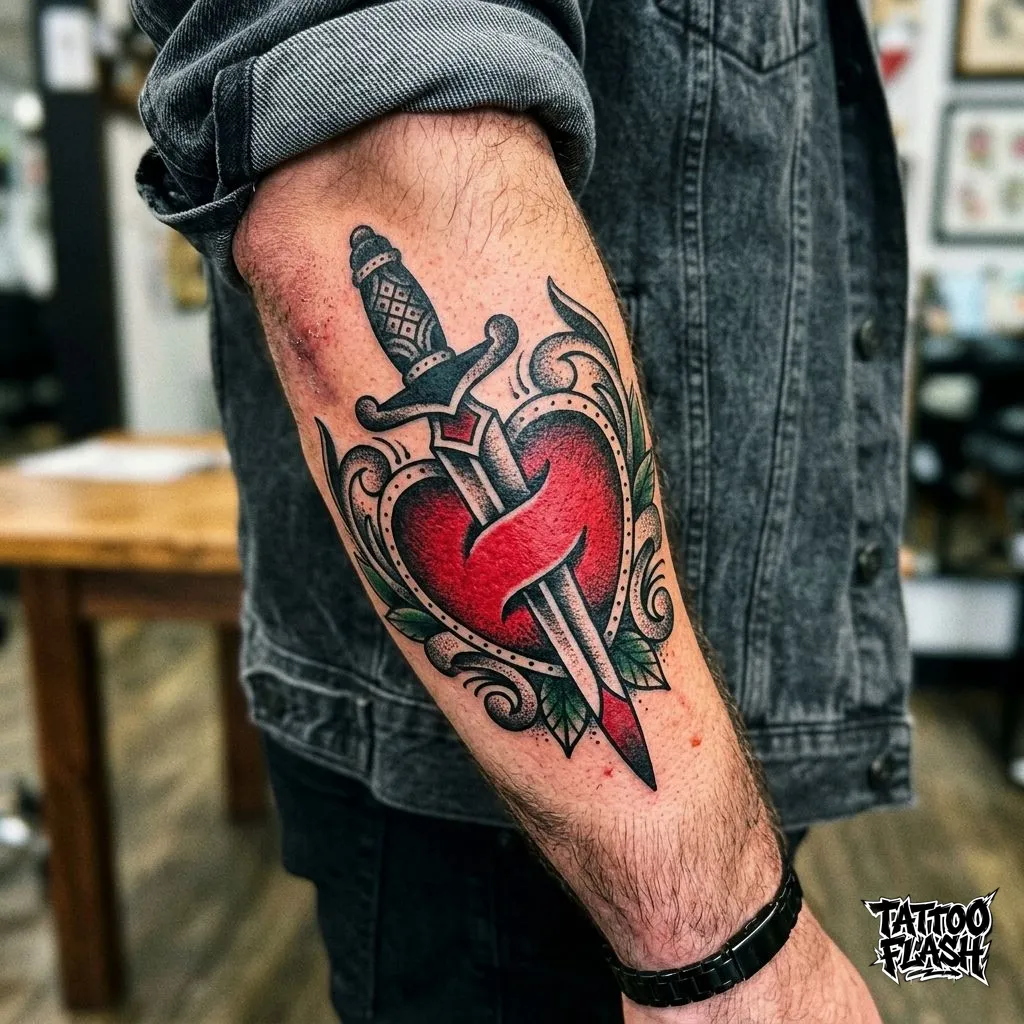 A traditional dagger and heart on the forearm. Notice the peppered 'whip shading' effect transitioning the black ink into the red.
Naval Swallows: In naval tradition, a sailor earned a swallow tattoo for every 5,000 nautical miles traveled. Because swallows always return to their same location to mate, they conceptually represent the hope that a sailor will safely return home. They are frequently tattooed in symmetrical pairs on the chest, specifically resting on the collarbones.
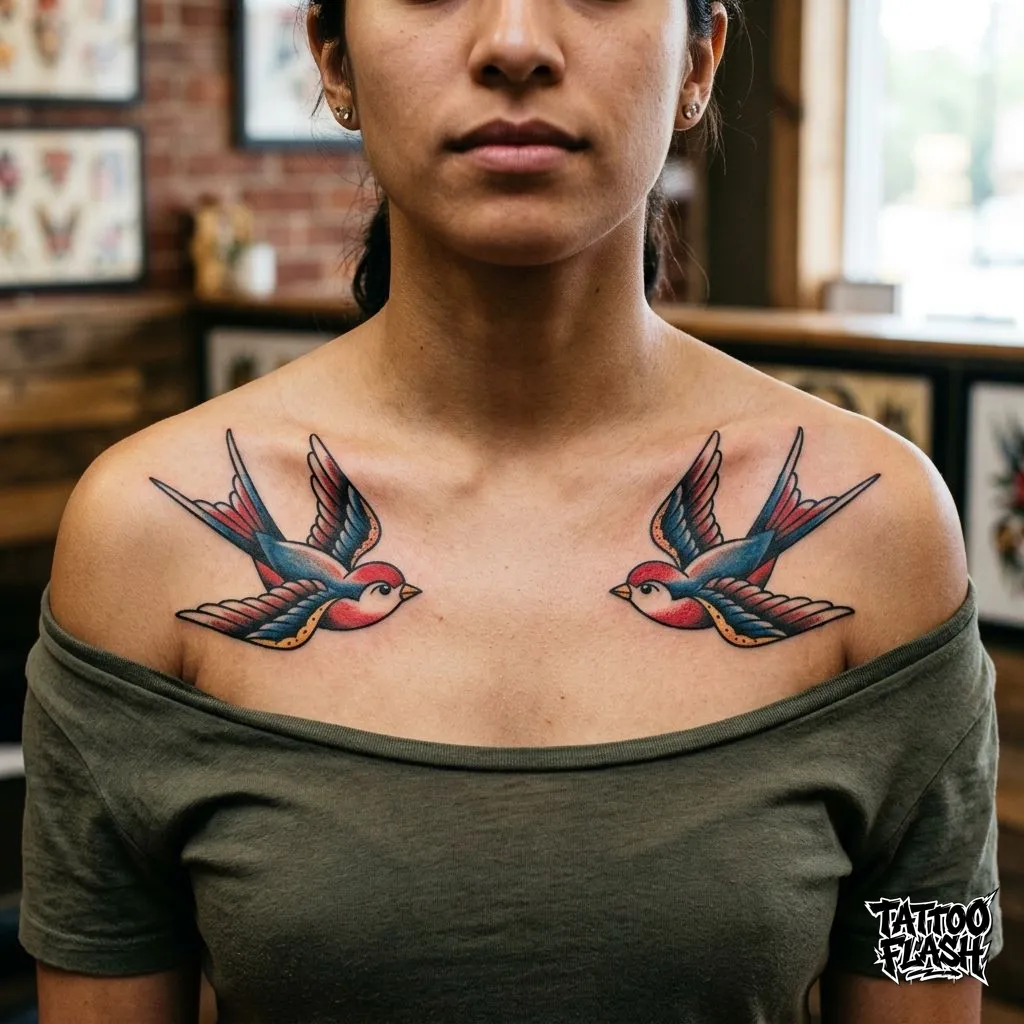 Identical traditional swallows on the chest. This placement perfectly frames the natural curvature of the clavicle.
The Clipper Ship: A massive centerpiece tattoo, the fully rigged Clipper Ship represents adventure, navigating rough waters, and the ultimate sailor's journey. Because ships require strict symmetry and large canvases to display the rigging and sails, they are generally applied to the upper back or full torso.
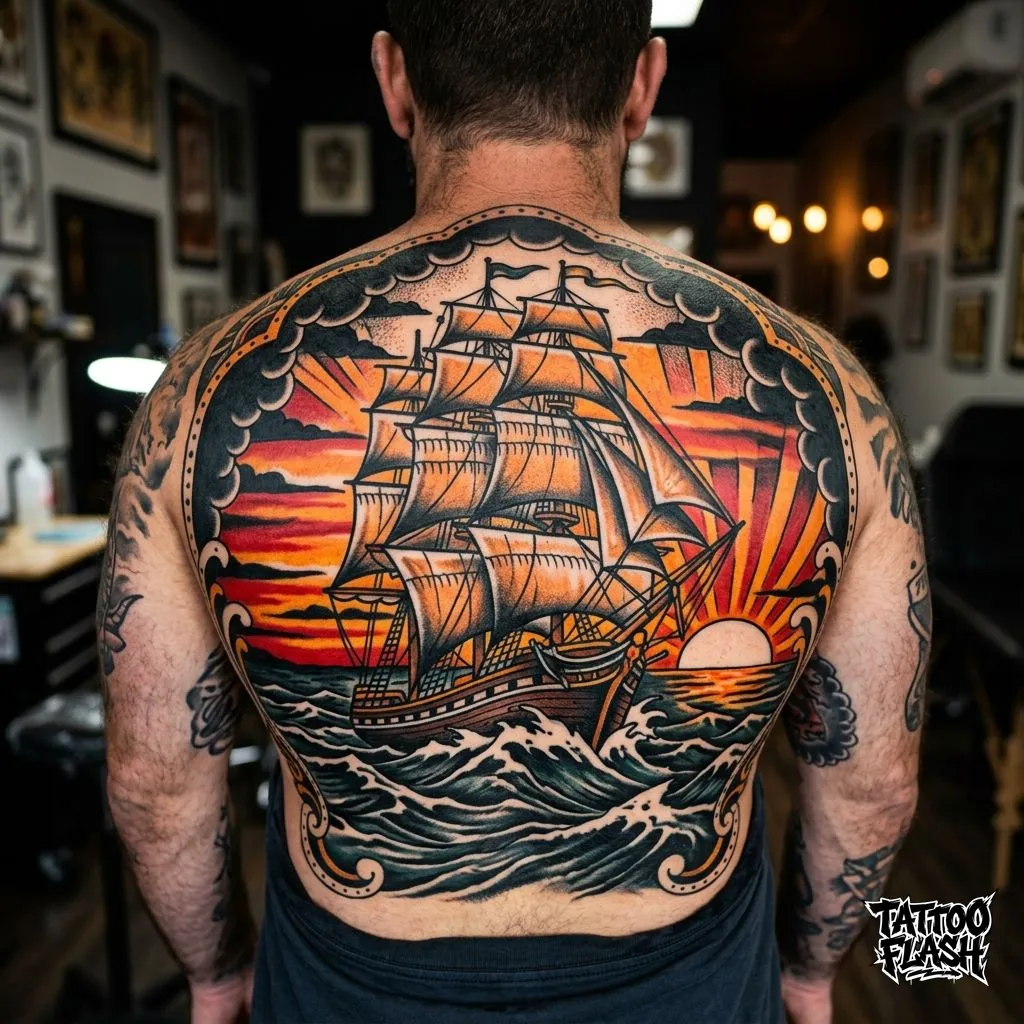 A massive traditional clipper ship on the upper back. The strict use of primary colors creates a sunset that will hold its saturation forever.
Aging and Longevity
The reason artists still practice strict American Traditional today is undeniable: it is the best aging style in the industry. As the human body ages, cells shift and skin loses elasticity. Delicate lines expand and blur together (an effect known as 'blowout').
Because Traditional uses thick, un-cluttered lines and massive blocks of color, the design maintains its structural integrity even if the lines expand half a millimeter over thirty years. Simply put, an American Traditional panther will still look like a panther when you are eighty years old.
Before you sit for a Traditional piece, compare it against Neo-Traditional and then visualize it perfectly using our fast and accurate AI Tattoo Generator.
General Tattoo Aftercare
Regardless of the style or placement you choose, aftercare is the single most critical factor in how your tattoo will heal and age. A tattoo is an open wound, and treating it with respect ensures that the ink stays vibrant for decades.
First, always listen to your specific artist. They know how their ink sets into the skin and what their preferred healing method is, whether that is "dry healing" or using a specific medical-grade adhesive barrier like Saniderm.
For the first few weeks, you must keep the tattoo completely out of direct sunlight and avoid submerging it in water. Showers are fine, but baths, pools, and the ocean are strictly off-limits until the skin has completely flaked and sealed.
Don't want a generic design?
Generate your own direction, keep the symbolism, and hand your artist a cleaner starting point.
About the contributor