Placement Focus
Back Tattoo Ideas
Explore 4 published back tattoo references. Compare upper back motifs and full back compositions, then discuss scale, orientation, and open space with your tattoo artist.
Published references
4
Styles represented
4
Published styles
Fine Line, Traditional, Japanese, and Blackwork
Published Back References
Explore 4 published back tattoo ideas. Compare the outlines and details shown, then discuss your intended size and coverage with your artist.
Upper back concepts


Full back compositions
Other back references

Concepts to adapt for this placement
3 adaptation references. These images do not show a confirmed back placement. Ask your artist to assess the composition, size, and detail for this area.
Upper back or full back: choose the composition first
A focused upper-back motif
Compare the outer silhouette, center point, and space around the shoulders. A centered motif can spread sideways without filling the lower back. Mark the shoulder width and the lower boundary you want your artist to assess.
A full-back composition
Compare how the main subject, background, and open areas work together across the full reference. A vertical composition draws attention down the back; a wider one emphasizes the shoulders. Decide which areas should stay open before adding supporting elements.
Compare these back tattoo concepts
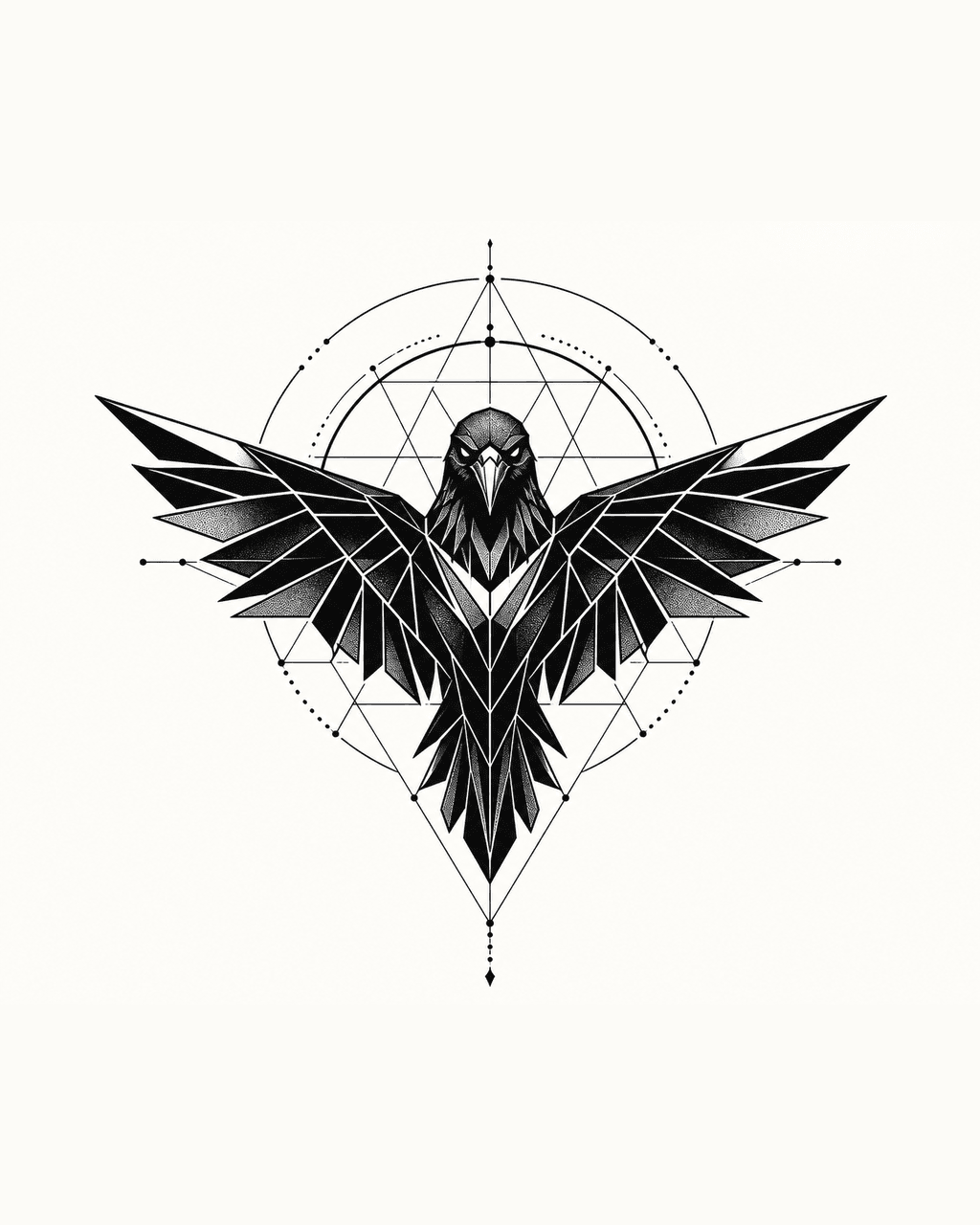
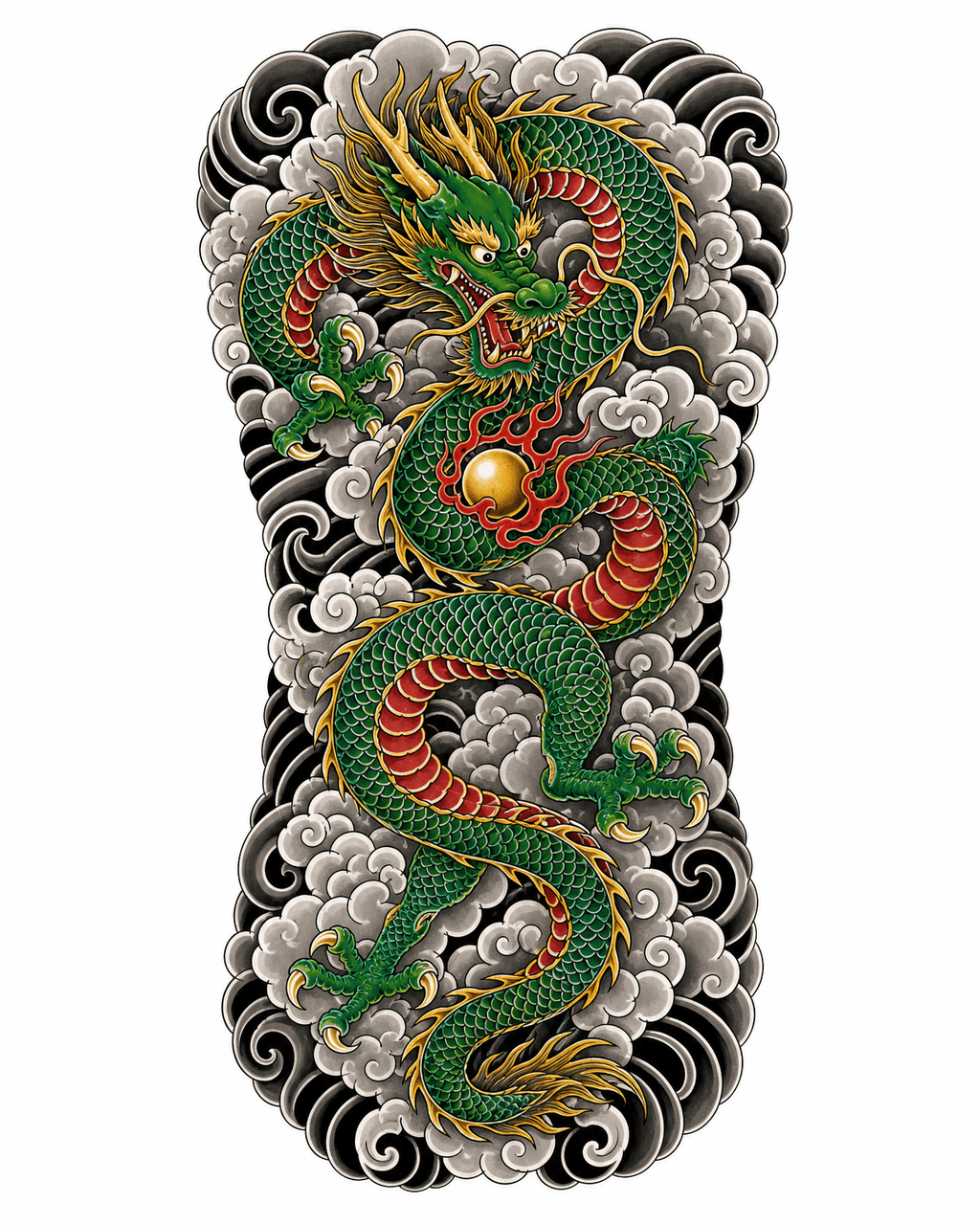
Compare the traditional eagle and geometric raven for their outer silhouettes and the balance between the left and right sides. Then compare the Japanese dragon-and-clouds concept for how the main subject and background share the composition. Use these differences to explain your preferred coverage and direction to your artist.
Traditional Eagle Back Tattoo Concept
The eagle's feathered wings spread across the shoulders, while a shield, arrows, and a leafy branch extend below the bird. Its head turns to one side; the two sides carry different details. Open skin remains around the outer edges and below the composition.
Geometric Raven Tattoo Concept for the Upper Back
The raven faces forward with angular wings extending to either side, a narrow pointed tail, and circular linework behind its head. White gaps divide the black facets and leave the outer silhouette open. Unlike the eagle mockup, this is flat artwork: upper-back placement is an adaptation to discuss, not a position shown in the image.
Japanese Dragon and Clouds Tattoo Concept for the Full Back
The green dragon winds vertically through a tall field of grey clouds around a flaming pearl. Its curved body and layered background fill more of the interior than the raven's separated facets; white space mainly frames the outside. This is a flat concept for possible full-back adaptation, not a full-back body preview.
The eagle is an AI-generated body mockup, not evidence of a completed or healed tattoo. The raven and dragon are flat artwork, so neither establishes physical size or how the design fits a body.
What to include in your artist brief
State the area you want to cover, the main subject, the intended orientation, and the details you want your artist to retain or simplify. Mark the top, bottom, and side boundaries, and identify the open areas you want to preserve. Bring approximate width and height rather than treating any reference image as a measured placement plan.