An exploration of the American Traditional anchor tattoo, tracing its meaning from proving transatlantic sailor voyages to representing modern stability.
More Than Just Sailors
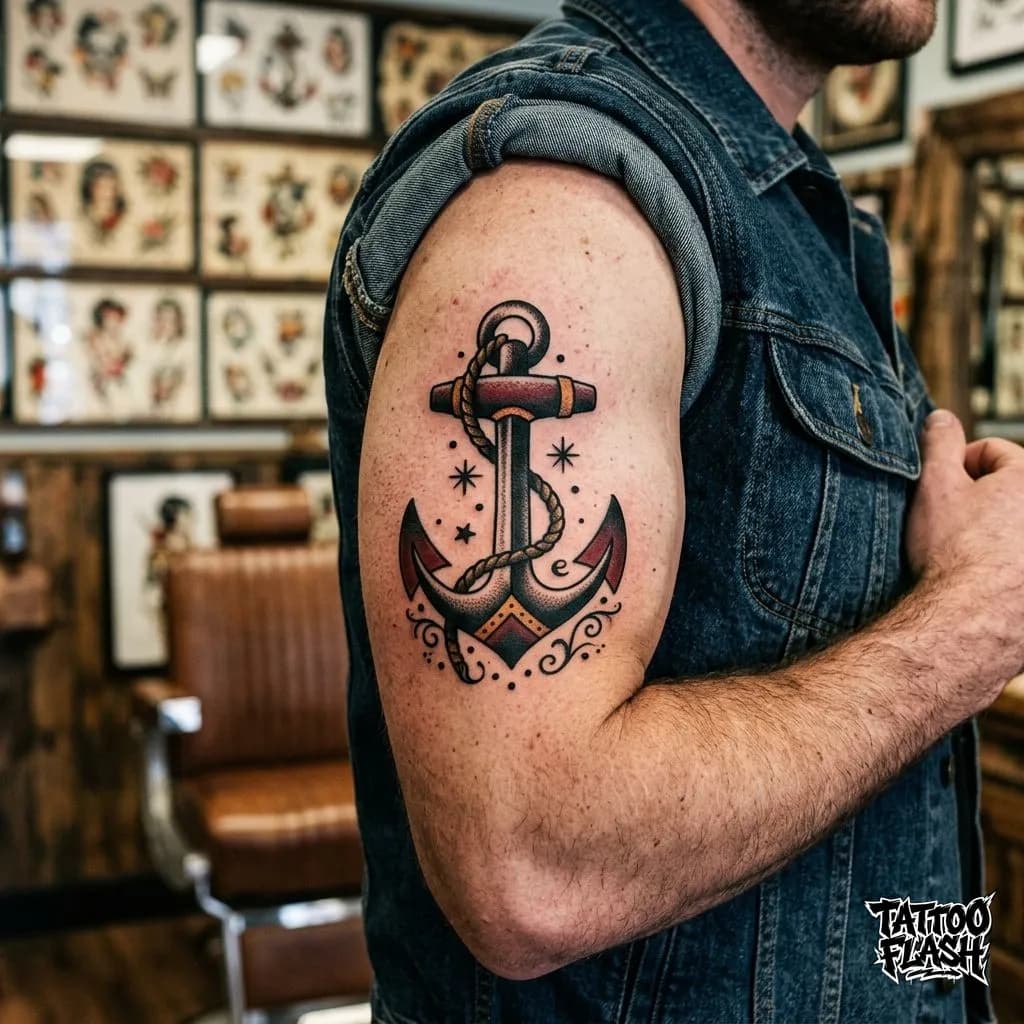
If you review our overview of American Traditional Tattoos and the broader Tattoo Meanings archive, you'll see that the anchor is one of the oldest and most widely recognized symbols in the history of Western tattooing. But the anchor is not just a relic of naval history. While its origins are deeply tied to sailors who successfully crossed the Atlantic Ocean, the modern anchor has evolved far past its Old School roots, adapting to almost every single tattoo style in existence.
At its core, an anchor represents stability, hope, and remaining grounded during chaotic times. A ship uses an anchor to prevent drifting off course during a storm. Metaphorically, clients use the anchor tattoo to represent the people, beliefs, or inner strength that keeps them from capsizing when life becomes turbulent.
Evolving Through Modern Styles
While a thick, bold Traditional anchor will always look fantastic (because "bold will hold"), modern tattoo artists have completely reimagined what this nautical symbol can look like by applying modern techniques. Let's look at how the anchor adapts across different genres:
The Fine-Line Anchor: In direct opposition to the heavy blackwork of the 1900s, Fine-line tattooing reduces the anchor to its absolute geometric minimum. By using a single needle, the design becomes light, airy, and incredibly subtle. This is exceptionally popular for couples or siblings getting matching pieces, frequently placed in highly visible but discreet locations like the inner wrist or behind the ear.
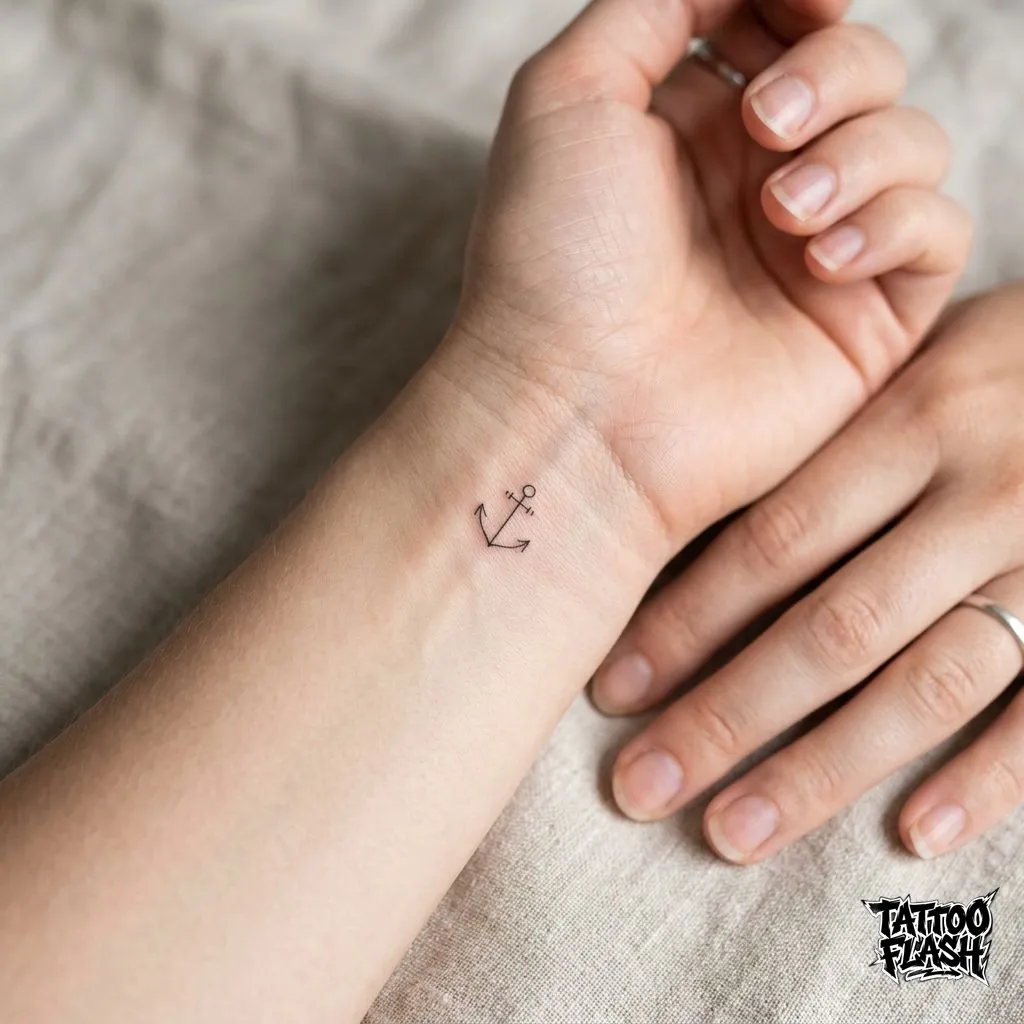 A minimalist fine-line anchor on the inner wrist. This delicate approach is perfect for those who want the symbolic meaning without a heavy commitment to black ink.
The Hyper-Realism Anchor: Advancements in rotary machines and soft shading techniques have allowed artists to treat skin like a canvas for photographic reality. A realism anchor isn't just a silhouette; it features distinct textures like flaking iron rust, heavy braided ropes, and oceanic grit. This style requires a larger canvas, making the chest or outer bicep ideal locations.
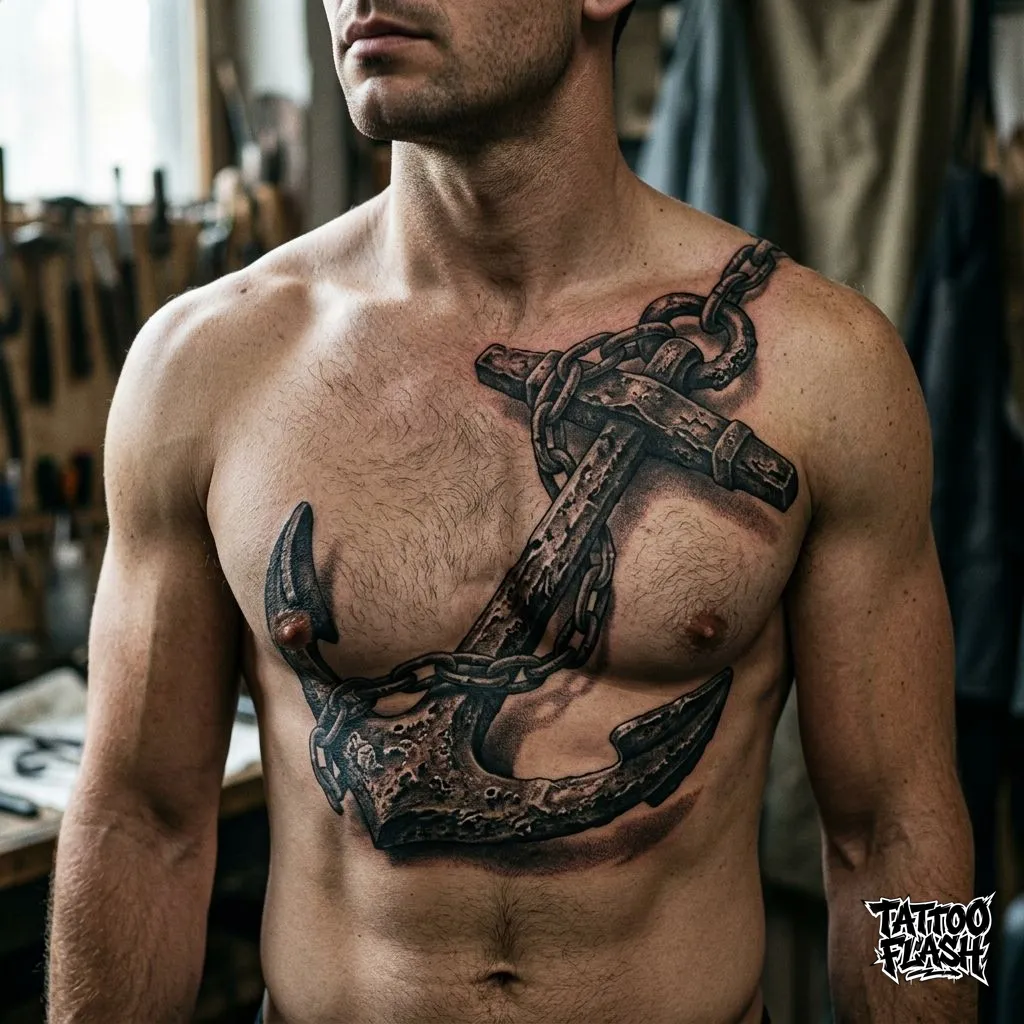 A massive hyper-realism iron anchor on the chest. The artist has captured the specific texture of rusted metal and heavy shadow.
The Watercolor Anchor: Watercolor tattooing is known for abandoning strict boundaries. By combining a rigid, structured silhouette of the anchor with free-flowing, unbound splashes of bright cyan and blue ink, the tattoo perfectly captures the dynamic, unpredictable nature of the ocean fighting against the unmoving iron.
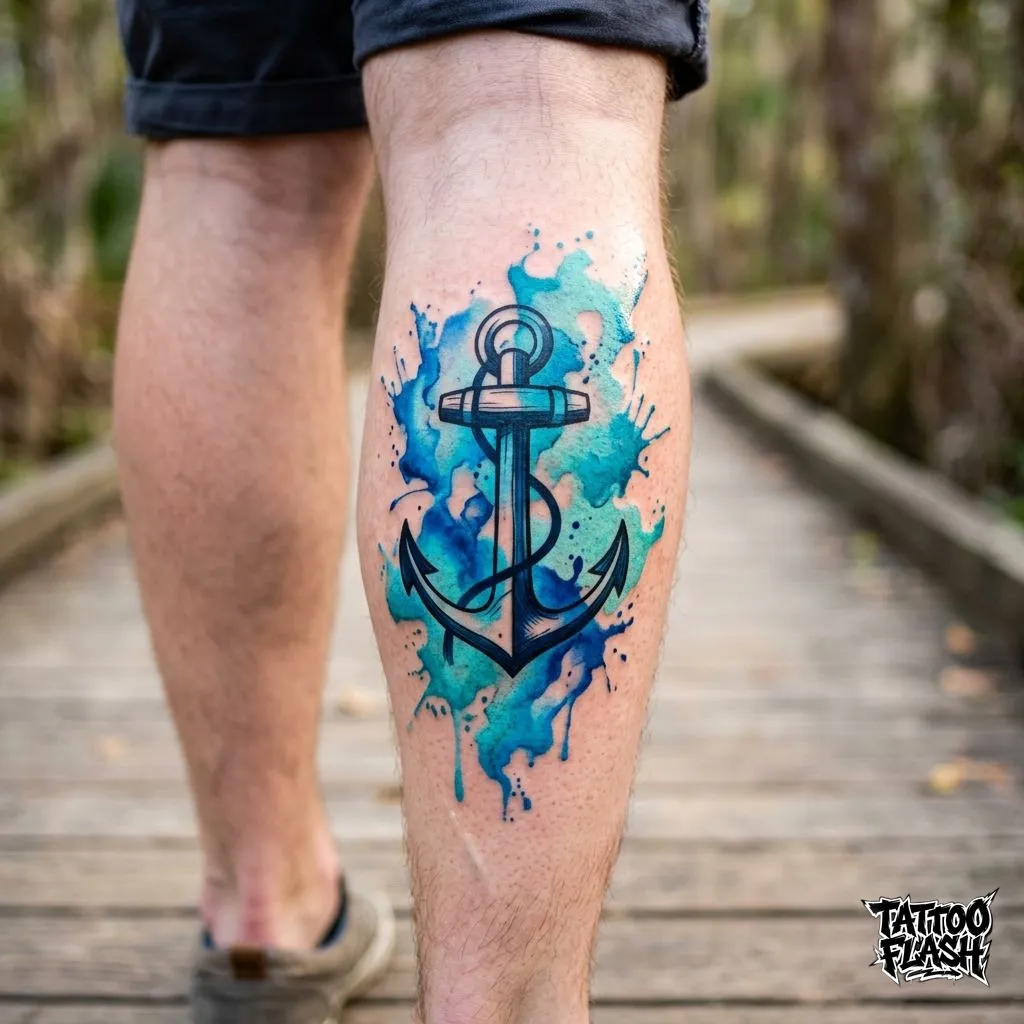 A vibrant watercolor anchor on the calf. The chaotic splashes of color perfectly offset the rigidly structured lines of the anchor itself.
Y2K Blackwork and Geometry: Modern Blackwork frequently takes classic symbols and injects them with heavy, aggressive geometry. This approach also reads especially well on a long forearm panel. Instead of standard curves, a blackwork anchor might utilize sharp angles, heavy negative space cutouts, and pure black saturation. It takes a historical symbol and gives it an edgy, futuristic update.
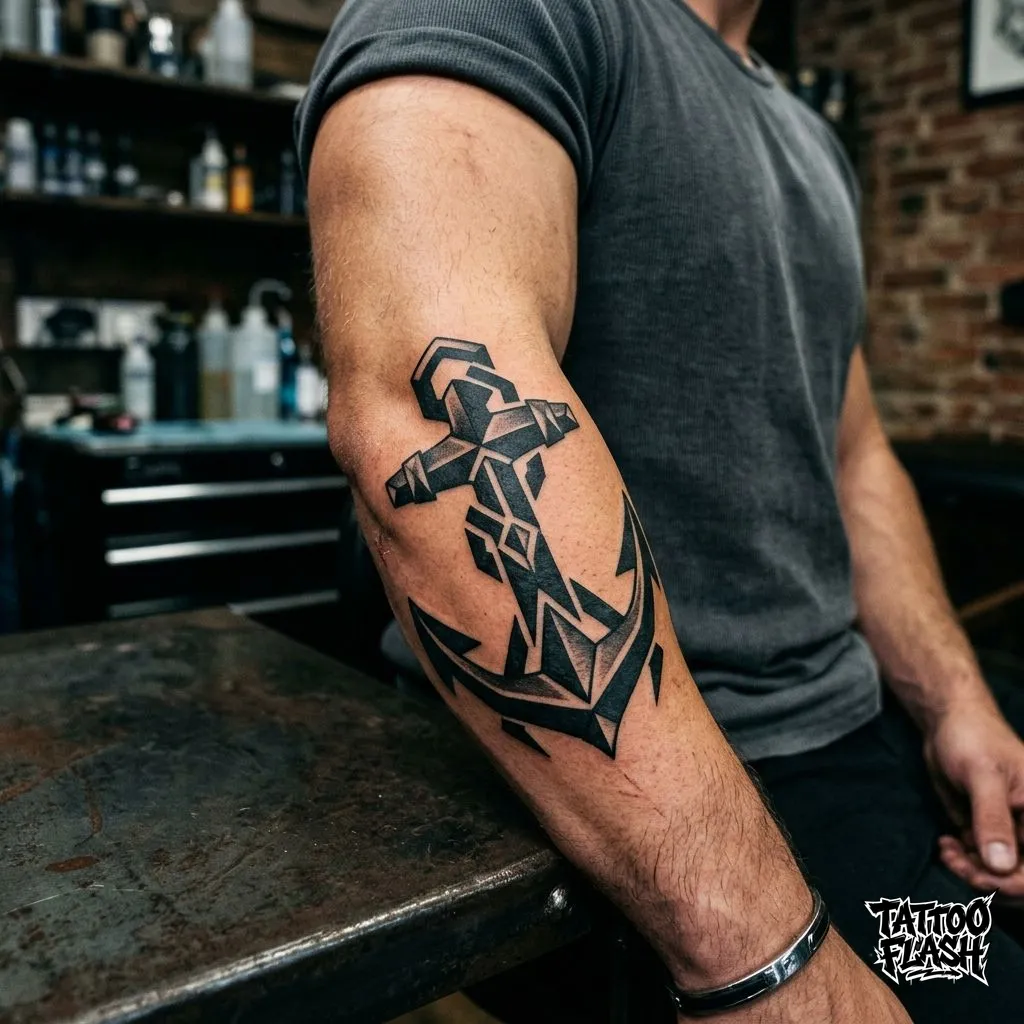 A geometric blackwork anchor on the forearm. The heavy use of sharp angles and solid black fill gives this classic design a highly modern edge.
A Symbol For Everyone
You do not need to be a sailor, a navy veteran, or even live near the ocean to wear an anchor. The desire for stability is a universal human experience. Whether you choose a tiny fine-line representation of your family, or a massive realism piece representing your triumph over a difficult period, the anchor remains a permanent testament to holding your ground.
Are you ready to see how an anchor would look in your preferred style? Test out different locations and specific concepts immediately using our AI Tattoo Generator.
General Tattoo Aftercare
Regardless of the style or placement you choose, aftercare is the single most critical factor in how your tattoo will heal and age. A tattoo is an open wound, and treating it with respect ensures that the ink stays vibrant for decades.
First, always listen to your specific artist. They know how their ink sets into the skin and what their preferred healing method is, whether that is "dry healing" or using a specific medical-grade adhesive barrier like Saniderm.
For the first few weeks, you must keep the tattoo completely out of direct sunlight and avoid submerging it in water. Showers are fine, but baths, pools, and the ocean are strictly off-limits until the skin has completely flaked and sealed.
Don't want a generic design?
Generate your own direction, keep the symbolism, and hand your artist a cleaner starting point.
About the contributor