Learn where fine-line tattoos work best, what ages well, and how to keep a delicate design readable before you generate or book.
The Rise of Fine-Line Tattooing
If you have spent any time looking at tattoos on social media over the past five years, you have undoubtedly noticed a massive shift away from the bold, dark aesthetics of the 90s towards something significantly more delicate. Welcome to the era of Fine-line tattooing. By utilizing ultra-tight needle configurations—often a literal "single needle" (1RL)—artists can achieve a level of elegance and micro-detail that mimics a graphite pencil sketch.
This guide breaks down what visually defines the style, the reality of how it ages, and which placements work best to preserve those delicate details. If you want to see how this style contrasts with heavier aesthetics, check out our broader Tattoo Styles Explained guide and compare it directly against Minimalist work.
Defining the Aesthetic
Unlike American Traditional which relies on massive, heavy "whip shading" and thick outlines to establish structure, fine-line work lives and dies by negative space. By limiting the amount of black ink deposited in the skin, the artist allows the natural skin tone to become part of the shading gradient.
This makes fine-line exceptionally good for botanical work, micro-realism portraits, abstract ongoing line art, and deeply intricate script. Because the needle is so incredibly thin, it causes significantly less trauma to the dermis upon entry. As a result, many clients report that fine-line tattoos hurt considerably less than heavy Blackwork, feeling more like an aggressive scratch rather than a severe wound.
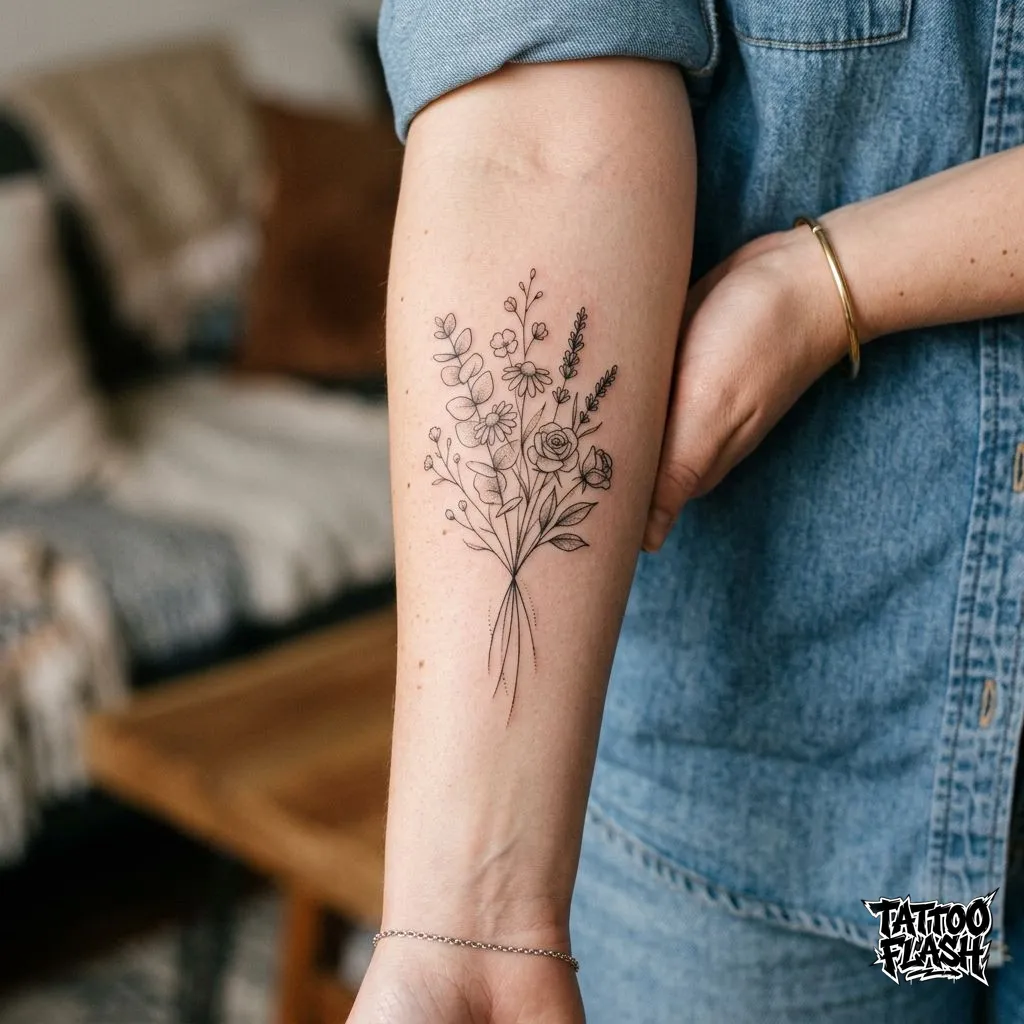 A stunning fine-line floral bouquet on the forearm. Notice how the negative space allows the piece to look airy rather than dense.
The Reality of Aging and Fade Risk
The elegance of fine-line work is precisely its greatest vulnerability. The human body is a living, breathing ecosystem. Over the decades, white blood cells continually attack tattoo pigment, breaking it down and carrying it away to the lymph nodes.
Because fine-line deposits significantly less ink at a slightly shallower depth than heavy traditional work, it is highly susceptible to fading. A micro-realism portrait the size of a quarter might look incredible fresh, but within five years, the microscopic lines often blur together or drop out entirely. This is why you must protect fine-line work from UV exposure with fanatic dedication.
Best Placements for Fine-line Work
To give a fine-line tattoo its best chance of survival, you must place it on a stable canvas. Avoid high-friction areas or places where the skin constantly stretches and folds over joints, such as the hands, feet, inner elbows, or knees.
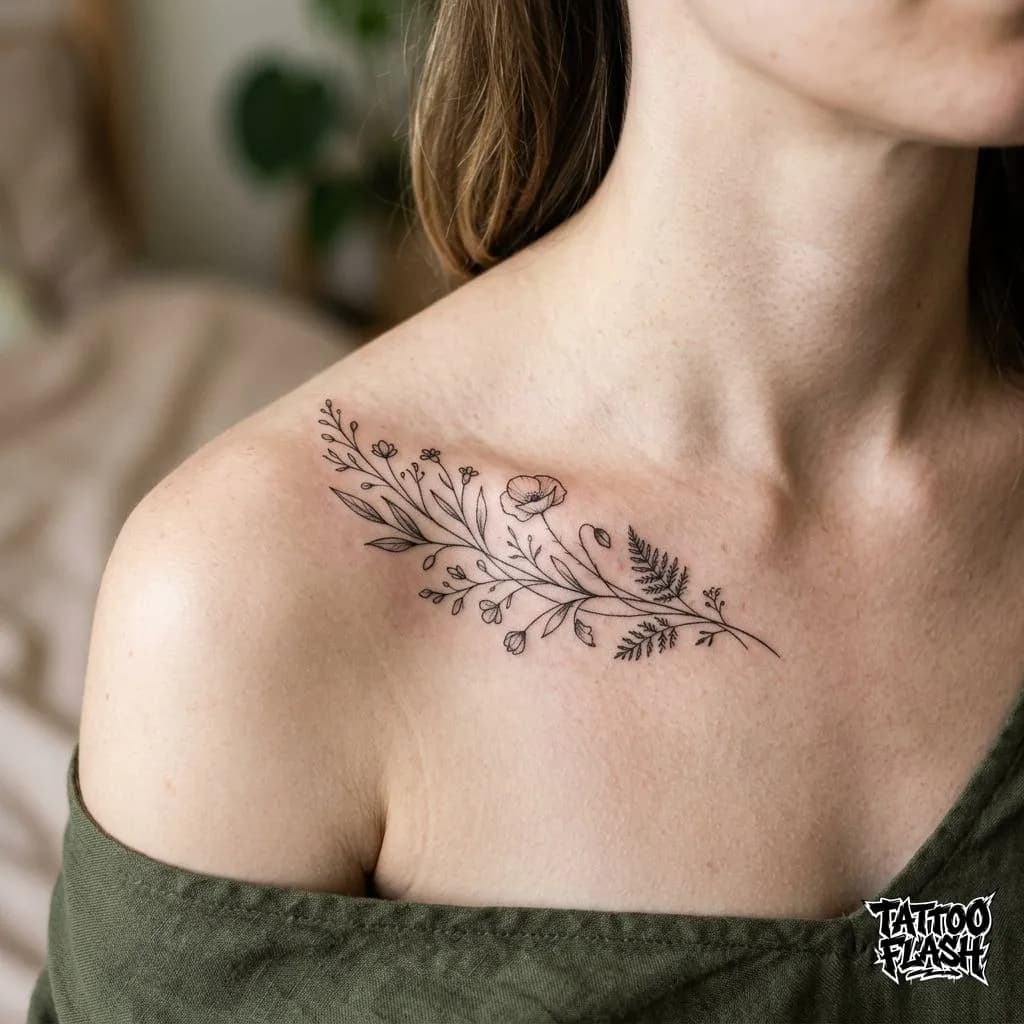
The Inner Forearm: This is arguably the perfect canvas for fine-line. The skin is relatively taut, rarely subjected to harsh daily friction, and easy to protect from the sun. The gentle curvature of the arm perfectly complements botanical stems and continuous line art. If you want a more jewelry-like version of the same delicacy, the collarbone is the next best option.
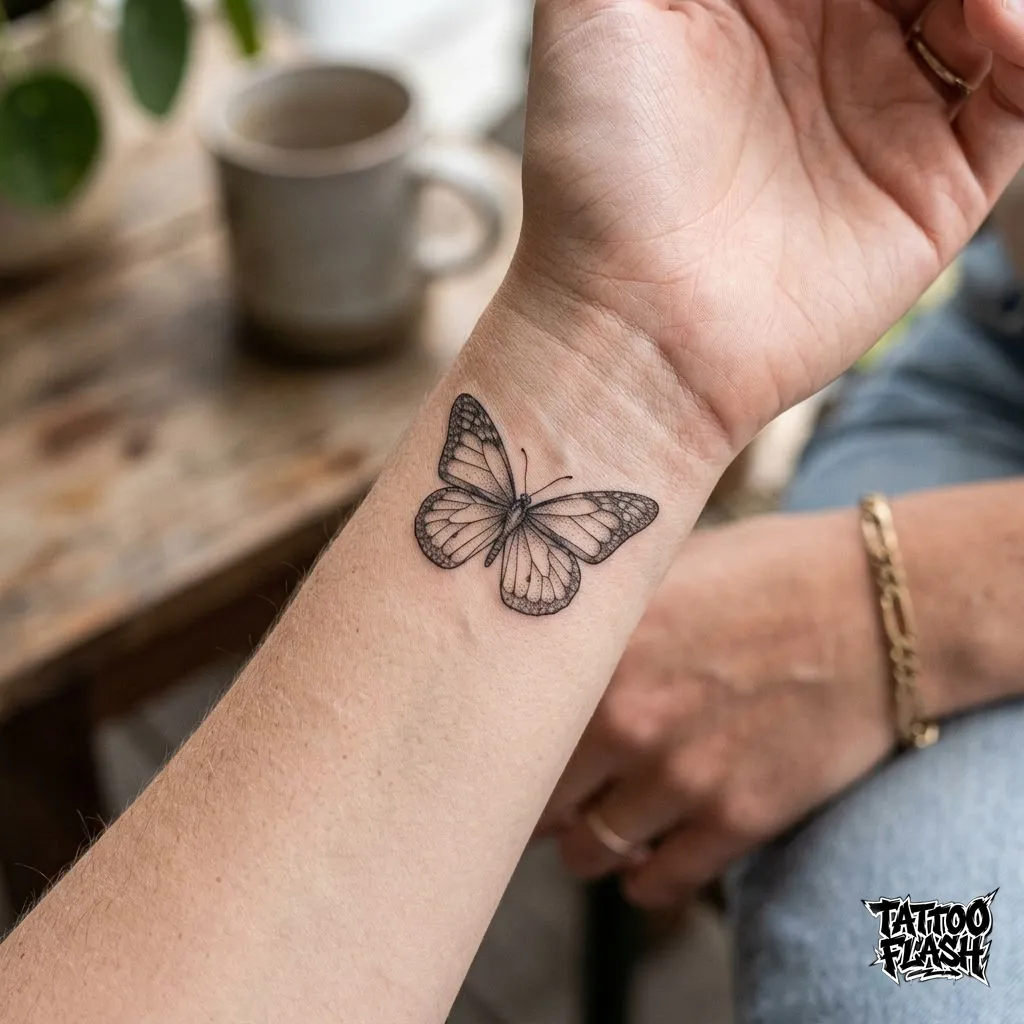 A micro-realism butterfly sitting on the wrist. While beautiful, this proximity to the hand risks fading faster due to frequent washing.
The Ribs and Sternum: While the ribs register incredibly high on the Tattoo Pain Chart, they are an excellent canvas for fine-line survival. The core of your torso sees almost zero direct sunlight most of the year, preventing the rapid UV degradation that destroys thin lines.
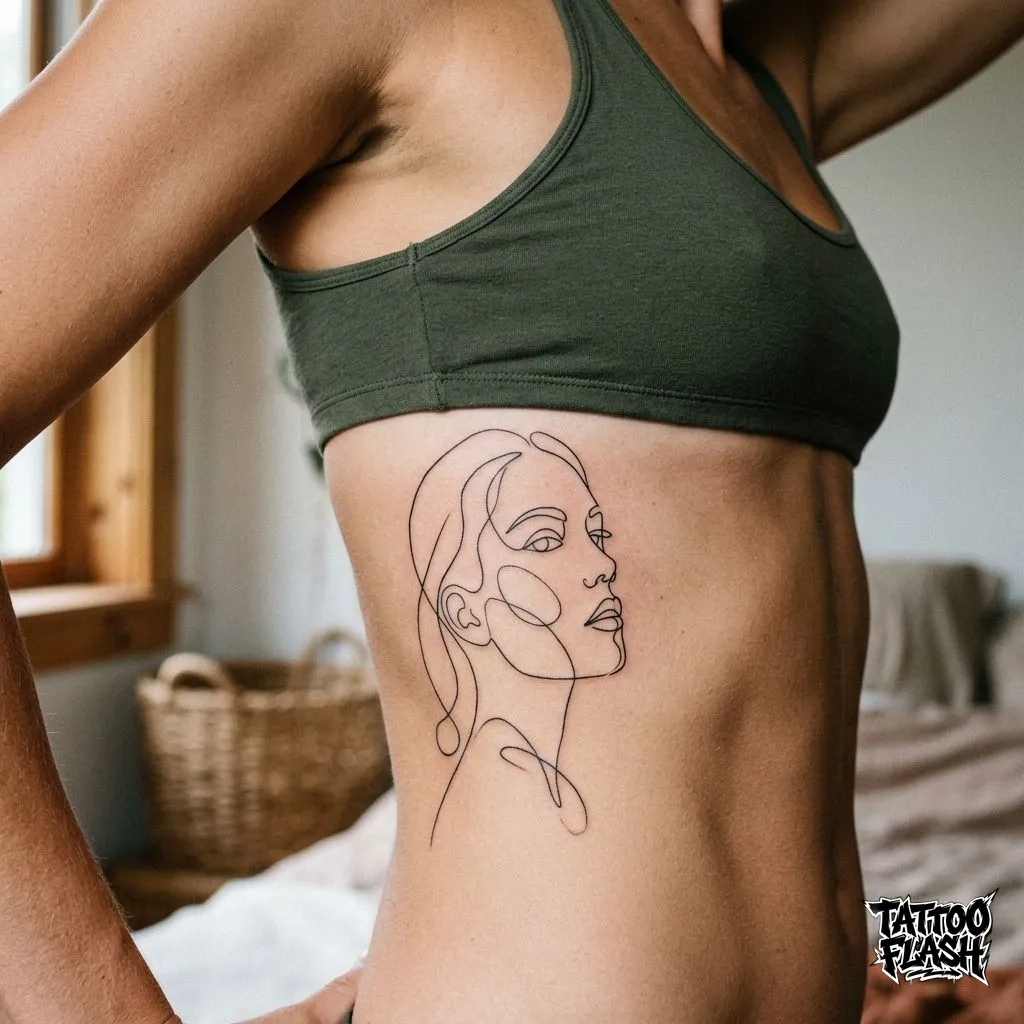 Abstract continuous line art mapped perfectly to the curvature of the ribs. The lack of sun exposure here will keep the thin lines crisp for a decade.
The Nape (Back of the Neck): If you want something discreet but elegant, the nape is an excellent choice. It is a lower-pain area of the neck, and the delicate nature of fine-line ensures the tattoo won't look overwhelmingly bold above the collar.
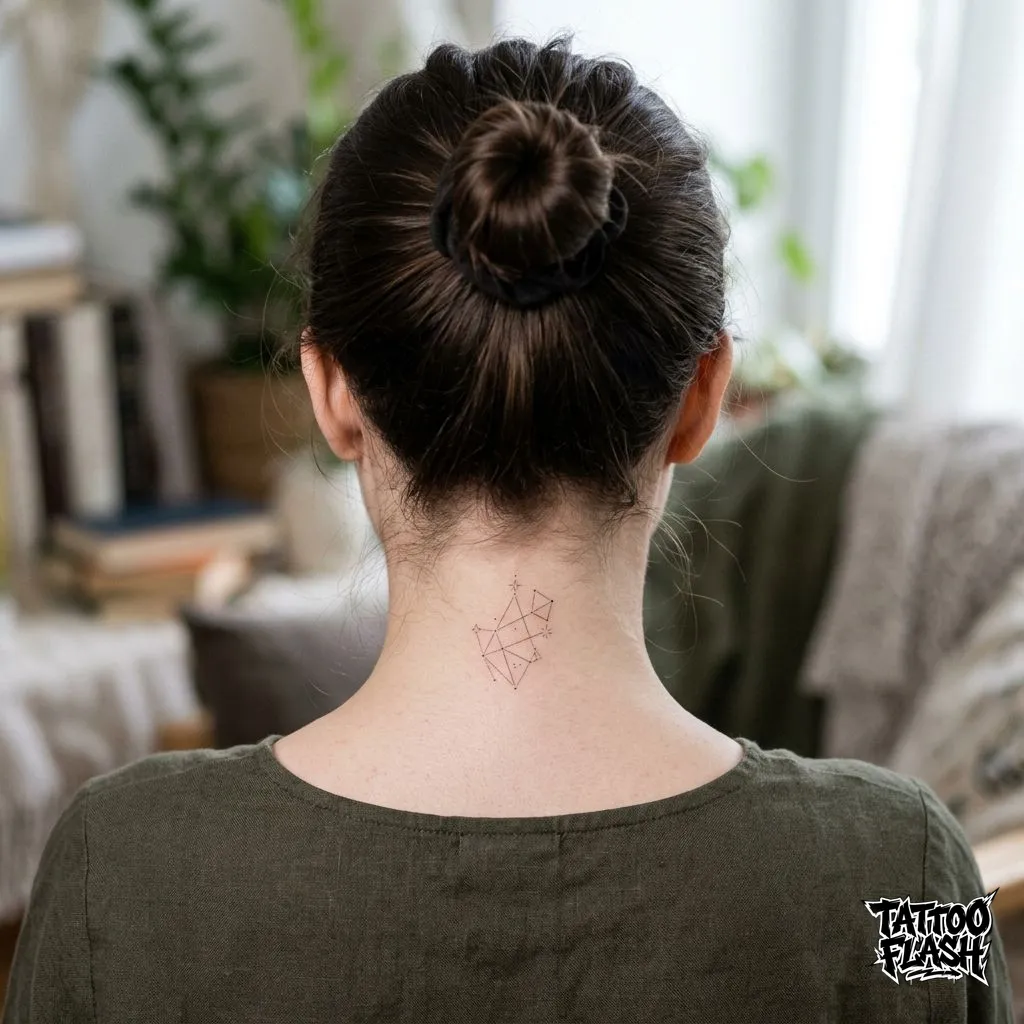 A minimalist geometrical constellation hidden beneath the hairline. Thin needles make this low-impact piece heal quickly.
The Artist is Crucial
Executing a perfect fine-line tattoo requires an incredibly steady hand. When a needle is the thickness of a strand of hair, every single wobble, hesitation, or inconsistent pressure depth is immediately visible in the healed skin. There is no thick black shading to hide mistakes behind.
When booking a fine-line artist, it is vital that you ask to see pictures of their healed work—specifically work that has settled for over a year. Many artists can make a fine-line tattoo look incredible right after wiping the stencil, but mastering depth control to prevent ink dropout or blowouts separates the amateurs from the professionals.
Are you ready to visualize your fine-line masterpiece? Test out different locations and concepts using our immediate AI Tattoo Generator.
General Tattoo Aftercare
Regardless of the style or placement you choose, aftercare is the single most critical factor in how your tattoo will heal and age. A tattoo is an open wound, and treating it with respect ensures that the ink stays vibrant for decades.
First, always listen to your specific artist. They know how their ink sets into the skin and what their preferred healing method is, whether that is "dry healing" or using a specific medical-grade adhesive barrier like Saniderm.
For the first few weeks, you must keep the tattoo completely out of direct sunlight and avoid submerging it in water. Showers are fine, but baths, pools, and the ocean are strictly off-limits until the skin has completely flaked and sealed.
Don't want a generic design?
Generate your own direction, keep the symbolism, and hand your artist a cleaner starting point.
About the contributor