Compare major tattoo styles by look, placement fit, detail level, and artist handoff quality so you can choose a direction before generating or booking.
Finding Your Visual Language
Walking into a tattoo shop and asking for "a tattoo of a rose" is like walking into a restaurant and asking for "food." The subject matter is only half of the equation; the style in which it is executed determines how the tattoo looks, how it ages, and what emotion it conveys.
The tattoo industry has evolved rapidly over the last century, fracturing into dozens of highly specialized aesthetics. Some artists spend their entire careers mastering a single style, ensuring perfection in its specific rules regarding line weight, color theory, and shading. Understanding these core styles is the first step in communicating effectively with your artist and ensuring your vision matches their portfolio.
For an extensive breakdown of where these different styles look best on the body, refer back to our core Tattoo Placement Guide. If you want the full hub, browse the Tattoo Styles archive before choosing one direction.
Traditional (American Traditional or Old School)
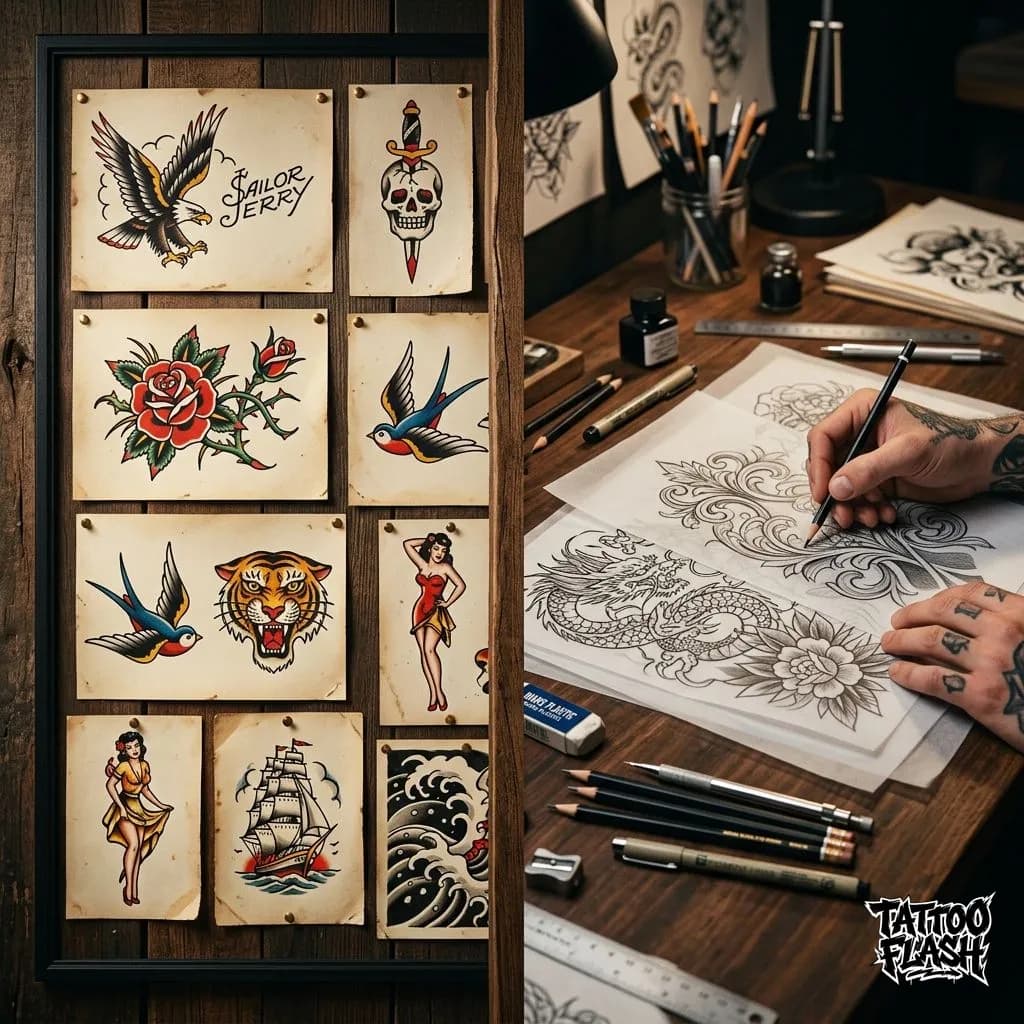
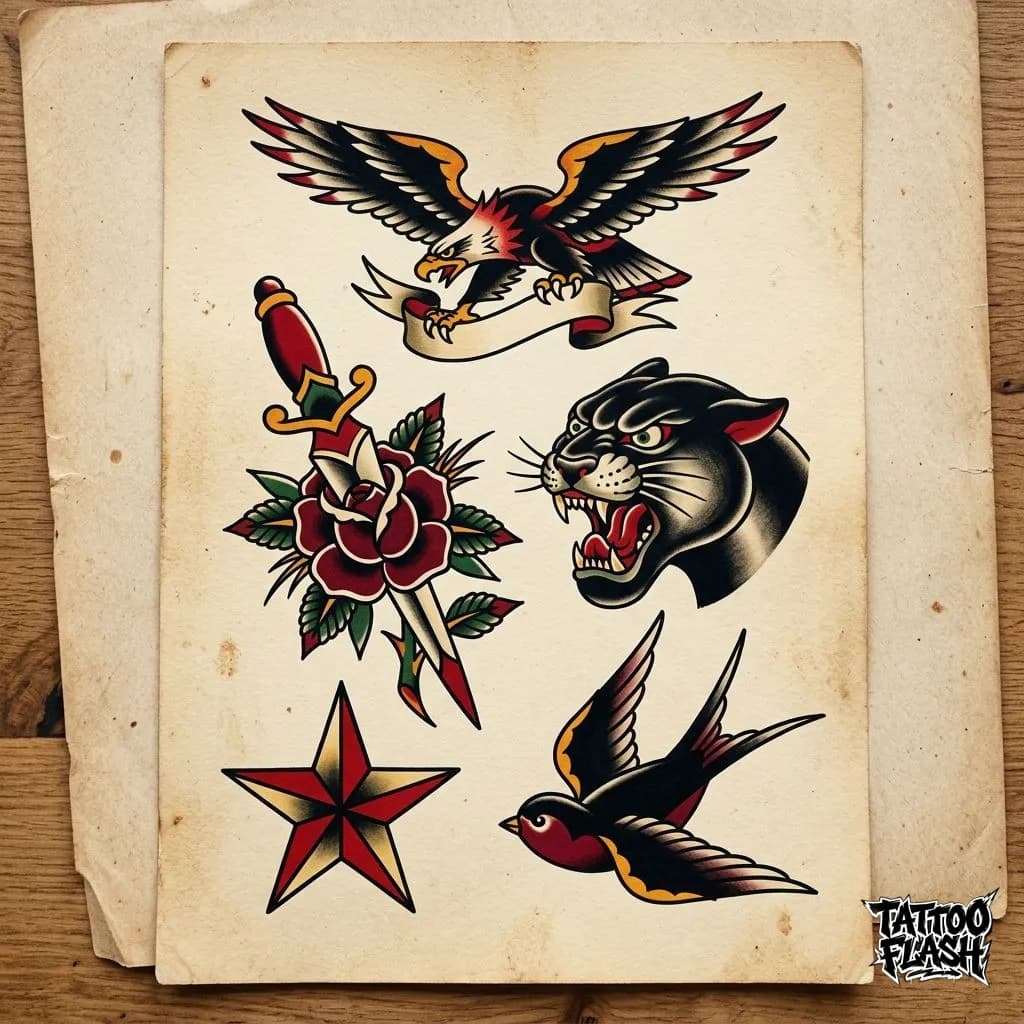
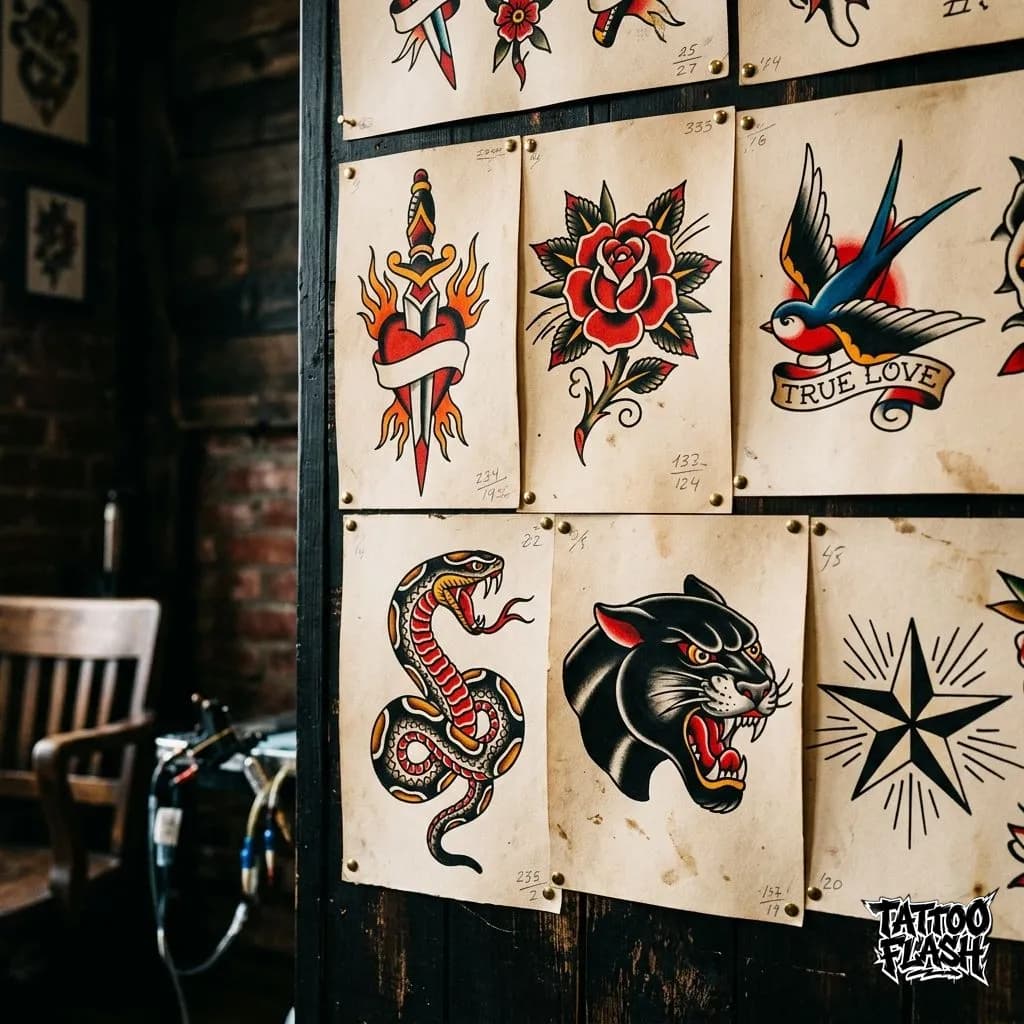
American Traditional is the bedrock of Western tattooing. Born on the high seas and popularized by icons like Sailor Jerry in the mid-20th century, this style was built for one primary purpose: longevity. The rules are strict: incredibly bold black outlines, heavy black shading (whip shading), and a limited, highly saturated color palette consisting mainly of primary reds, greens, yellows, and solid blacks.
Because the lines are so thick and the colors so bold, Traditional tattoos age better than almost any other style. They are designed to be legible from across the room, avoiding the "muddled blur" that can plague overly complex designs decades later.
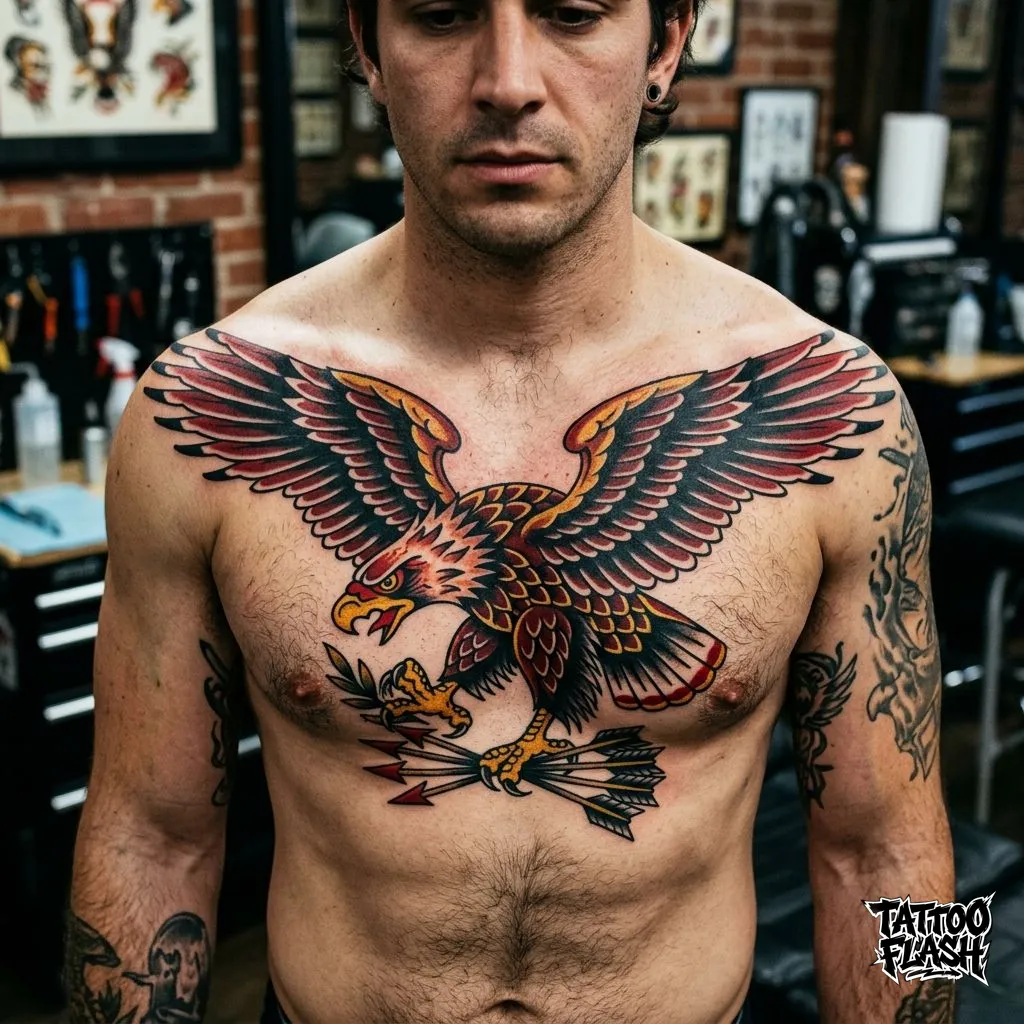 A massive traditional eagle on the chest. Notice the strictly limited color palette and the incredibly bold, structural outlines.
Fine-Line and Micro-Realism
On the complete opposite end of the spectrum sits Fine-line tattooing. Enabled by modern tattoo machines and ultra-tight needle configurations (often literally a single needle), this style focuses on elegance, minimalism, and high levels of negative space.
Fine-line tattoos often depict botanicals, delicate script, or micro-portraits. They appeal to clients wanting a piece that feels like a delicate pencil sketch rather than a bold sticker. However, the tradeoff is longevity. Because the lines are so incredibly thin and the ink is deposited shallower in the dermis, fine-line tattoos fade much faster and are more susceptible to sun damage than traditional work.
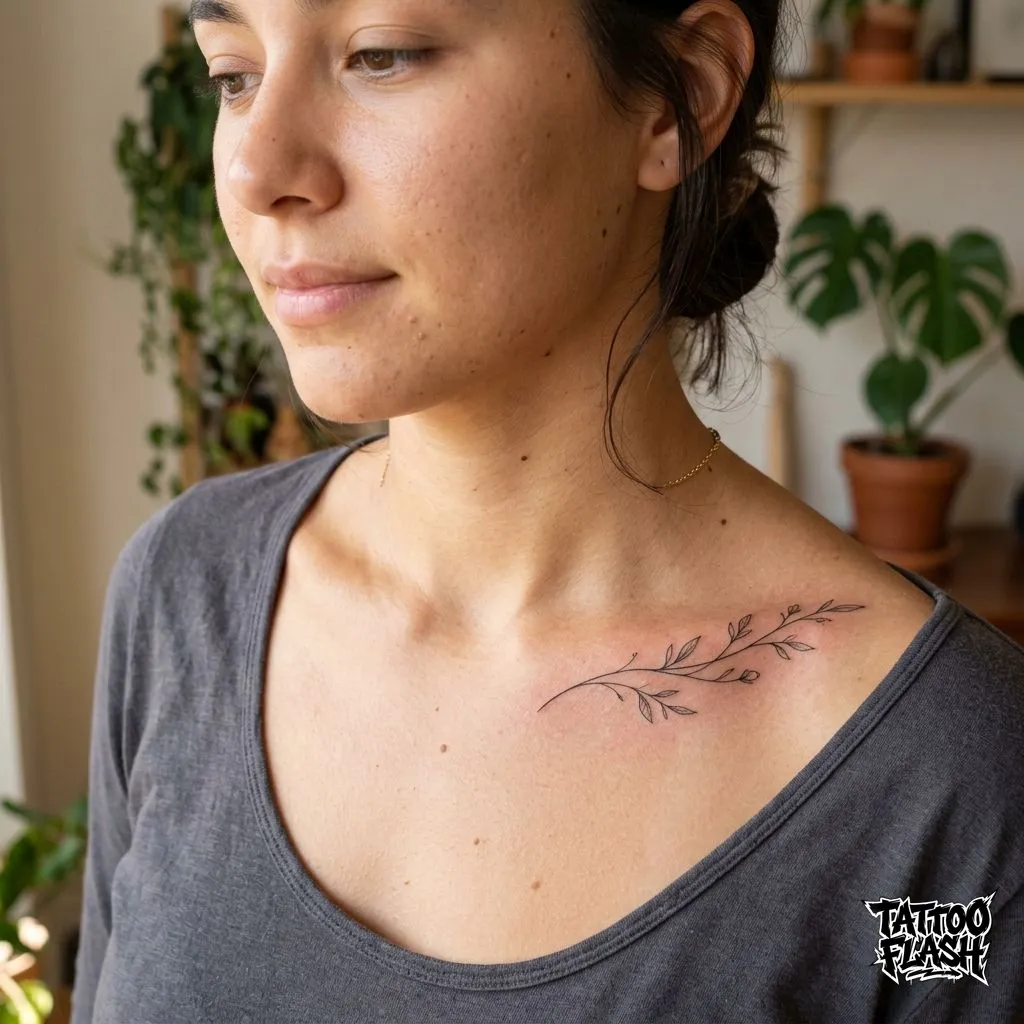 A delicate fine-line botanical stem. The high negative space and single-needle execution give it an airy, elegant aesthetic.
Realism (Black & Grey or Color)
Realism eschews hard outlines entirely, relying exclusively on layered shading and precise contrast mapping to create the illusion of a 3D photograph on the skin. This style requires masterful understandings of light sources, volumetric shading, and anatomical structure.
Black and Grey realism often utilizes "wash" techniques, diluting the black ink with distilled water to create incredibly soft transitional gradients. Color realism is even more challenging, requiring the artist to blend opaque pigments directly in the skin to match exact photographic tones.
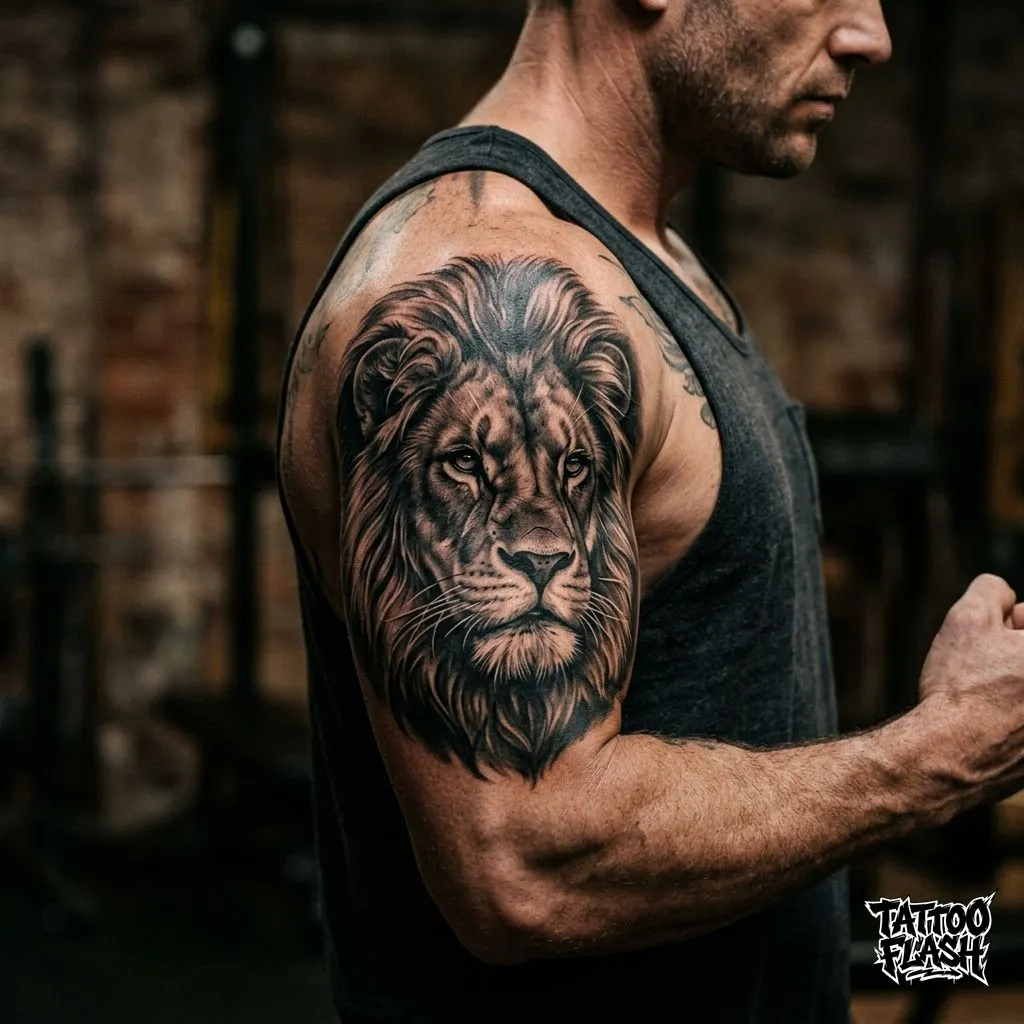 Hyper-realistic lion portrait. The absence of strict black outlines forces the artist to build shape entirely through layered shading.
Geometric and Blackwork
Geometric tattoos and Blackwork often overlap in modern portfolios. Blackwork is a broad term that encompasses any tattoo utilizing exclusively black ink, but in modern contexts, it heavily overlaps with Geometric and Ornamental styles. These pieces rely on massive contrasts between solid, packed black ink and untouched skin.
Geometric tattoos specifically use mathematically perfect patterns like mandalas, metatron's cubes, or repetitive dot-work (stippling) to create optical illusions or armor-like compositions. This style demands an incredibly steady hand, as any wobble in a perfectly straight geometric line destroys the illusion.
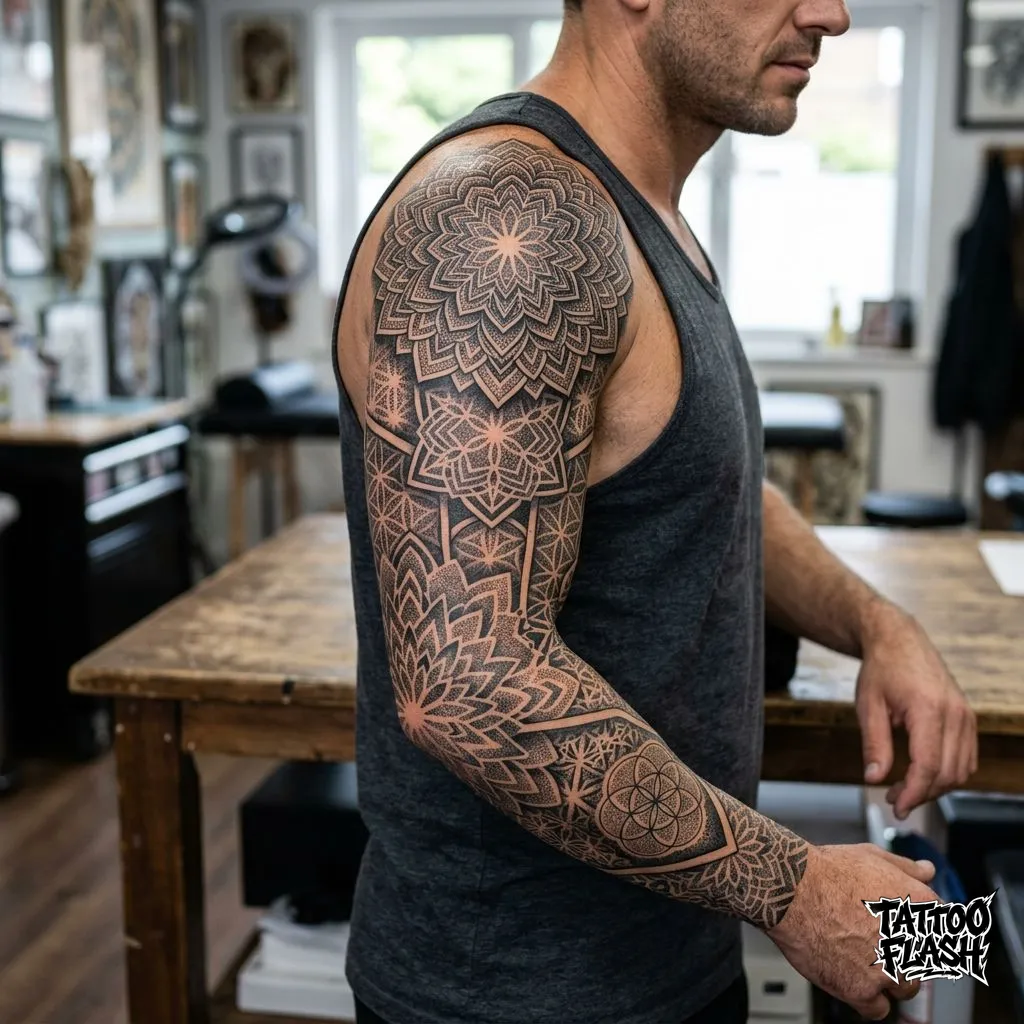 A full geometric sleeve utilizing dot-work (stippling) to create soft gradients within harsh geometric borders.
Mixing Styles and Making A Decision
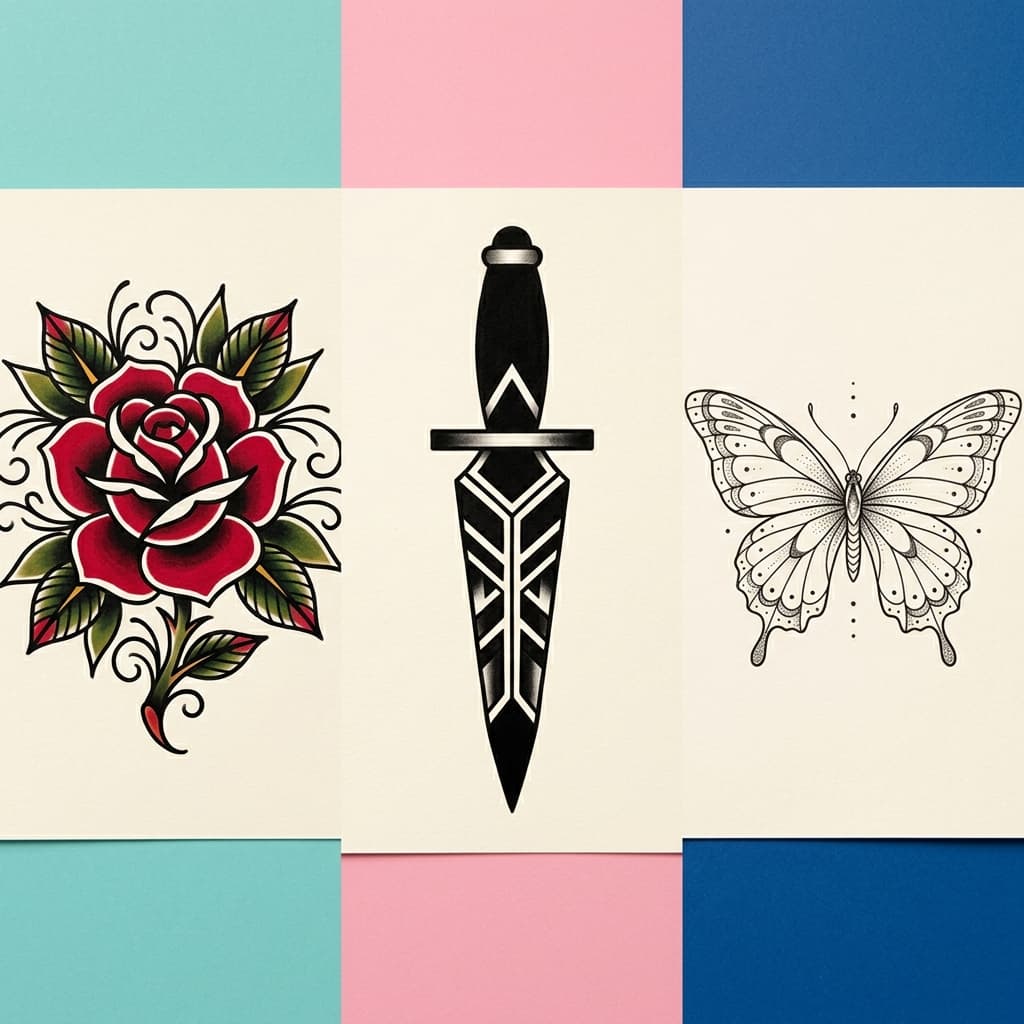
While purists argue against mixing styles, modern tattooing has seen incredible fusions. For instance, Neo-Traditional takes the bold lines of traditional but injects illustrative complexity and diverse color palettes. Minimalist work strips ideas down to their most essential silhouette, while Micro Realism compresses photorealistic detail into an unexpectedly small footprint. "Trash Polka" aggressively mixes realism with chaotic graphic design elements.
Before committing to a style, look at photographs of healed tattoos (preferably 5+ years old) rather than just fresh, highly edited Instagram photos. This will show you the reality of how ink expands and settles in the human body. Have a specific subject in mind? See it reimagined across all these different styles instantly using our AI Tattoo Generator.
Don't want a generic design?
Generate your own direction, keep the symbolism, and hand your artist a cleaner starting point.
About the contributor

Editorial Contributor
TattooFlash Editor contributes to the TattooFlash editorial library.