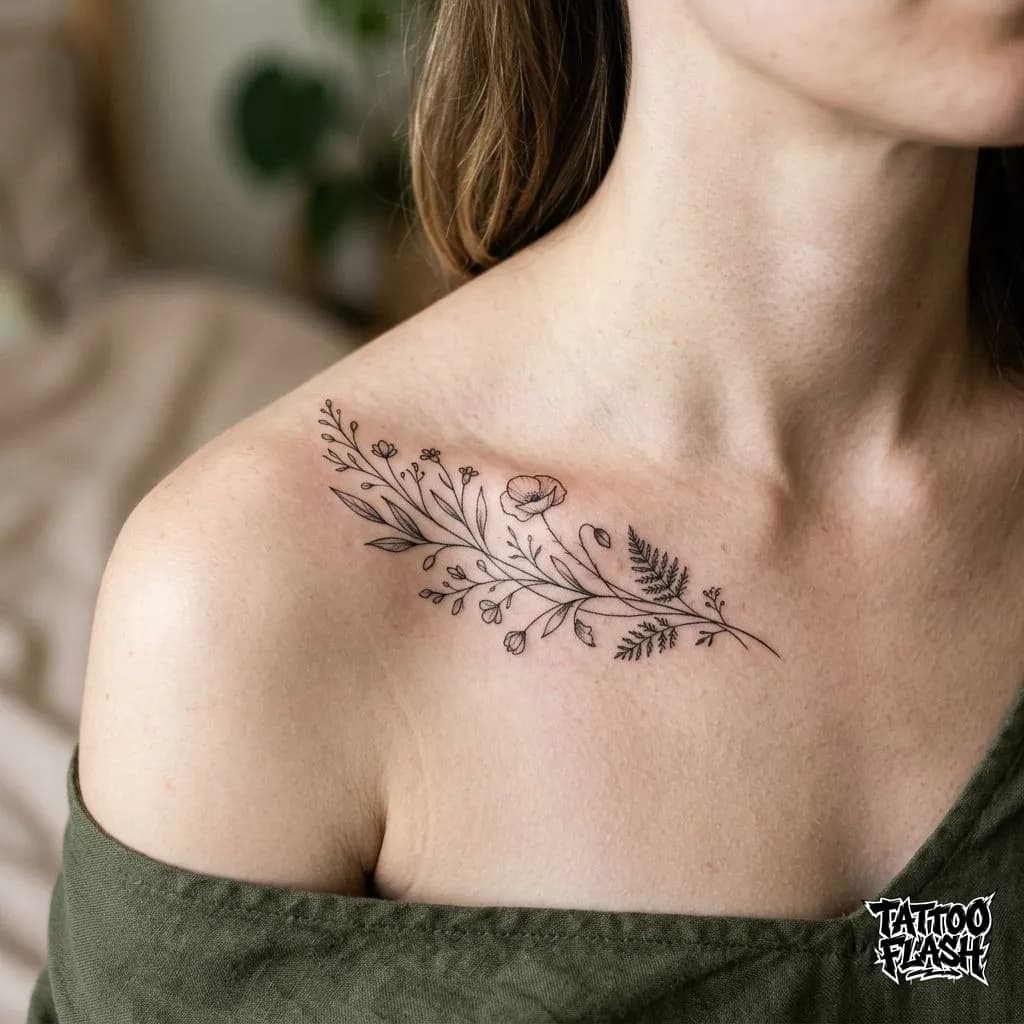
The illustrations on this page are AI-generated tattoo concepts. They show visual directions, not client photographs, measured tattoo sizes, or evidence of healed results.
What a semicolon tattoo can mean
A semicolon tattoo can express continuation, hope, remembrance, or solidarity. It is associated with mental-health awareness and suicide prevention through Project Semicolon. The organization's own FAQ says the symbol is open to anyone who finds meaning in it, and that its use is not limited to one experience or an official placement.
That context does not tell you an individual wearer's diagnosis, personal history, or willingness to discuss it. A tattoo may carry a private meaning. If you are choosing one, decide what the mark represents to you and how much of that story you want to share. The design is an expression, not a treatment or a guarantee of recovery.
Four design directions
Standalone semicolon
A standalone mark keeps attention on the punctuation. Compare the size of the dot, the shape of the comma, and the space between them. Ask the artist to assess those details at the proposed scale rather than assuming that the smallest possible version is the best one.

Semicolon with a butterfly
A butterfly can be a personal way to express change. Decide whether the punctuation forms part of the body or sits beside the butterfly, and how recognizable you want the semicolon to remain. Neither interpretation has to carry the same meaning for every wearer.

Semicolon with a heart
A heart can bring affection, remembrance, or support into the brief. Compare an integrated mark with two separate symbols. If the semicolon is central to your idea, ask the artist to keep the dot and comma distinguishable instead of letting them disappear into a decorative line.

Semicolon behind the ear
A behind-the-ear placement changes how and when the design is seen. It is not automatically private: hair length, styling, and the exact position all matter. The behind the ear guide offers more questions about orientation and visibility.

Choose visibility on your own terms
Consider whether you want to see the mark regularly, share it with others, or keep its meaning personal. Compare the placement guide and discuss your usual clothing and hairstyle with the artist. You do not owe strangers an explanation of the tattoo, and another person's tattoo is not an invitation to ask about trauma or illness.
For a light outline treatment, use the fine line guide to prepare questions about spacing and scale. You can explore a composition with the generator, but check the punctuation in any AI result carefully. Bring the selected reference to your artist for adaptation.