Considering a behind the ear tattoo? Learn everything about the pain level, healing process, and the intricate minimalist designs that fit perfectly into this hidden curve.
The Art of the Hidden Canvas
Getting a tattoo on your hands, neck, or face used to be referred to as a "job-stopper." But as tattoo culture has exploded in the past decade, placing ink near the face has become entirely normalized. The space directly behind the ear is arguably the most popular compromise: it is intimately close to the face, deeply personal, yet entirely hideable if you leave your hair down.
Because the canvas is essentially a two-inch vertical strip of skin curving along the mastoid bone, it requires very specific design choices. You cannot wrap a massive Clipper Ship behind the ear. Instead, this placement thrives on verticality, tiny details, and pieces that frame the natural curvature of the skull. If you are comparing facially adjacent placements, start with our Tattoo Guides archive and the dedicated Behind the Ear placement page before you commit.
Popular Styles for the Space
The limited square footage behind the ear acts as a magnifying glass for the style you choose. Let's look at how modern artists maximize this tiny canvas:
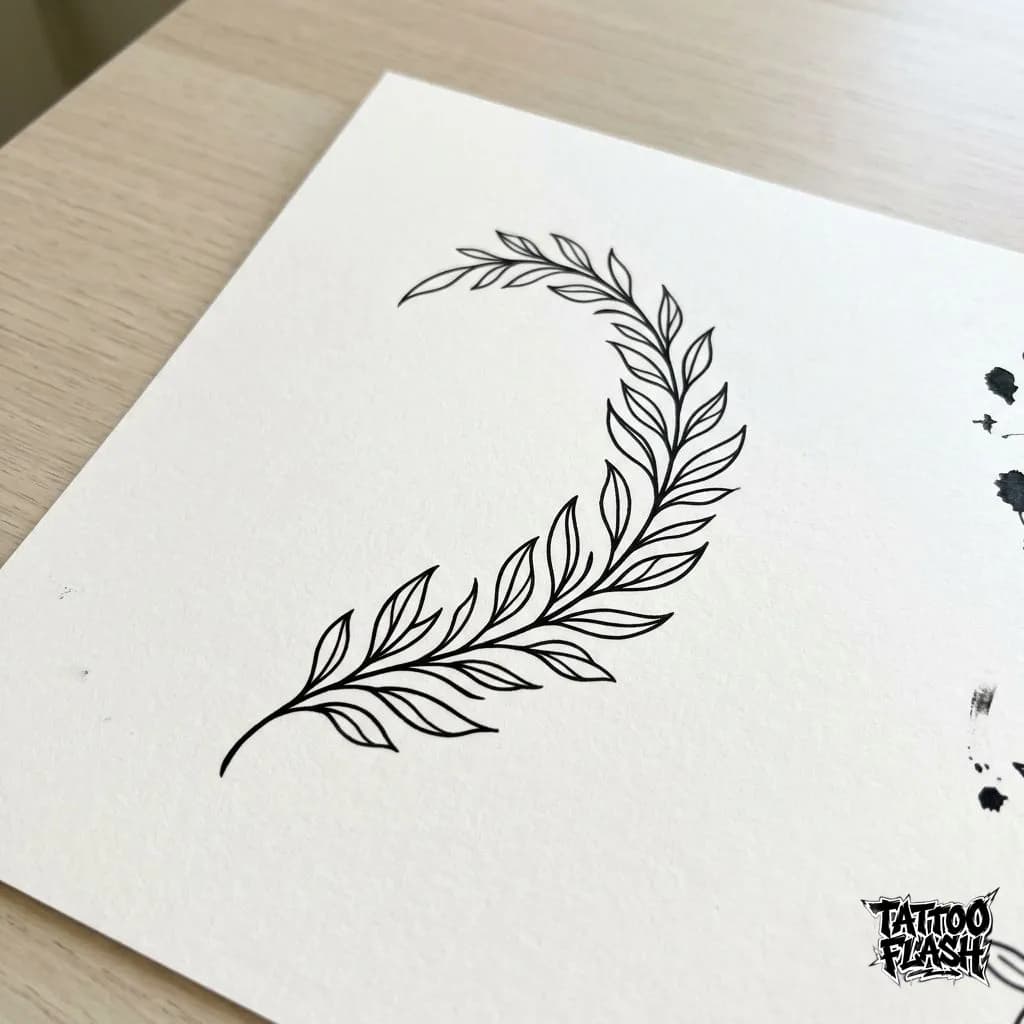
Fine-Line and Celestial: The absolute most popular style for this placement is Fine-Line. If you want the longer editorial breakdown, read our Fine-Line Tattoo Guide. Because the skin here is relatively thin but unexposed to sun and constant friction, delicate needlework heals beautifully. Constellations, birth years, and delicate script are perfectly proportioned here.
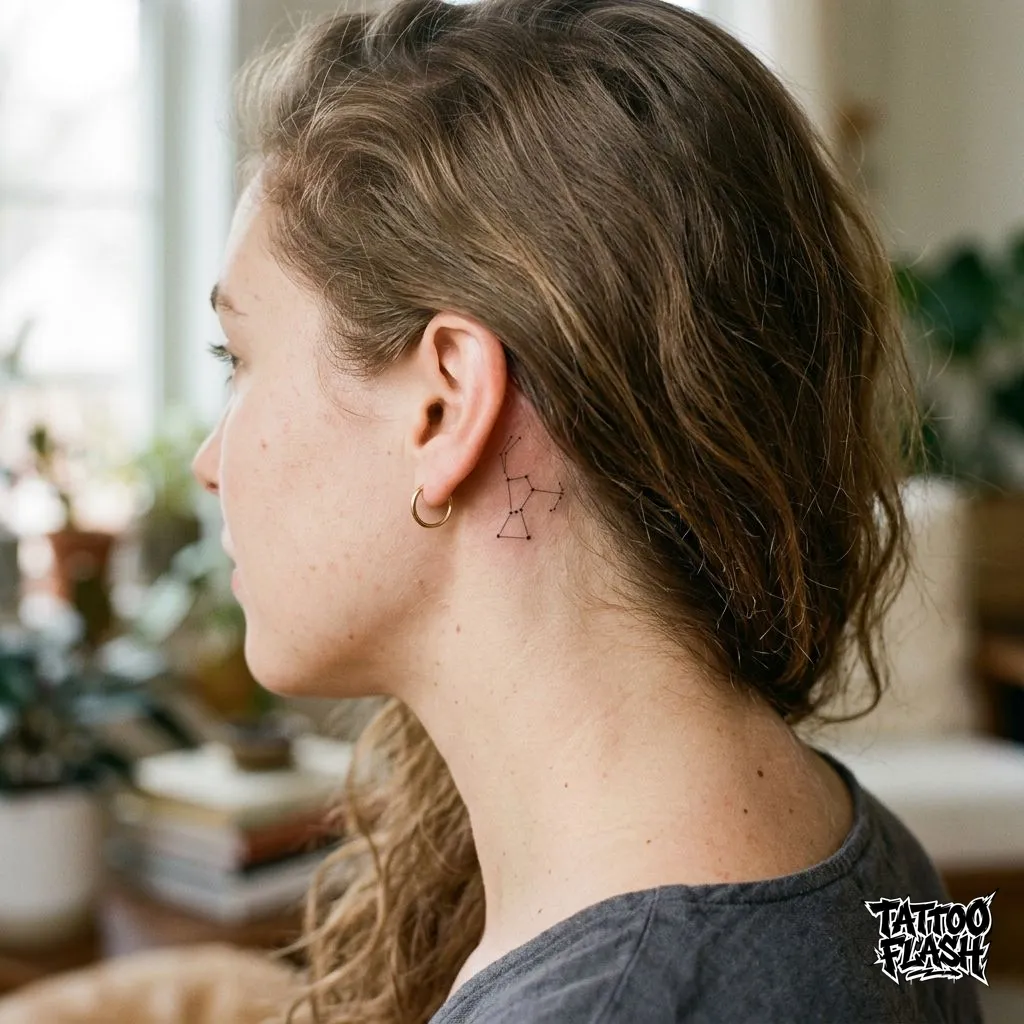 A delicate setup of fine-line stars. The minimal use of ink keeps the tattoo looking like a whisper rather than a shout.
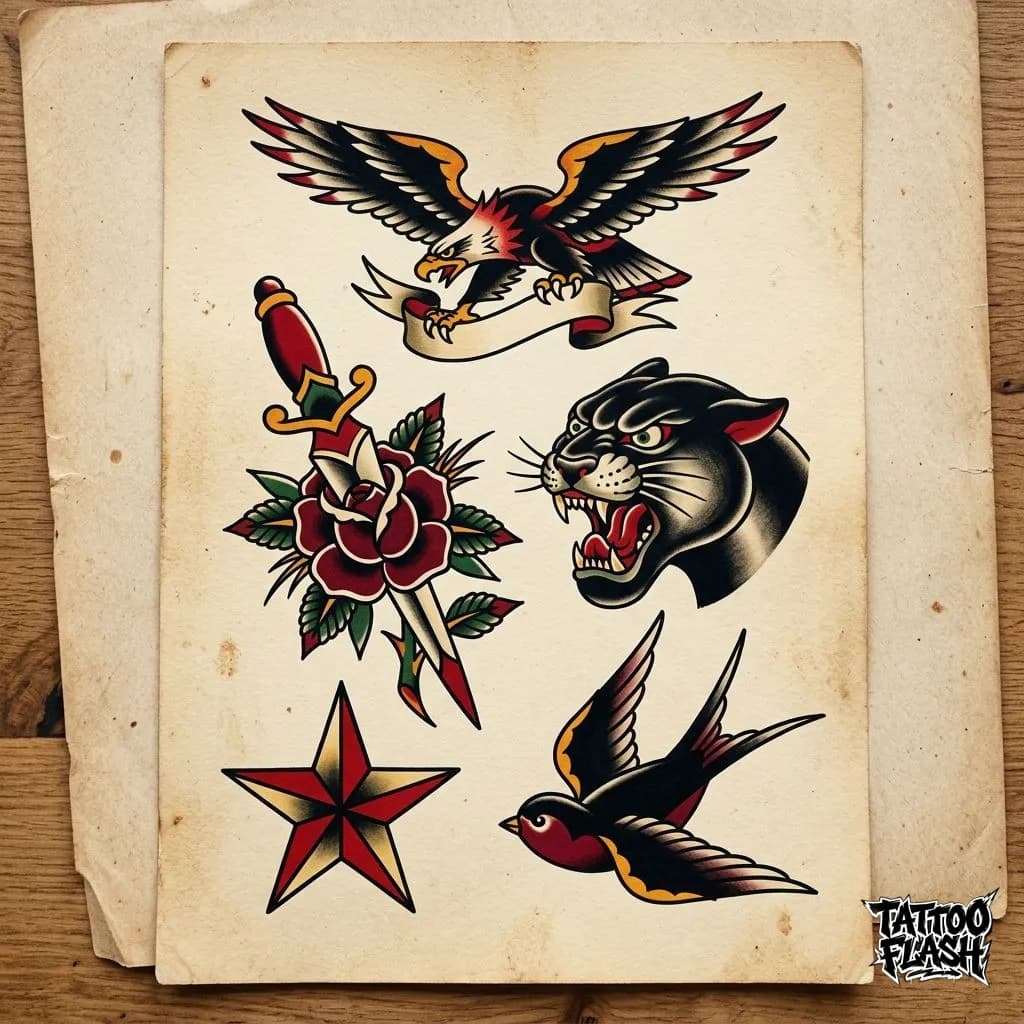
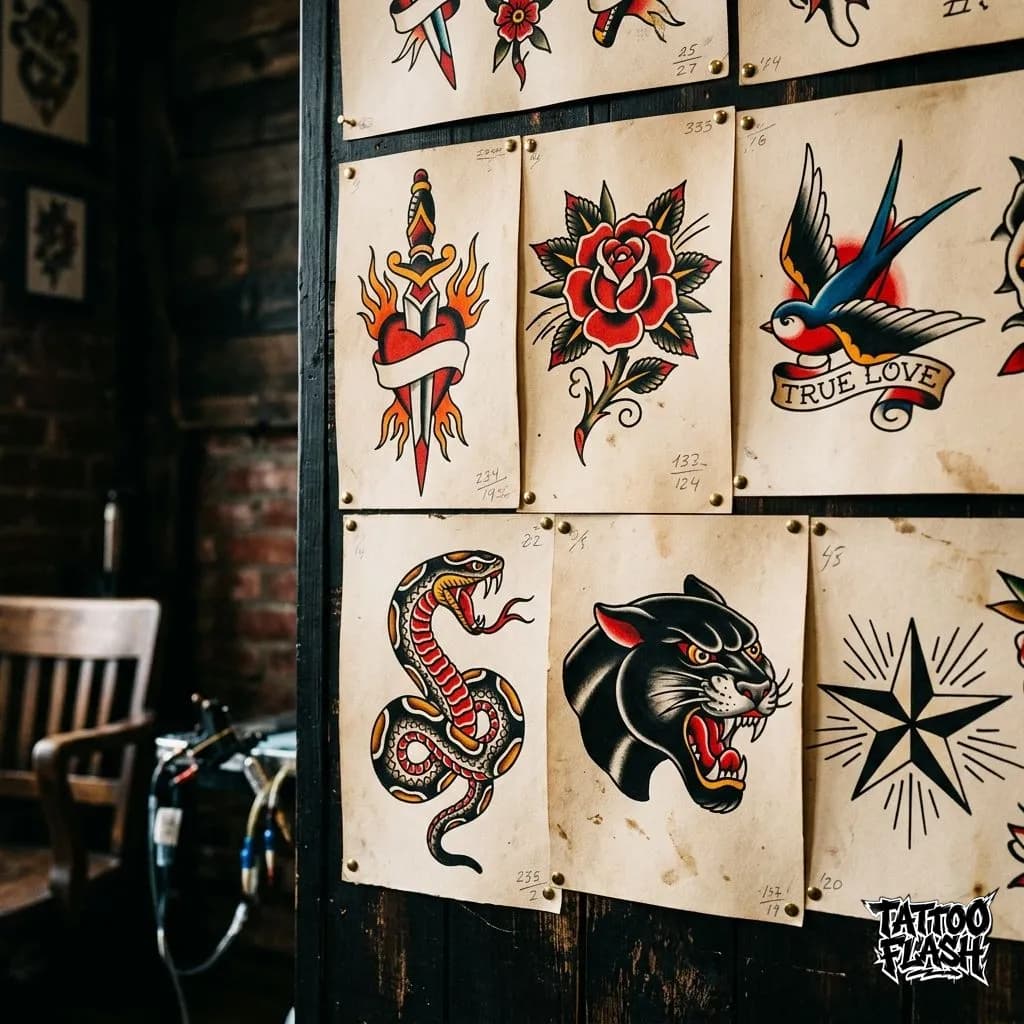
American Traditional: If you want something that commands attention even when partially obscured by hair, you must choose American Traditional. The heavy black outlines and solid primary colors ensure the design punches through visually. Highly vertical designs like daggers, torches, and single roses are perfect for the space.
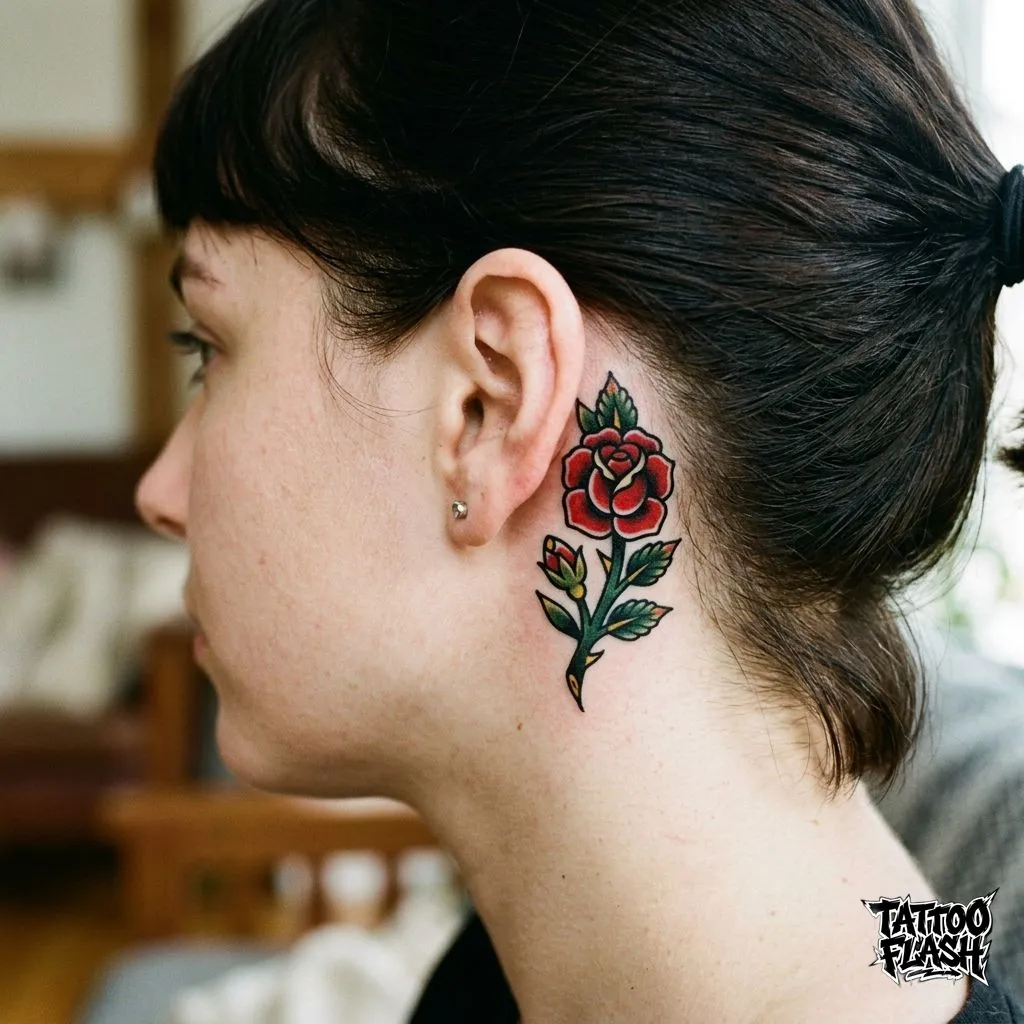 A bold traditional rose. Notice how the vertical stem perfectly follows the natural line of the neck falling away from the skull.
Micro-Realism: For clients who want the impact of a photograph without dedicating their entire forearm, Micro-Realism behind the ear is stunning. If you want the long-form explanation, our Micro Realism guide breaks down how small details hold over time. Tiny butterflies, individual feathers, or small floral elements can be packed with an unbelievable amount of gradient detail.
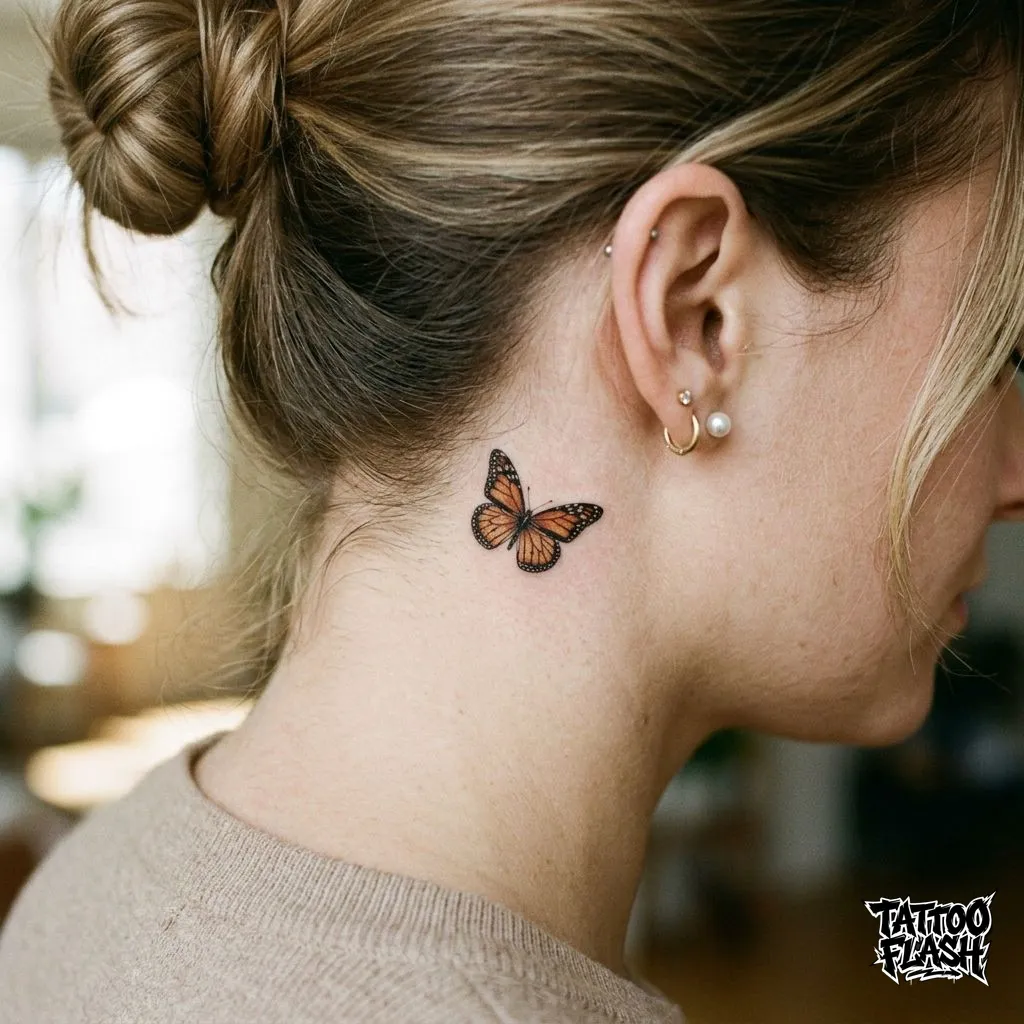 A micro-realism butterfly resting just behind the lobe. The soft gradient shading makes it look like it just landed on the skin.
Dark Art and Blackwork: This placement isn't just for delicate, pretty things. Blackwork and dark art enthusiasts frequently use the space directly behind the lobe for intense, high-contrast imagery. If you want a slightly larger neighboring canvas, compare it against the broader neck before deciding. Because the jawline creates a natural shadow beneath the ear, dropping a solid black element out of that shadow creates instant visual drama.
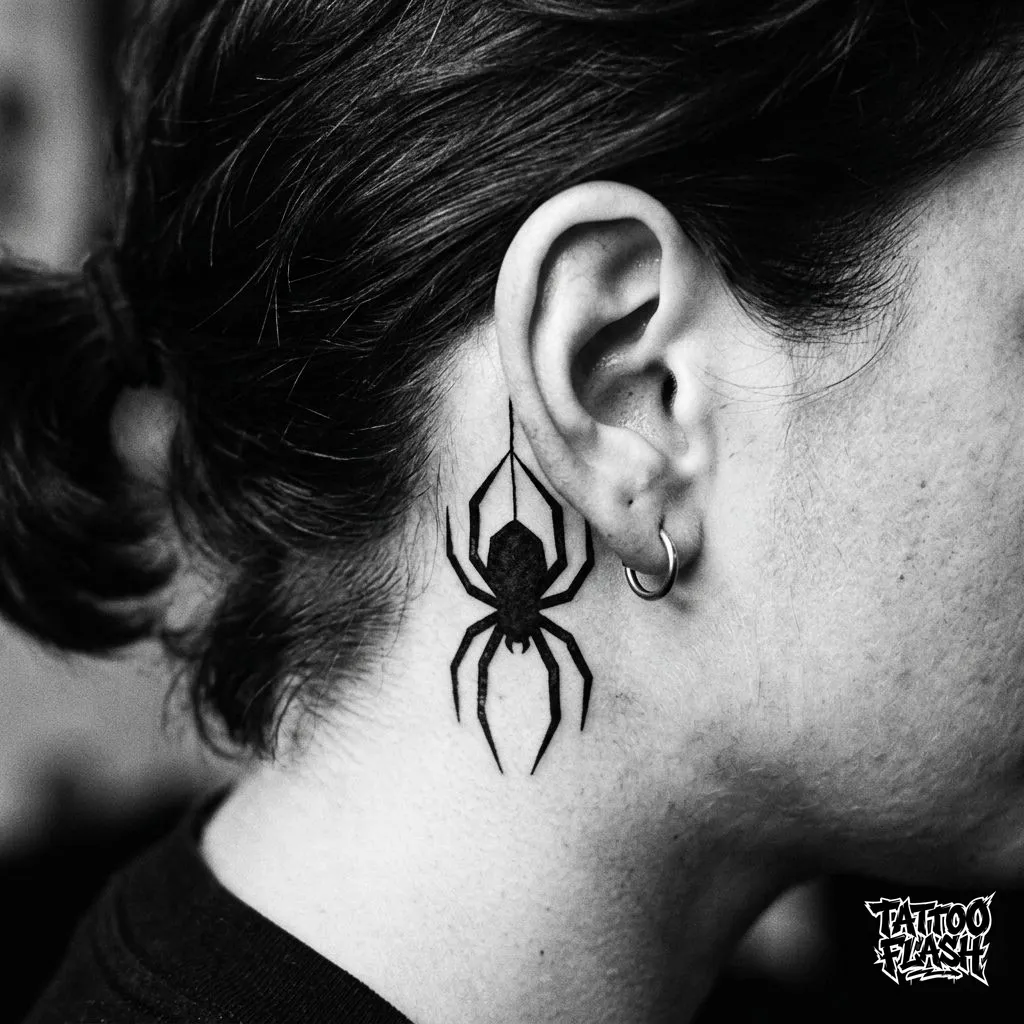 A geometric blackwork spider dropping from behind the ear. The intense black saturation creates unavoidable contrast against the neck.
Pain and Healing Reality
Let's address the elephant in the room: Does it hurt? Yes. If you refer to our overarching Tattoo Pain Chart, anywhere ink meets a hard bone is going to be intensely uncomfortable. The skin vibrating directly against the mastoid bone sends an incredibly loud, buzzing sensation straight into your inner ear.
However, because the canvas is so small, tattoos here are generally finished in under thirty minutes. It is a sharp, loud, but highly abbreviated burst of pain.
Healing this area requires some lifestyle adjustments. You cannot sleep on that side of your head for the first week, and you must be incredibly careful when using shampoo, conditioner, or hairspray. Getting chemical products directly into a fresh, unsealed tattoo can cause terrible breakouts and instantly damage the healing ink.
Try testing out a design behind your own ear before committing by using our AI Tattoo Generator.
General Tattoo Aftercare
Regardless of the style or placement you choose, aftercare is the single most critical factor in how your tattoo will heal and age. A tattoo is an open wound, and treating it with respect ensures that the ink stays vibrant for decades.
First, always listen to your specific artist. They know how their ink sets into the skin and what their preferred healing method is, whether that is "dry healing" or using a specific medical-grade adhesive barrier like Saniderm.
For the first few weeks, you must keep the tattoo completely out of direct sunlight and avoid submerging it in water. Showers are fine, but baths, pools, and the ocean are strictly off-limits until the skin has completely flaked and sealed.
Don't want a generic design?
Generate your own direction, keep the symbolism, and hand your artist a cleaner starting point.
About the contributor
Editorial Contributor
TattooFlash Edit contributes to the TattooFlash editorial library.