Understand what makes a blackwork tattoo work, where it ages best, how blackout differs from blackwork, and how to brief a strong design.
The Brutal Elegance of Blackwork
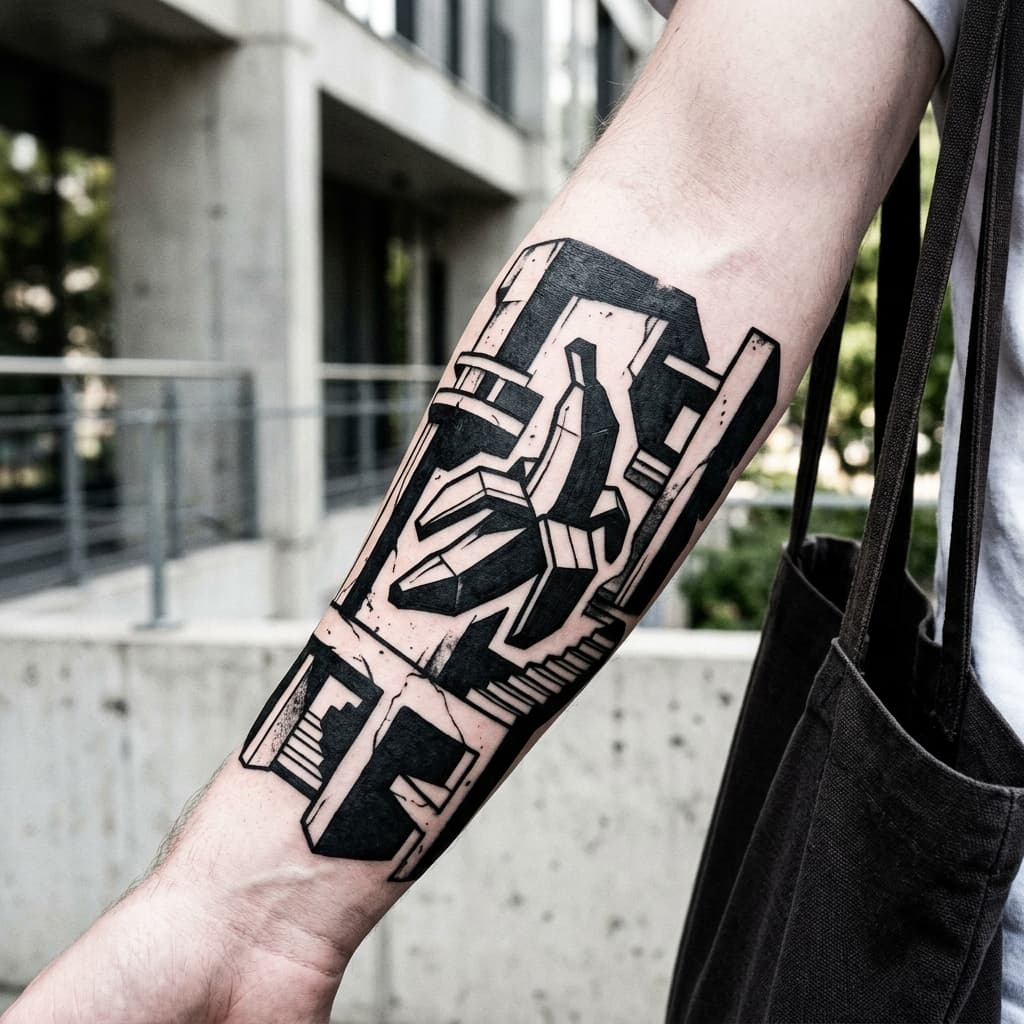
At its most literal, "Blackwork" refers to any tattoo that uses exclusively black ink. However, in the modern tattoo industry, Blackwork has evolved into a distinct aesthetic category characterized by massive contrast. This style abandons traditional gradients, soft grey washes, and colorful palettes in favor of aggressive, highly saturated black ink packed directly against untouched negative skin.
For an overview of how this stark approach differs from shading-heavy methods, check out our core guide on Tattoo Styles. The defining trait of modern Blackwork is not just the absence of color, but the profound, intentional use of absolute darkness to create shapes, illusions, and armor.
Sub-Styles within the Blackwork Umbrella
Because "only black ink" is such a broad constraint, several distinct sub-genres have emerged as dominating forces within the Blackwork community.
Geometric and Tribal Blackwork: This is the most visually commanding sub-style. Artists use vast planes of solid black ink specifically to carve out negative-space geometric patterns. The contrast is jarring and beautiful, creating patterns that look almost like cybernetic implants or ancient armor plating. Because these pieces require massive real estate to breathe, they are incredible fits for the chest or the upper back.
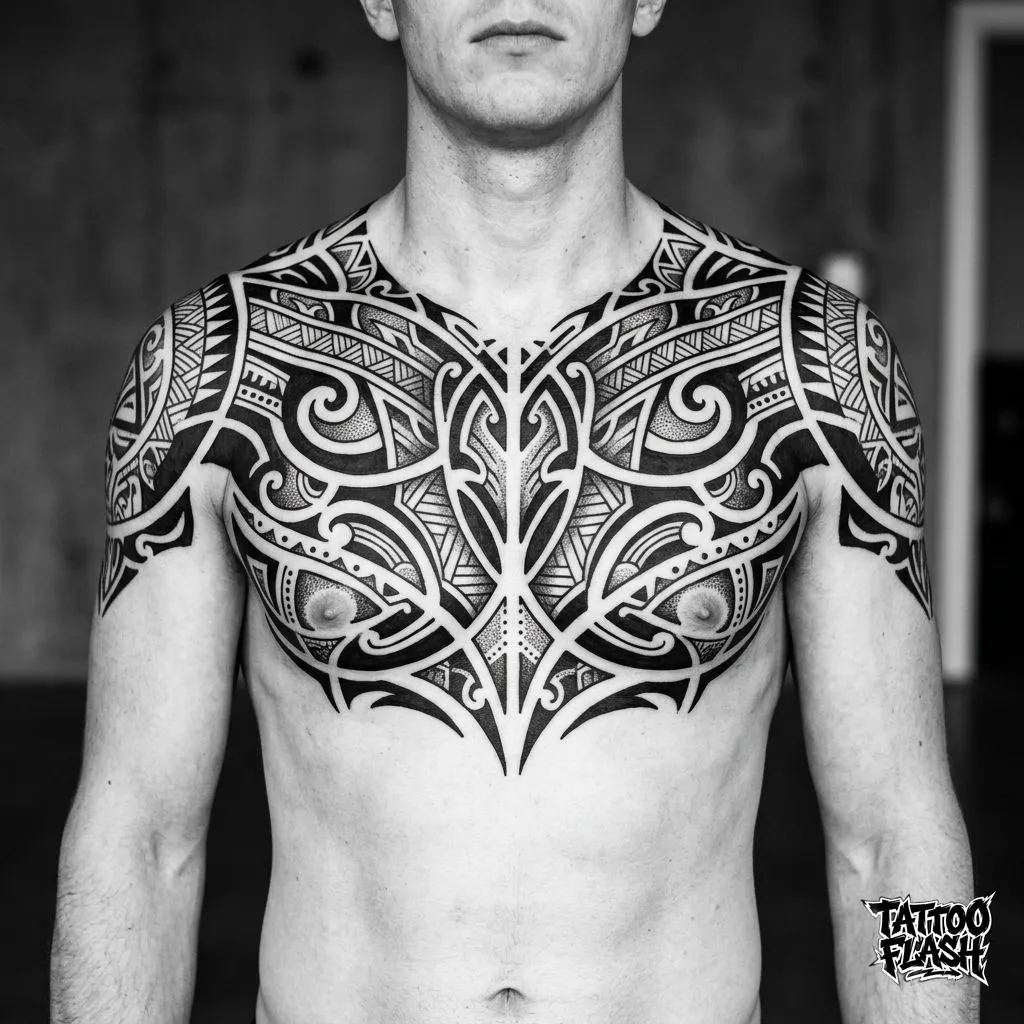 Heavy tribal blackwork on the chest. The massive fields of solid black force the negative skin to act as the actual linework of the tattoo.
Ornamental and Dot-Work: A slightly softer approach to Blackwork, the Ornamental sub-style borrows heavily from South Asian henna patterns and sacred geometry. While it still relies exclusively on black ink, artists break the tension of solid black blocks by using thousands of tiny dots (stippling) to create soft, cascading gradients.
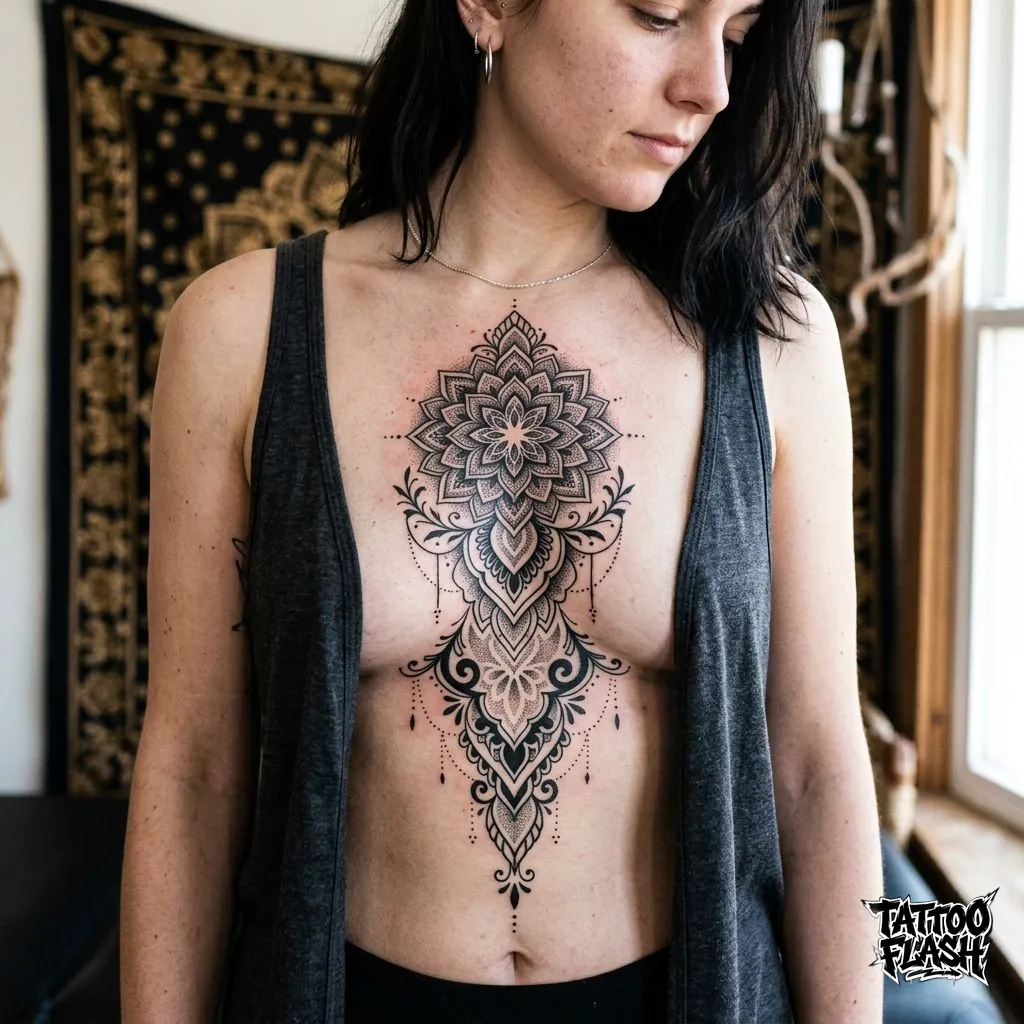 An ornamental blackwork mandala running down the sternum. The transition from solid black diamonds to delicate dot-work creates a mesmerizing texture.
Dark Art and Illustrative Blackwork: This sub-style is defined by its subject matter: skulls, demons, occult symbols, and grim reapers. The technique mirrors etching or woodcut prints from the medieval era. Lines are incredibly scratchy and chaotic, and shading is achieved by densely crossing thin black lines (cross-hatching) rather than using soft grey washes.
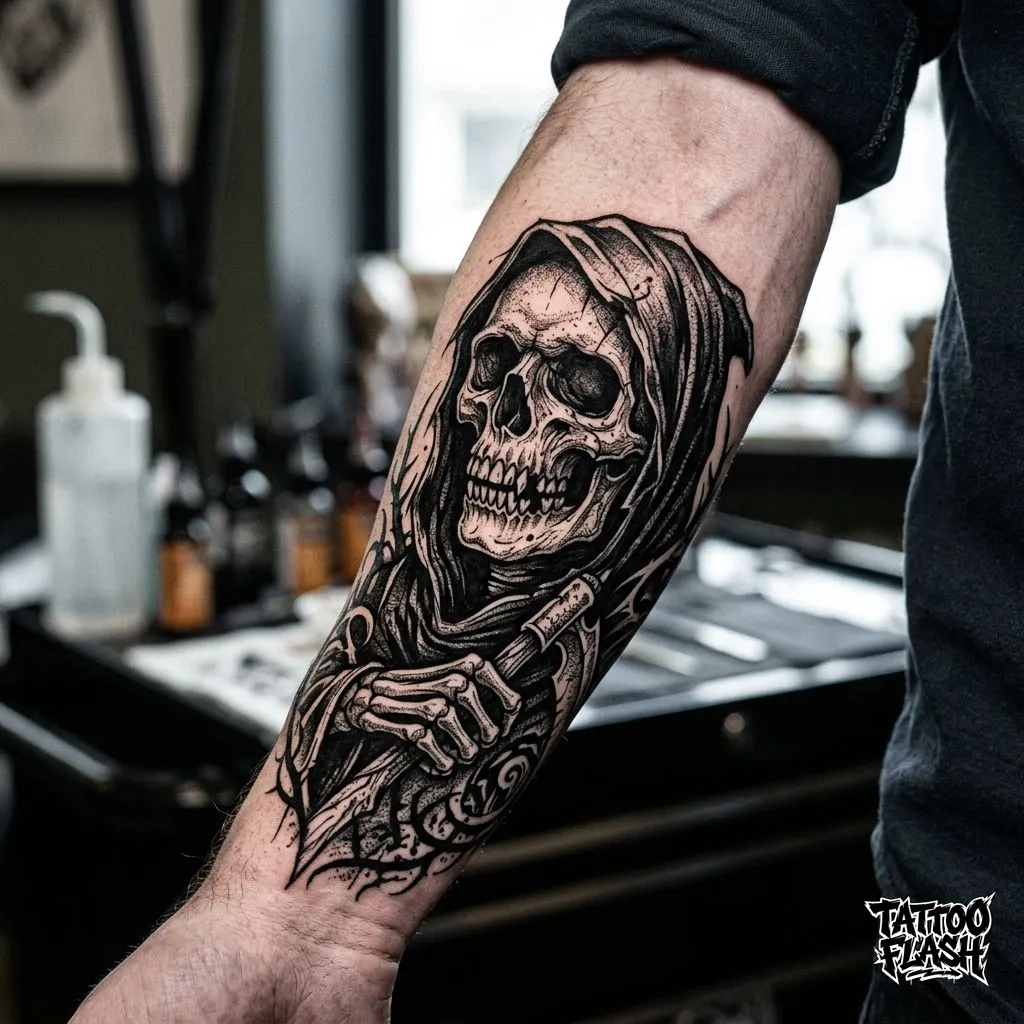 Illustrative dark art on the forearm. Notice how the shading within the skull avoids soft gradients, relying entirely on harsh black etching lines.
Cyber-Sigilism and Modern Abstract: A recent explosion in the Blackwork scene is "Cyber-sigilism," heavily inspired by early 2000s tribal and digital aesthetics. It features incredibly thin, razor-sharp intersecting lines that look like aggressive thorny vines or circuitry.
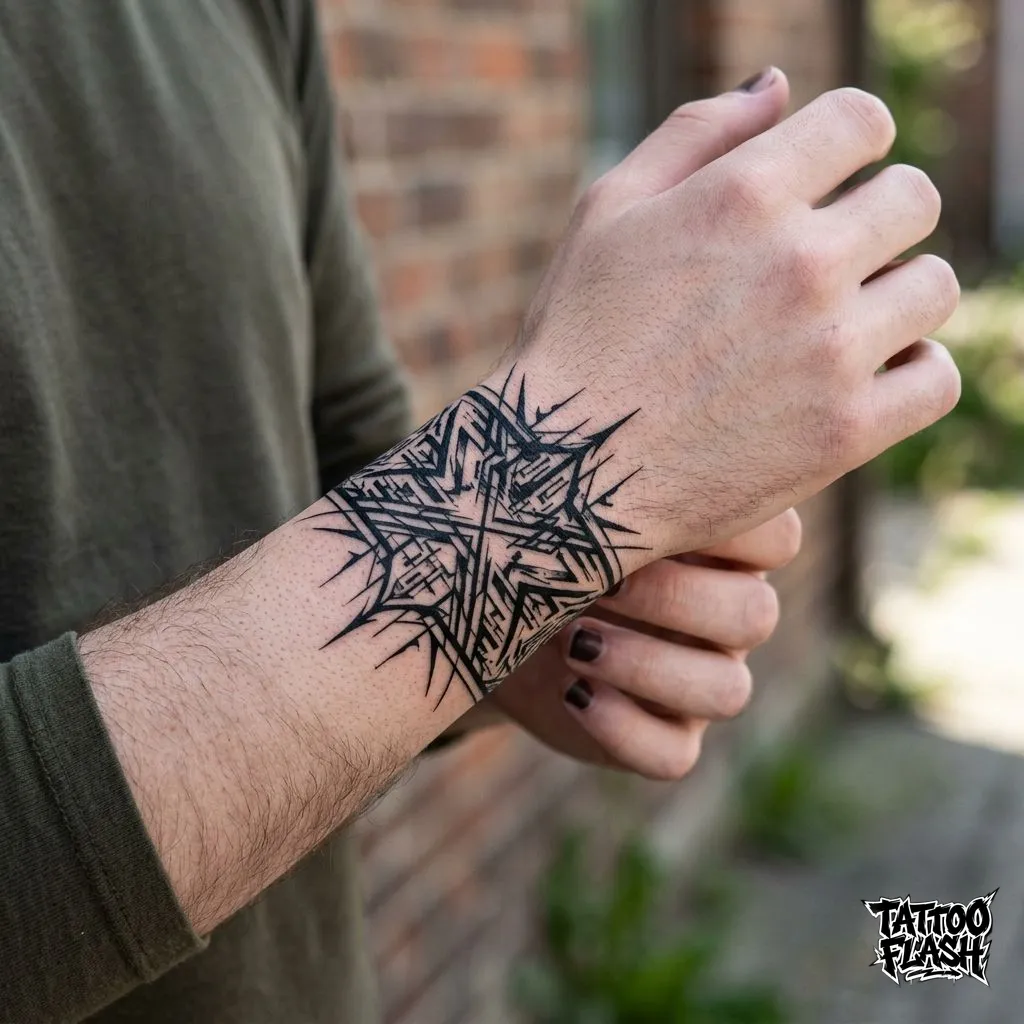 A sharp cyber-sigilism web wrapping around the wrist. The lines are chaotic yet balanced, acting as a modern revival of 90s cyber-goth aesthetics.
Pain and Placement Considerations
Clients must be warned: true Heavy Blackwork is an endurance test. Packing solid black ink into the skin requires the tattoo artist to slow their hand speed and repeatedly run an abrasive "magnum" needle over the same area until the skin is entirely saturated with pigment. It is a highly traumatic process for the dermis.
If you are planning an aggressive blackwork piece on a notoriously sensitive area (such as the ribs or the neck), you need to mentally prepare for intense sustained pain and significant swelling during the immediate healing phase. You can map out your pain tolerance on our Tattoo Pain Chart.
Are you curious how your design concept looks stripped of all color and plunged into heavy blackwork? Run your prompt through our AI Tattoo Generator and watch the transformation.
General Tattoo Aftercare
Regardless of the style or placement you choose, aftercare is the single most critical factor in how your tattoo will heal and age. A tattoo is an open wound, and treating it with respect ensures that the ink stays vibrant for decades.
First, always listen to your specific artist. They know how their ink sets into the skin and what their preferred healing method is, whether that is "dry healing" or using a specific medical-grade adhesive barrier like Saniderm.
For the first few weeks, you must keep the tattoo completely out of direct sunlight and avoid submerging it in water. Showers are fine, but baths, pools, and the ocean are strictly off-limits until the skin has completely flaked and sealed.
Don't want a generic design?
Generate your own direction, keep the symbolism, and hand your artist a cleaner starting point.
About the contributor

Editorial Contributor
TattooFlash Editor contributes to the TattooFlash editorial library.