Deconstruct the meaning behind the dagger tattoo. Learn why this sharp, piercing traditional motif usually signifies survival, danger, or the dual edge of beauty.
A Weapon of Betrayal and Protection
The dagger is one of the most versatile and aggressive symbols in tattoo history. Unlike a sword, which represents open, honorable combat and chivalry, a dagger is a weapon of close quarters, assassination, and secrecy.
Depending entirely on what the dagger is paired with—or how it is drawn—it can signify treacherous betrayal, a severed tie, or absolute, unyielding protection. We recommend looking at our broader American Traditional Definitions and the wider Tattoo Meanings archive to see how the dagger historically interacted with other classic motifs like snakes and skulls.
Stylistic Approaches
Because the dagger is essentially a vertical geometric shape (a cross-guard over a straight blade), it naturally fits almost anywhere on the human body. Let's look at how different styles interpret this dangerous weapon:
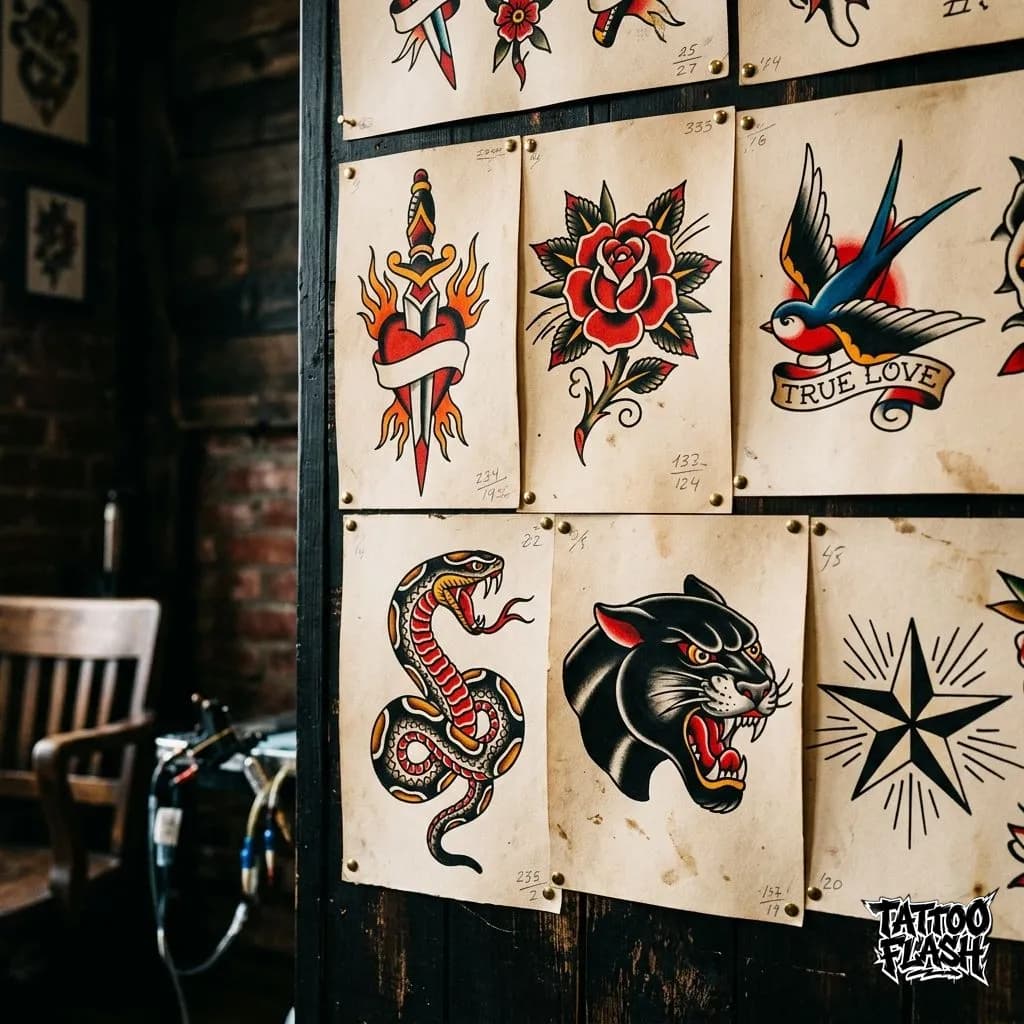
The Traditional Heart and Dagger: This is the undisputed king of dagger tattoos. When a dagger is pierced explicitly through a heavy red heart, it historically symbolizes a romantic betrayal or a deeply painful heartbreak. In pure execution terms, it still belongs to the bold Traditional family. The traditional style uses heavy "whip shading" (peppered black dots) fading into solid red to ensure the tattoo remains vibrant and legible for decades.
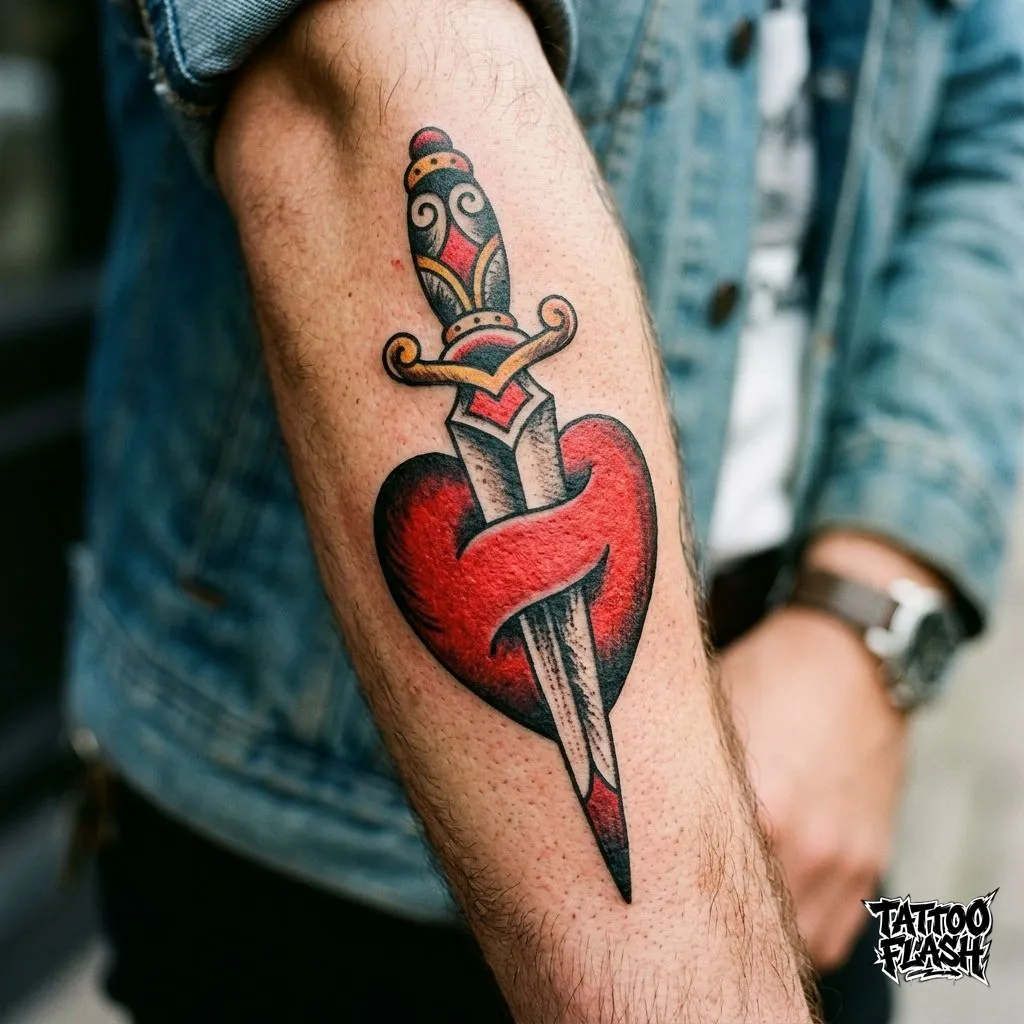 A traditional heart and dagger on the forearm. The intense saturation of red ink guarantees this symbol of betrayal will survive harsh sun exposure.
The Fine-Line Dagger: In recent years, the aggressive nature of the dagger has been co-opted and softened by the Fine-line movement. Instead of representing violence, a delicate, single-needle dagger often represents a quiet, internal strength or the ability to "cut ties" with toxic situations. Because these are highly delicate, they are frequently placed on entirely unexposed areas like the sternum or ribs.
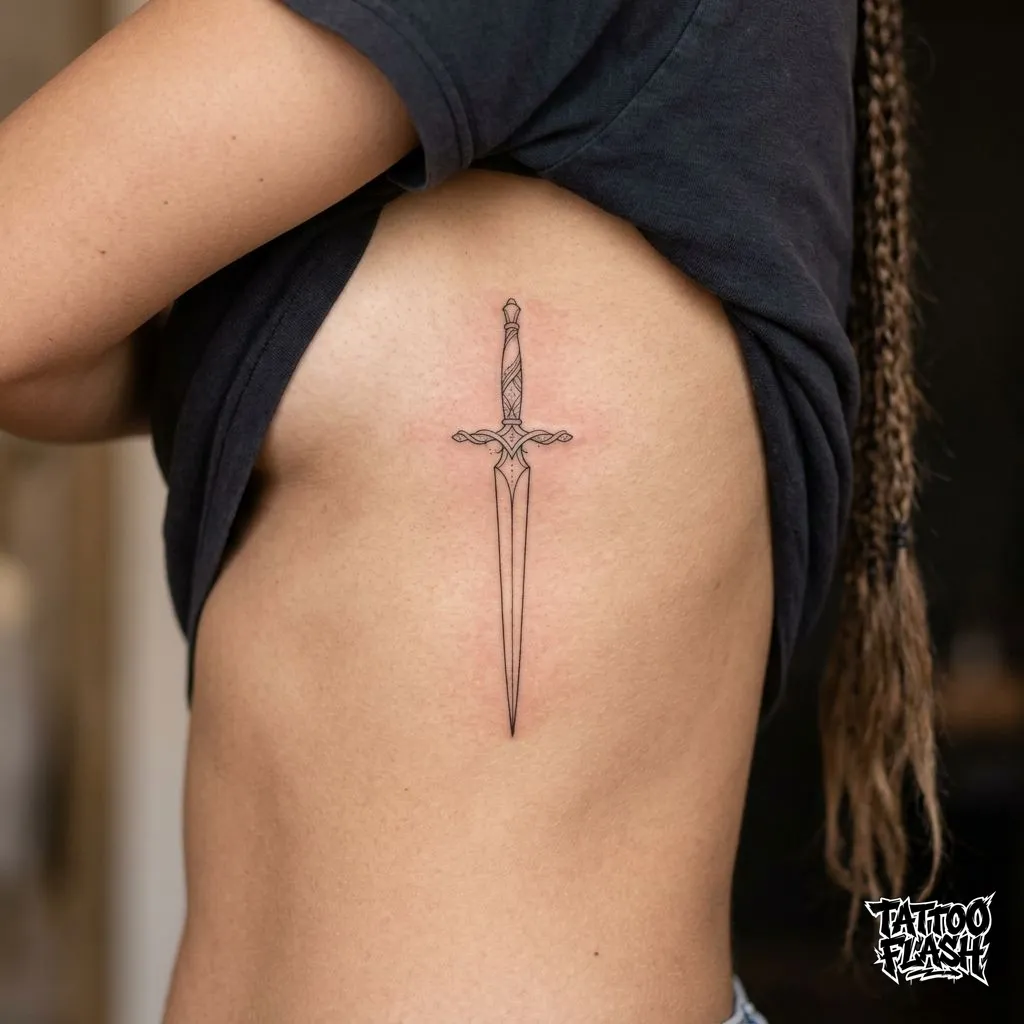 A microscopic fine-line dagger on the ribs. The lack of heavy shading turns a violent weapon into an elegant, quiet accessory.
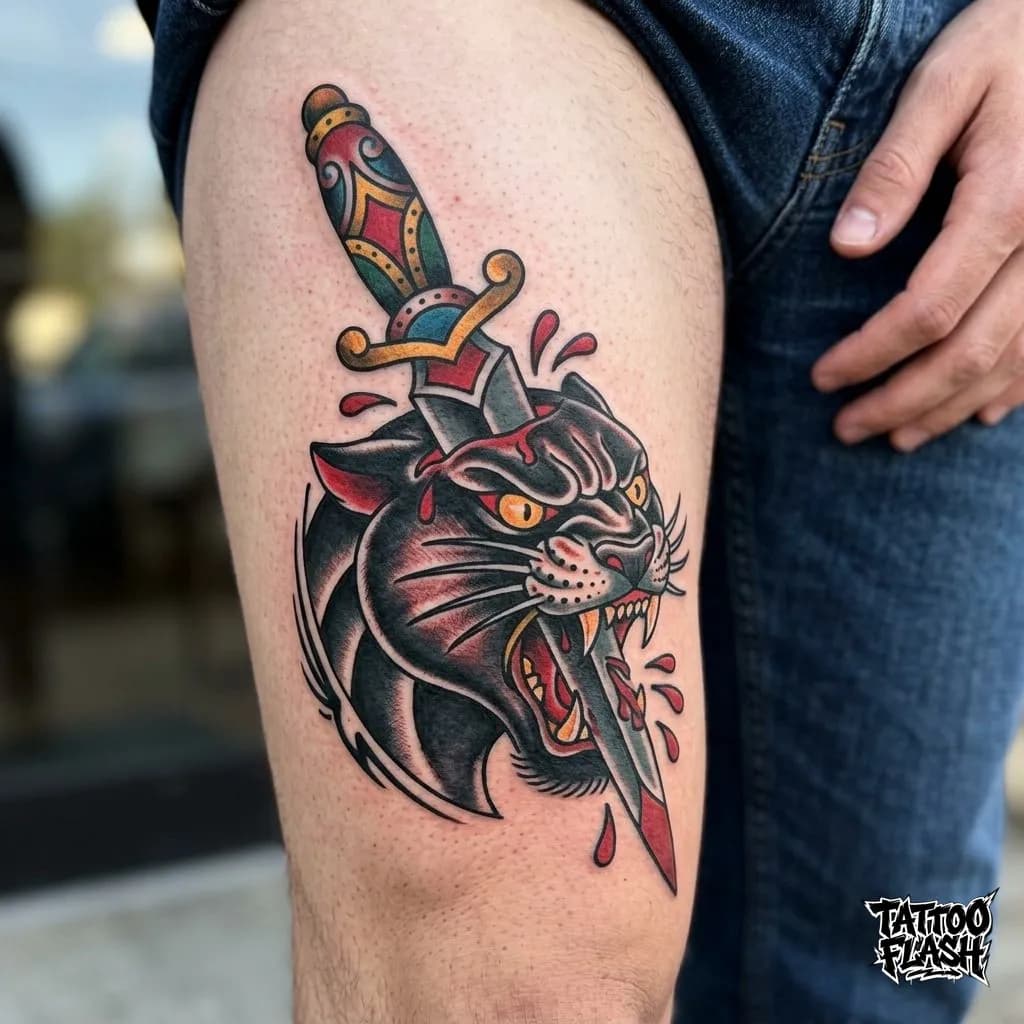
The Neo-Traditional Jeweled Dagger: Neo-traditional tattooing takes the rules of Old School (bold outlines) but applies highly varied line weights and a massively expanded color palette. Neo-Traditional daggers frequently abandon themes of violence and instead focus on incredible extravagance—featuring ornate gold filigree handles, massive inset emeralds or rubies, and surrounding lush botanicals. They often fit best on larger placements like the thigh.
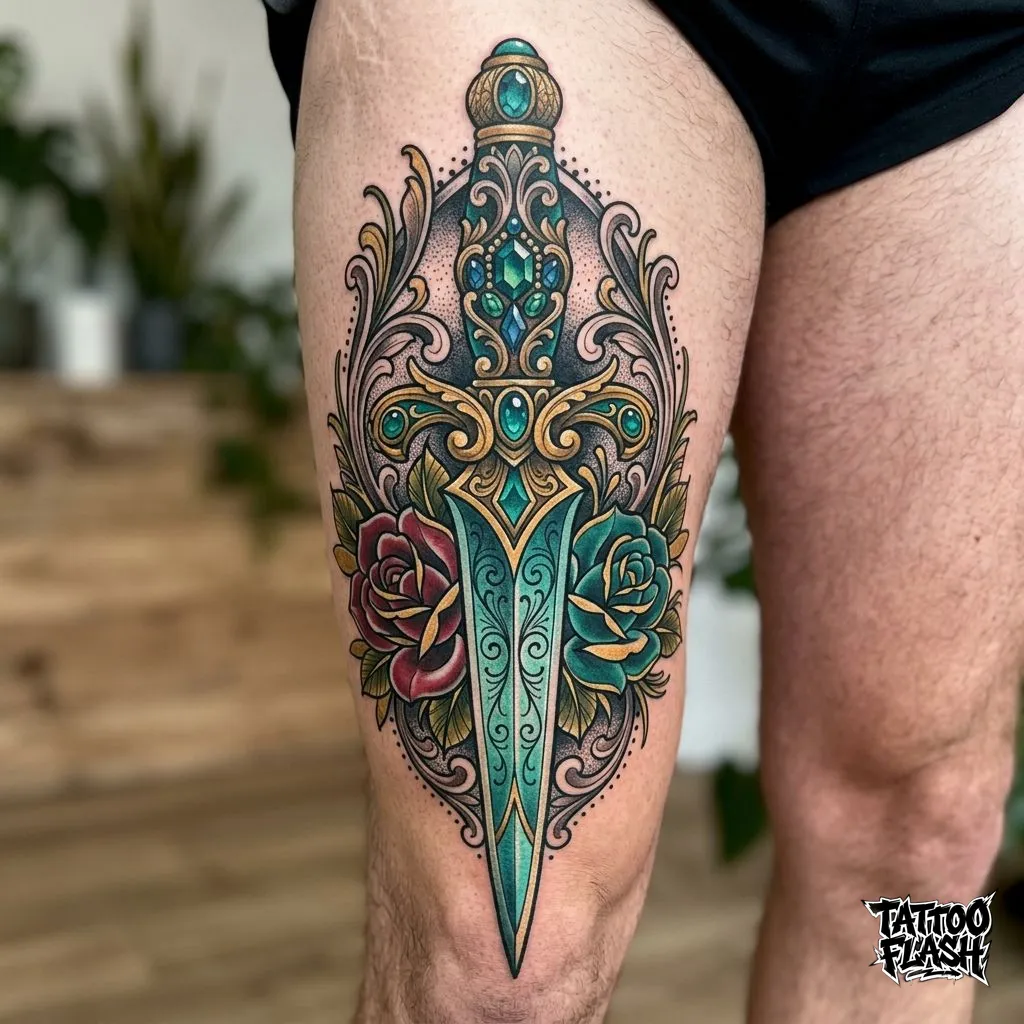 An ornate neo-traditional dagger on the thigh. The artist has used varying line weights and vibrant teal hues to create a highly decorative aesthetic.
The Dark Art Blackwork Dagger: For those leaning into gothic, medieval, or heavy metal aesthetics, Blackwork daggers strip away all color. That heavier treatment also reads especially well on the calf. These pieces rely on intense black saturation, sharp geometric angles, and often terrifying imagery (like screaming skulls inset into the pommel). They represent pure aggression and protection.
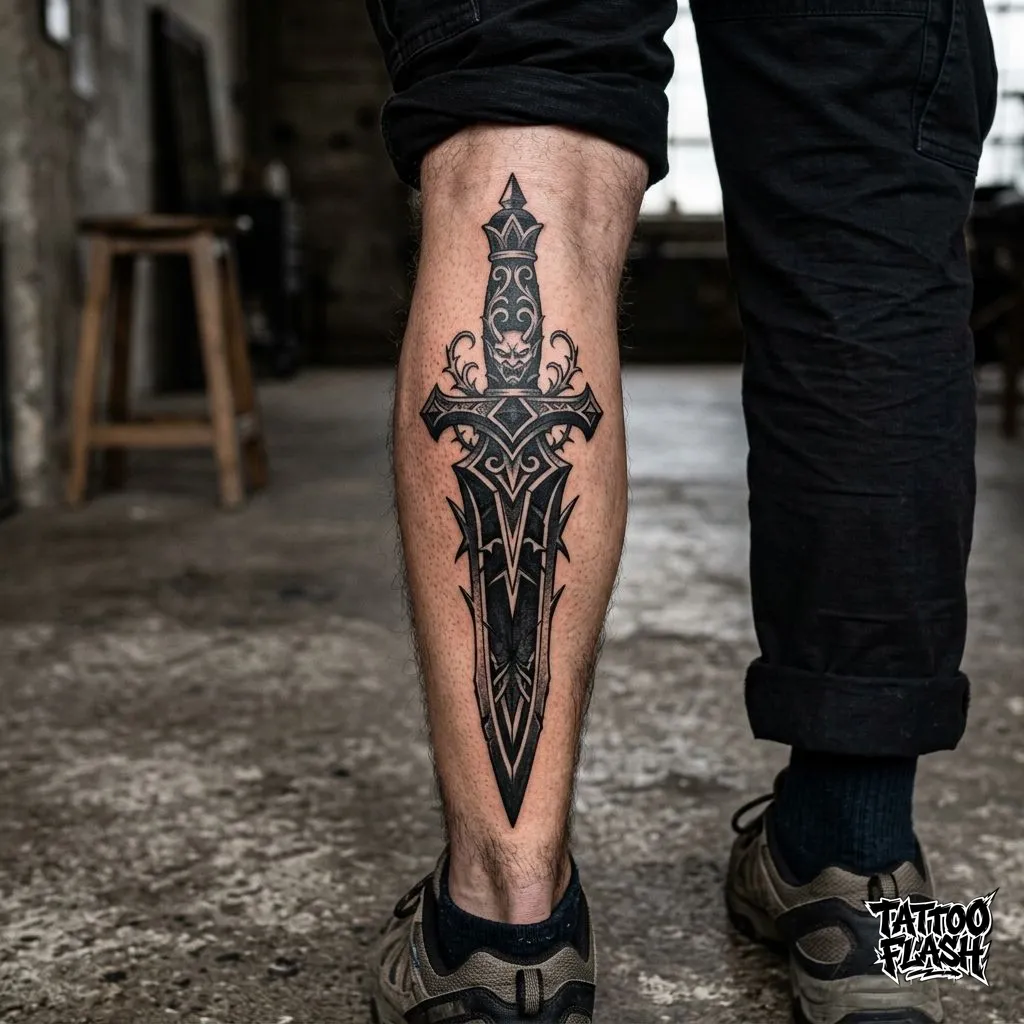 A gothic blackwork dagger on the calf. The heavy geometry and negative space create a distinctly aggressive, dangerous design.
Deciding on Your Dagger
When getting a dagger, you must decide what it is interacting with. Is it simply floating? Is it severing a rope? Is it piercing an animal skull? The secondary element dictates the entire meaning of the piece. To visualize how these specific combinations will look on your specific body, we recommend generating concepts instantly using our AI Tattoo Generator.
General Tattoo Aftercare
Regardless of the style or placement you choose, aftercare is the single most critical factor in how your tattoo will heal and age. A tattoo is an open wound, and treating it with respect ensures that the ink stays vibrant for decades.
First, always listen to your specific artist. They know how their ink sets into the skin and what their preferred healing method is, whether that is "dry healing" or using a specific medical-grade adhesive barrier like Saniderm.
For the first few weeks, you must keep the tattoo completely out of direct sunlight and avoid submerging it in water. Showers are fine, but baths, pools, and the ocean are strictly off-limits until the skin has completely flaked and sealed.
Don't want a generic design?
Generate your own direction, keep the symbolism, and hand your artist a cleaner starting point.
About the contributor